Bedroom Lighting Without a Ceiling Light: A Practical Lamp Plan
Bedroom lighting without a ceiling light needs to work from the moment you enter the room. A bedside lamp may be pleasant once you are under the covers, but it is less useful if you have to cross a dark floor to reach its switch. Start with light you can turn on at the entrance, then check what you need for reading and getting dressed.
You may be able to do this with lamps you already own. The plan depends on where power is available, which surfaces can hold a lamp, and where light actually lands. Choose the jobs first; decide how many lights you need after testing them.
Start Bedroom Lighting Without a Ceiling Light at the Door
Stand at the entrance and identify a reachable switch, lamp control or dedicated remote location. Avoid a plan that depends on finding your phone before you can see the bed, a bag on the floor or an open drawer. A compatible remote can be useful, but give it a regular home rather than leaving it somewhere in the bedding.
Next, mark the usable sockets and the path from the door to the bed. A floor lamp beside a convenient outlet may suit the room; one placed where its base blocks the door will not. If a table lamp uses a switch halfway along its cord, check that the switch will remain accessible after the furniture is in position.
Where a wall switch already controls an outlet, confirm which outlet it operates before arranging the room around it. Do not alter wiring to make a layout work. If you need a new outlet or fixed lighting connection, use a qualified electrician and obtain any permission required for your home.
Give Each Light a Job Before Choosing Its Shape
Separate light for moving around from light for a close task. IKEA’s bedroom lighting guide similarly considers activities such as reading and dressing separately. One fixture may serve more than one purpose, but check the result instead of assuming it will.
For the room: spread light beyond one small surface
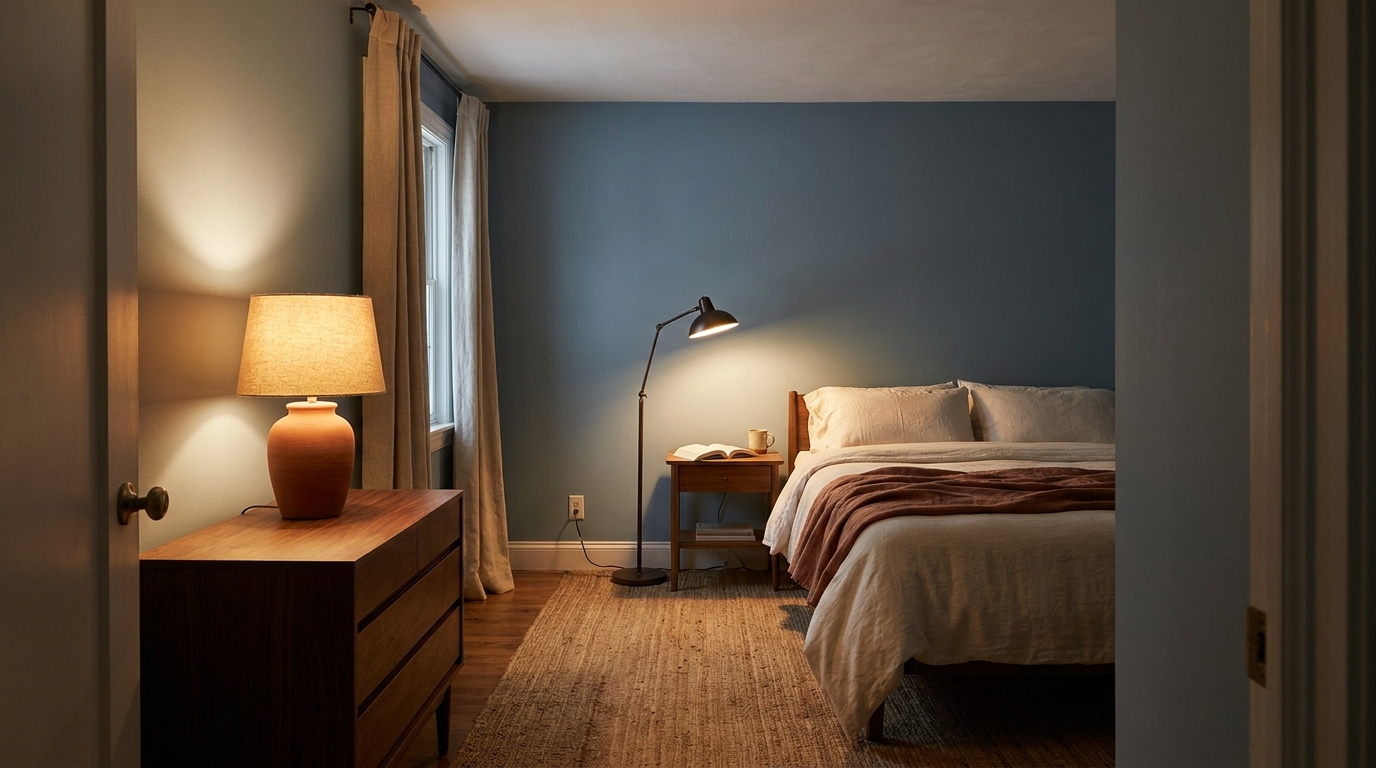
Try a shaded floor lamp or a table lamp on a suitable existing chest. Look at the floor, the far side of the bed and the wardrobe front, rather than judging only the bright patch around the lamp. A narrow reading beam aimed at a book can leave the rest of the room dim.
Keep the lamp in a position where the shade and base fit comfortably. A broad shade can project beyond a small table even when the base fits. If there is no spare surface, compare the full footprint of a floor lamp with the space available; a tripod base may occupy more walking space than you expect.
For reading: put the light on the page
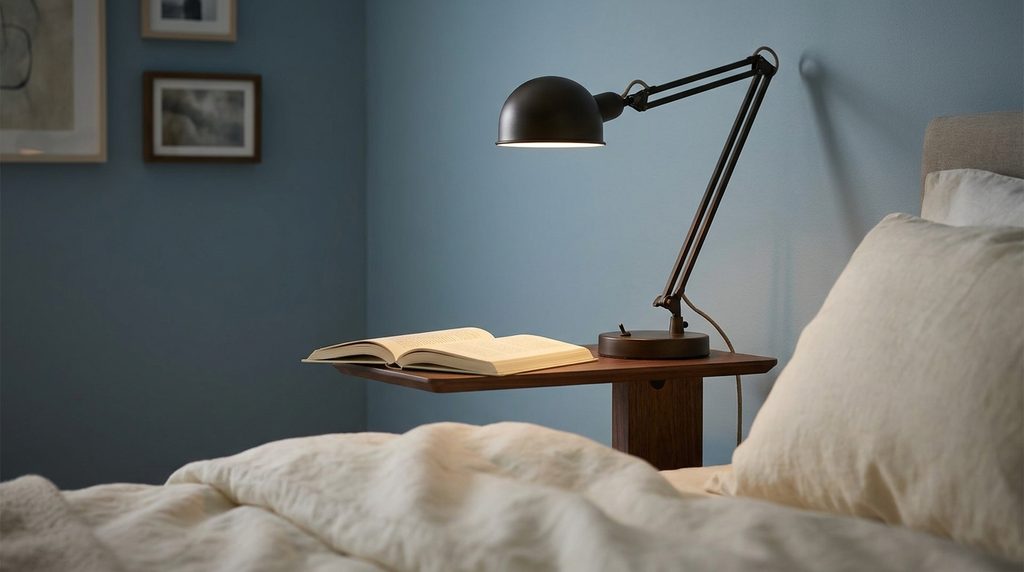
Sit against your usual pillows with a book in your normal position. Adjust a reading light so the page is illuminated without an exposed bulb or bright LED shining directly into your eyes. Test again when you recline: a shade that screens the light while you sit upright may not do so from a lower position.
In a shared bed, check the view from the other pillow too. Separate controls let one person keep reading, but the direction of the beam still matters. Choose the light and its support together; these nightstand alternatives can help when the bedside surface is tight.
For dressing: check inside the storage
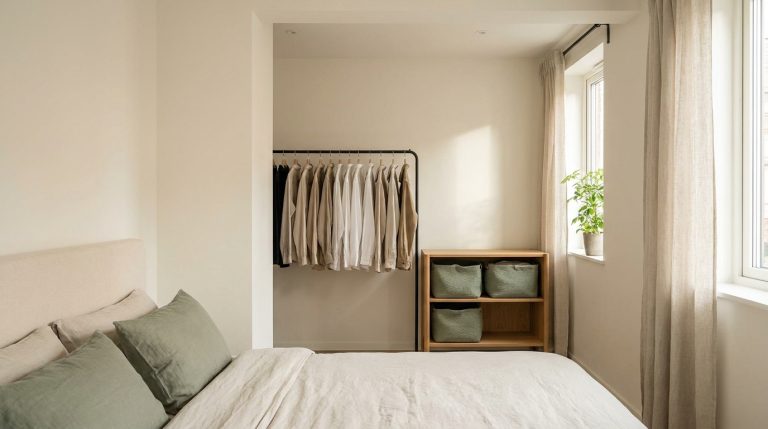
Open the wardrobe and stand where you normally choose clothes. If your body blocks the room light, moving the lamp or adding suitable wardrobe lighting may help more than making the bedside lamp brighter. Check lower shelves as well as the hanging rail.
Use lighting intended for the proposed location and follow its installation instructions. A rechargeable decorative lamp should not be tucked among clothing simply because it fits. With an open clothes rack, first test whether an existing room lamp can illuminate it from the side without taking over the route beside it.
An Example Plan Using Two Existing Lamps
Imagine a bedroom with an outlet near the door and another beside the bed. A chest stands near the entrance; the wardrobe is across the room. This is an illustrative planning example, not a measured lighting design or a tested makeover.
Start with a shaded table lamp on the chest, with its control reachable as you enter. Keep the adjustable lamp beside the bed for reading. Switch both on after dark and open the wardrobe. If you can move around comfortably, read and find clothes, there may be no reason to add a third fixture.
If the wardrobe shelves remain dark, first change the position or direction of the room lamp within a suitable location. If that does not resolve the shadow, consider a purpose-made wardrobe light. If there is no chest, a stable floor lamp near the entrance could take over the room-lighting job, provided its base and shade leave the doorway clear.
| Option | Useful when | Check before choosing |
|---|---|---|
| Shaded table lamp | A stable surface is already available. | Shade projection, switch reach and light beyond the tabletop. |
| Floor lamp | You need room light without using a tabletop. | Base footprint, stability, door movement and outlet position. |
| Adjustable reading lamp | The page needs more light than the surrounding room. | Beam direction, glare from both pillows and adjustment range. |
| Rechargeable lamp | A local light is useful away from an outlet. | Output, runtime at the brightness you use, and an accessible charging place. |
A rechargeable lamp can fill a local gap, but do not assume it can light the entire bedroom. Check whether the stated battery life applies to its lowest setting. Think through where it will charge so it does not become unavailable at the time you normally need it.
Choose Bulbs and Controls That Work Together
Compare light output in lumens rather than judging brightness from watts alone. ENERGY STAR’s brightness guide explains the distinction. The room’s shape, surfaces, shades and lamp positions still affect where that light reaches, so a single bulb-output target cannot settle every bedroom plan.
Choose bulbs approved for the fixture’s fitting, type and wattage limit. Check dimmer compatibility as well: a dimmable bulb and the control used with it must be suitable for each other. For an integrated LED lamp, check the fixture’s stated output and controls, since there may be no replaceable bulb.
Compare the color appearance of lamps you will use together. If one looks starkly blue-white beside a warmer lamp, decide whether you like the difference before buying more. Begin by adjusting the mismatched source rather than replacing every lamp. Avoid choosing a very dim decorative bulb for a fixture expected to light the whole room.
Check Cords, Bases and Clearances
Keep cords out of walking routes and places where doors or furniture can pinch them. Do not hide them beneath rugs. Keep bedding, curtains and other combustible materials away from lamps and follow the fixture’s required clearances. The U.S. Fire Administration’s electrical safety guidance covers cord placement and using bulbs with the correct wattage.
A lamp base should sit securely on its supporting surface. Check the door at its full opening and the wardrobe with its drawers pulled out. If the lamp must be moved every time you get dressed, revise its location before treating it as a permanent part of the room.
Do not connect one extension lead to another or exceed its rating. Electrical Safety First advises against this in its extension-lead guidance. If a workable layout depends on permanent stretches of extension cable, have a qualified electrician assess the outlet arrangement.
Run a Short Evening Test Before Buying More
Test the arrangement after daylight has faded, with curtains in their usual position. Keep enough light on to move safely while you adjust the setup. Then work through these ordinary moments:
- Enter: Can you find and operate the first light without walking across a dark room?
- Get dressed: Can you distinguish the clothes you need without your body blocking the light?
- Read: Is the page comfortable to see from your normal position, without direct glare?
- Settle down: Can you turn off the room light while keeping the bedside control within reach?
Note the first task that does not work. A dark wardrobe calls for attention at the wardrobe; glare from a reading lamp calls for a change to its position or shade. That gives your next adjustment a clear purpose. Bedroom lighting without a ceiling light is finished when you can use the room comfortably, not when every corner contains a lamp.