Small Bedroom Nightstand Alternatives: What Fits Beside Your Bed
The most useful small bedroom nightstand alternatives fit both the space beside your bed and the things you reach for at night. A narrow side table may be enough for a book and water. A wall-mounted shelf can leave the floor accessible. A fabric bedside pocket can hold glasses and a remote, but it cannot replace a stable surface for a drink.
Before choosing an alternative, separate two jobs: supporting things on top and storing things out of sight. You may need both, or only one. Then choose around the gap you actually have, rather than trying to recreate a matching pair of bedside cabinets.
Measure the Bedside Space, Including What Moves
Measure from the outside of the bed frame, not just the mattress edge. A projecting rail or upholstered wing can reduce the gap beside the bed. Include skirting boards, curtains and plugs that prevent a piece from sitting close to the wall.
Check depth as well as width. A slim table may fit between the bed and wall but extend into the place where you step out of bed. Open nearby wardrobe doors and under-bed drawers, and leave the standing space you need to use them. The smallest-looking object is not always the easiest one to live with.
For height, start with the top of your mattress, including a topper if you use one. Room & Board’s bed and nightstand guide suggests a surface level with, or a little above, the mattress. Treat that as a starting point, then check your reach while lying down and sitting up. Your bed frame and usual sleeping position may change what feels comfortable.
If the gap remains awkward before you add any bedside furniture, review the bed placement first. Our broader small bedroom ideas cover access around the bed, wardrobes and everyday routines.
A Narrow Side Table Works When There Is a Usable Floor Gap
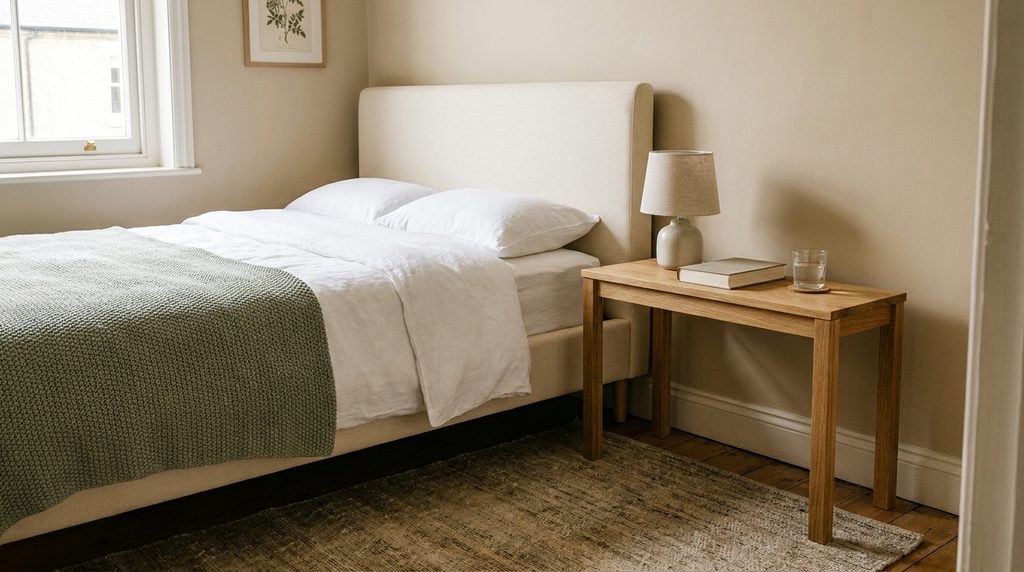
You do not need a piece sold specifically as a nightstand. A compact side table can provide the right surface when you need only a few items nearby. Look for a stable base, a height that suits the bed and enough tabletop space for your actual essentials.
Lay those essentials on an existing surface before choosing a size. A lamp base, water glass and open book need more room than a phone and glasses. Avoid judging the table from a photograph that shows it holding only a small vase.
Check where the feet land. Splayed legs may project farther than the top, and a pedestal base can occupy the space where you put your feet down. A lower shelf is useful for a current book, provided it does not make the table harder to move for cleaning or access.
An existing flat-topped stool can sometimes serve the same purpose. Check that it is steady and that the top supports your items properly. A dished seat, upholstered surface or improvised stack of objects is a poor substitute for a level bedside surface. Do not select it only because it is narrower than your old cabinet.
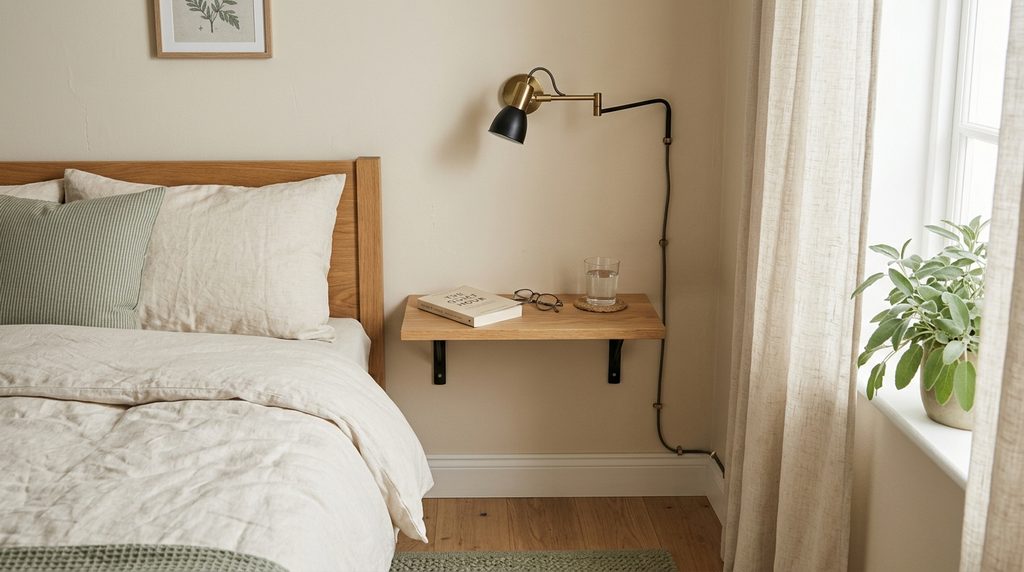
A Wall-Mounted Shelf Helps When the Floor Needs to Stay Clear
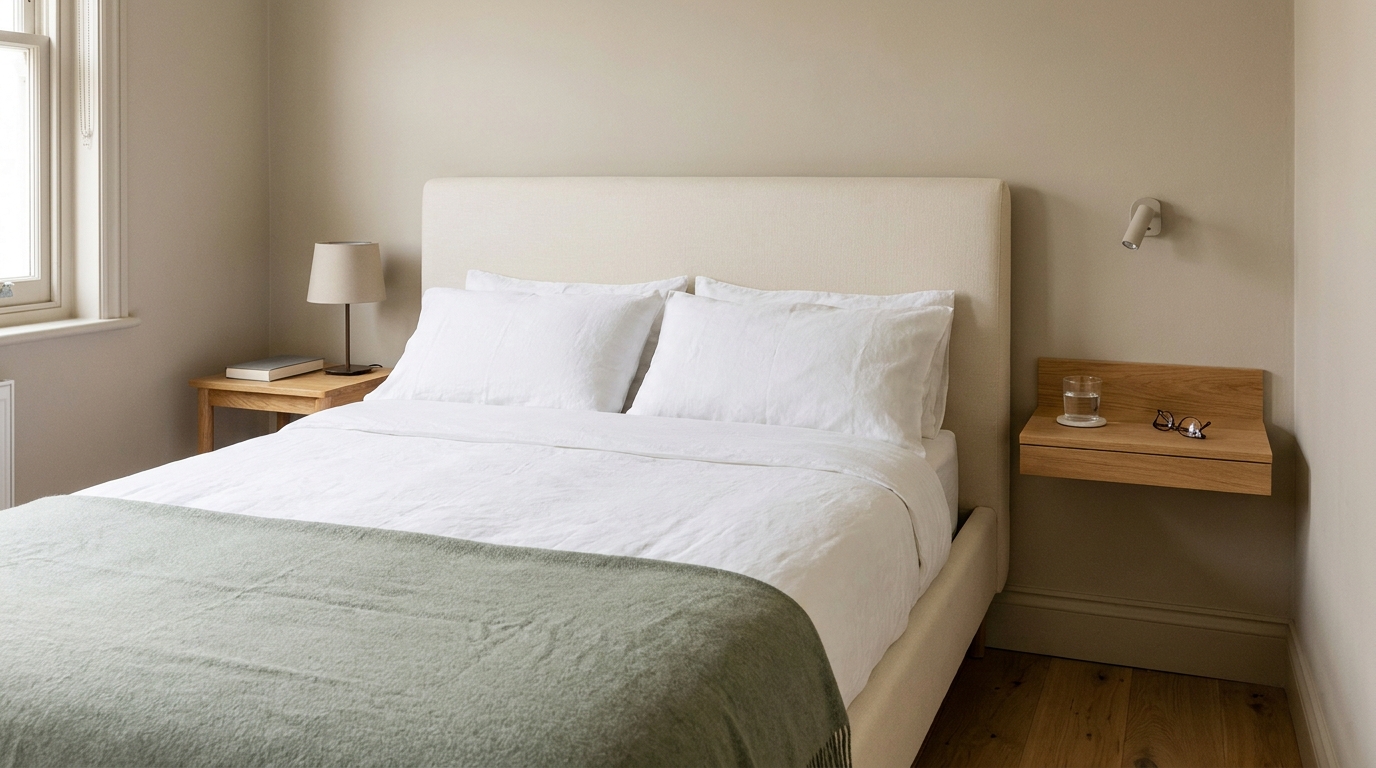
A shallow bedside shelf can be useful where a table’s legs would obstruct cleaning or under-bed storage. It still projects into the room, though. Mark its proposed width and depth before mounting it, and check that the edge will not interfere with sitting up, getting out of bed or changing the sheets.
Choose between an open shelf and a small wall-mounted drawer by what you want to keep there. An open ledge can serve a book and glasses. A drawer hides small items, but its box adds depth and needs opening clearance. It may also reduce the space available beneath it.
Mounting is part of the choice. For example, IKEA’s wall-mounted bedside table instructions specify wall-appropriate fixings and distinguish storage use from seating. Follow the instructions for the product and your wall, including its load limits. A bedside shelf should not be treated as support for standing up.
Position the surface alongside the bed where you can reach it, rather than adding a projecting shelf directly over your pillow. If you cannot confirm a suitable installation or do not have permission to drill, choose a freestanding or compatible removable option instead.
Without Floor Space or Drilling, Separate Storage From a Surface
A bedside pocket or caddy can hold light, dry items such as reading glasses, a remote and a paperback. Check how it attaches: some tuck under a mattress, while others fasten to a suitable bed rail. The attachment must match your bed and remain secure when you move or change the bedding.
A pocket does not solve every bedside need. Keep water on a stable surface, and follow your device manufacturer’s charging guidance rather than enclosing a charging device among bedding or inside a fabric pocket. Think through those two jobs before replacing a table entirely.
A purpose-made clamp-on bedside shelf may provide a small surface without wall holes, but it needs a compatible rigid bed frame. Check the permitted rail thickness, clamp position and load. Upholstered, curved or adjustable frames may not suit the fitting. Confirm that it will not interfere with the mattress, bedding or movement of the bed.
If neither option fits, do not force a shelf into the walking gap. You may need to move the bed slightly or use an accessible existing surface. Avoid relying on a windowsill that is difficult to reach or needed for opening the window.
Nearby Furniture Can Work, If You Can Reach and Use It
An existing small chest or desk beside the bed can sometimes do two jobs. Check the top from the mattress: a surface that is convenient while standing may be too high or too far away when lying down. Keep a clear area for bedside essentials without blocking the furniture’s original purpose.
Open its drawers and try the desk chair in its normal position. If every evening requires moving the chair into the doorway, the combined setup may be inconvenient. Likewise, a chest does not replace a nightstand usefully if you must reach across a tall lamp or work equipment to set down water.
Avoid making bedside storage responsible for the whole room. If clothing is filling these small spaces because a chest will not fit, our guide to organizing a small bedroom without a dresser can help you give folded clothes a separate home.
Plan the Lamp and Charging Before Filling the Surface
The lamp often decides how much table you need. Place its actual base footprint beside the other essentials when planning, and account for the shade as well. A small base with a broad shade may still crowd the bed or curtain.
A wall-mounted reading light can free the tabletop if a suitable installation is available. Check the switch from your reading position before choosing its location. In a shared bed, consider where the light falls when only one person wants to read. A compact table lamp may be simpler when mounting is impractical.
Locate the outlet before deciding where the phone will go. Allow space behind furniture for the plug and cable, without pinching either against the wall. Keep the cable out of the route around the bed and away from moving drawers. A cable clip can keep the loose end reachable without filling the tabletop with spare chargers.
The Two Sides of the Bed Can Have Different Solutions
Consider a shared bedroom where one person reads every night and the other mainly needs glasses and water. The reader might use a narrow table with a lower book shelf. The other side might work with a shallow wall-mounted surface and a separate light. There is no need to force identical furniture into different gaps.
Connect the two sides visually with a similar wood tone, lamp finish or color. Their storage capacity can differ. What matters is that both people can reach what they use and get in and out of bed without working around the furniture.
In a single-person bedroom, one useful bedside surface may be enough. Keep the unused side simple if it improves access or makes changing the bedding easier. Do not fill a gap purely to create symmetry.
For a room without overhead lighting, use this guide to bedroom lighting without a ceiling light to plan the bedside lamp alongside the rest of the room.
Try Nightstand Alternatives With Your Evening Essentials
Before buying, mark the proposed footprint with floor-safe removable tape or lay out a paper template. Use the manufacturer’s full dimensions, including projecting legs, brackets or handles. A template tests the space; it does not test the strength of a shelf or attachment.
Check the reach from bed, the place where your feet land, and the movement of every nearby drawer or door. Picture the lamp, book and drink in their usual positions. Is there room to use the surface, or only enough room to arrange it for a photograph?
Once installed or positioned correctly, try the setup through an ordinary evening and morning. Keep the items you used nearby and relocate the ones you did not. The right nightstand alternative gives those essentials a dependable home while leaving the bedroom comfortable to move through.