How to Store Clothes in a Small Bedroom Without a Closet
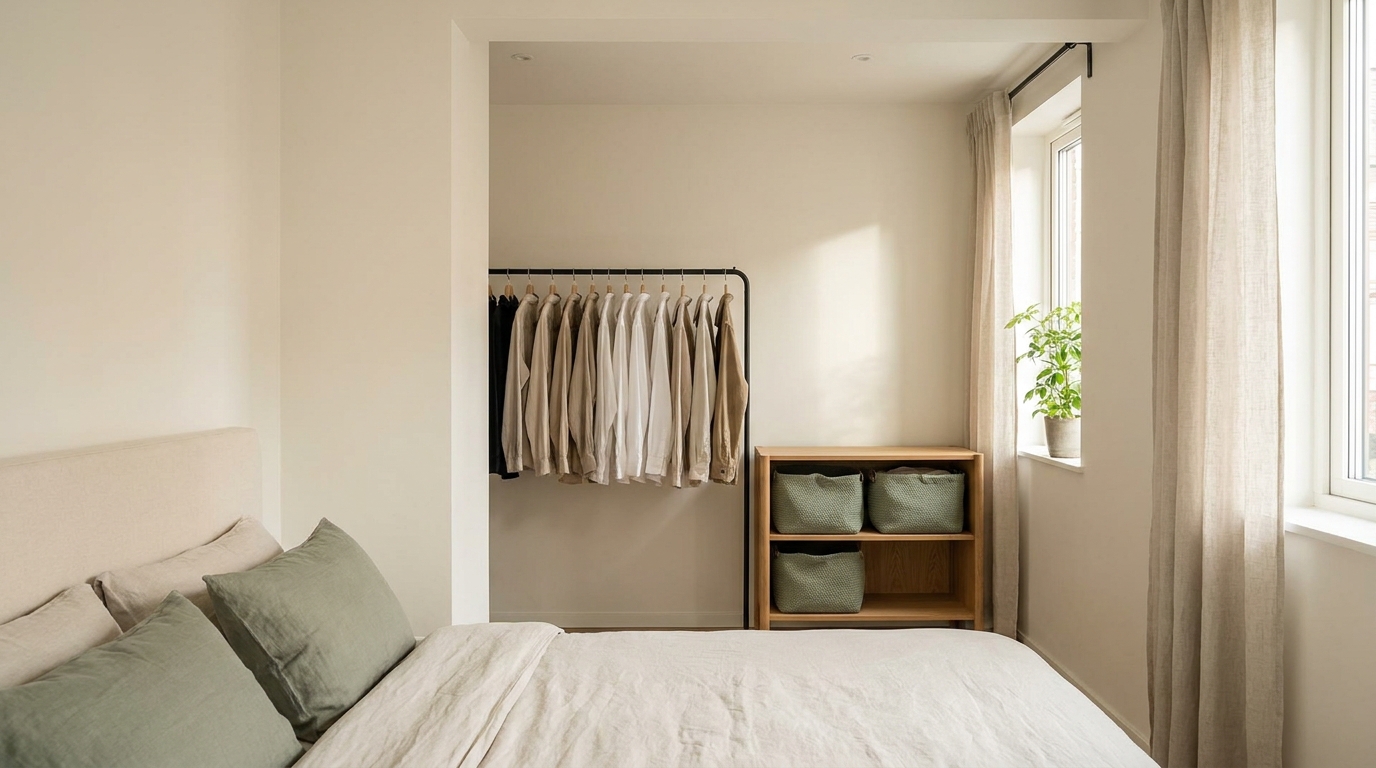
A small bedroom without a closet needs a reliable place for hanging clothes, not just more boxes. Start by choosing one main setup: a clothes rack, a freestanding wardrobe, or a properly installed wall rail. Then give folded clothing and small essentials a place beside it, so getting dressed does not involve searching across the room.
The best choice depends on the clothes you own and the space available around your bed. A rack can suit someone with a modest collection of shirts and jackets. A wardrobe may be more comfortable if you want clothing out of sight. A wall rail can work where floor space is tight and suitable mounting is possible.
Measure Your Clothing Space Before Choosing Furniture
Gather the clothes that need hanging, including clean items waiting to be put away. Separate shorter pieces, such as shirts and jackets, from long dresses or coats. Measure the longest item from the top of its hanger to the hem. That gives you a useful starting point for hanging clearance.
If you already have a temporary rail, hang the everyday items together and measure the width they occupy without squeezing them. Otherwise, use your current hanging arrangement to estimate the space, then check it against the storage system you are considering. Leave room to move hangers and remove a garment comfortably.
Next, measure the proposed location in the bedroom. Include skirting boards, curtain movement, nearby furniture and the room needed to stand in front of the clothes. A rack’s published depth may describe its base rather than the shoulders and sleeves extending beyond it. Check both.
Mark the footprint with removable tape suitable for your floor. Open the bedroom door and walk between the bed and storage area. If the arrangement blocks the route you use every morning, revisit the furniture placement in our small bedroom ideas guide before adding another unit.
Choose a Storage Setup for a Small Bedroom Without a Closet
Choose the main hanging arrangement first. Buying baskets before deciding where shirts, dresses and coats will go can leave you with plenty of containers and nowhere for the clothes that cannot use them.
| Setup | Best fit and main tradeoff |
|---|---|
| Freestanding clothes rack | Useful for visible, frequently worn clothes. Check the loaded footprint, stability and capacity. |
| Freestanding wardrobe | Keeps clothing enclosed. Needs usable interior space, door access and the specified anchoring. |
| Wall-mounted rail | Leaves the floor below available. Requires suitable wall fixings and still occupies space when loaded. |
You do not need all three. Start with the option that suits most of your hanging clothes, then solve any remaining storage gap with furniture you already have.
Use a Clothes Rack When Easy Access Matters Most
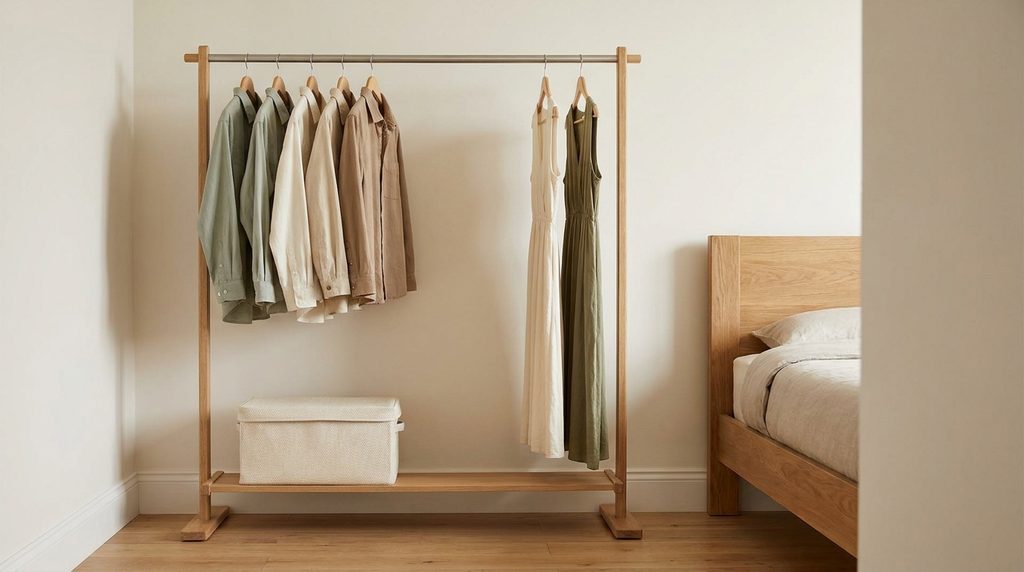
A single rail is straightforward to browse and easy to rearrange. Place it against a usable wall rather than automatically across the foot of the bed. Check that its feet do not project into a walking route and that clothes will not catch on the bedside table as you pass.
Arrange shorter garments together and give long pieces their own section. This makes it easier to see whether space below the shirts can hold a small container. Do not fill that space until you have checked the hems: trousers or dresses should not rest on shoes or folded clothing.
A double rail is helpful only when its heights suit your clothes. Two closely spaced bars can hold short items but leave nowhere for a long coat. Choose adjustable components where useful, and check the assembled dimensions rather than assuming that two rails provide twice the usable storage.
Follow the rack’s load limit and distribute the clothing as instructed. A lightweight rack loaded with heavy coats may be a poor match even if everything fits along the bar. Avoid adding bags to projecting ends unless those parts are designed to carry them.
Open hanging also means the clothes remain visible. Keep everyday pieces on the rail and put occasional items in suitable covered storage if available. You do not need a color-coordinated wardrobe; a manageable amount of clothing and a clear floor underneath usually make the arrangement easier to live with.
Choose a Freestanding Wardrobe for Enclosed Storage
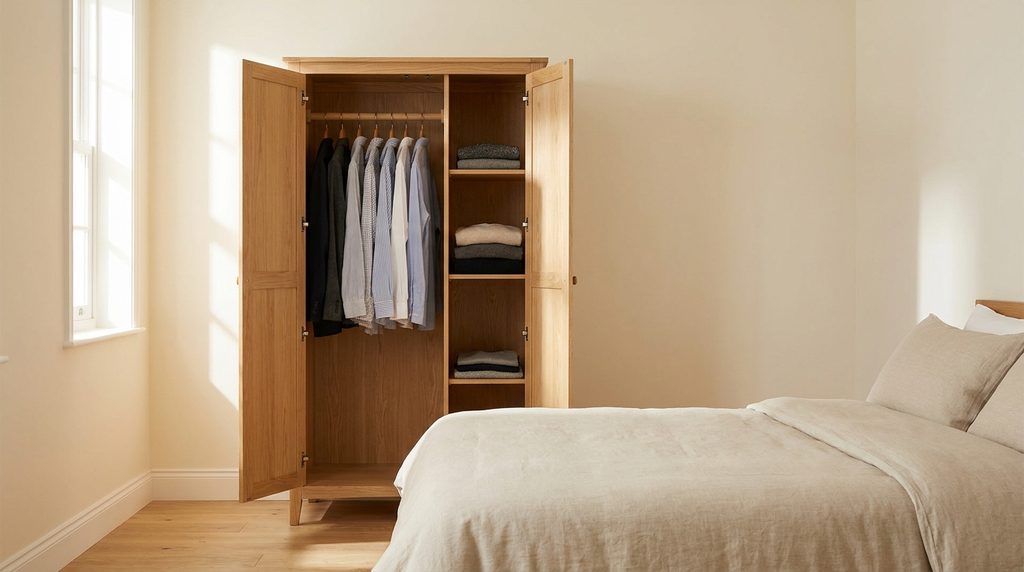
A freestanding wardrobe creates a dedicated clothing cupboard where there is no built-in closet. It can be a better fit than a rack when you prefer doors over visible clothing, but compare the inside as carefully as the exterior. A narrow unit with mostly shelves may not solve a shortage of hanging space.
Check the internal hanging height, the usable rail width and the depth with the doors shut. Very shallow wardrobes may use a forward-facing rail, so garments sit behind one another rather than side by side. Consider whether you will be comfortable moving the front items to reach the back.
Door operation affects the room beyond the wardrobe’s footprint. Hinged doors need space to swing open while you stand nearby. Sliding doors avoid that swing, but only part of the interior is accessible at once. Test which arrangement suits the gap beside your bed rather than choosing by appearance alone.
Before ordering, check the delivery route and assembly clearances too. A unit can fit the finished wall space yet be awkward to assemble beneath a low ceiling. Follow the manufacturer’s installation and anchoring instructions. The U.S. Consumer Product Safety Commission’s Anchor It! guidance explains why securing top-heavy furniture matters. Freestanding does not automatically mean it can safely remain unanchored.
Consider a Wall Rail When Suitable Mounting Is Possible
A wall-mounted rail can create hanging space without a rack base on the floor. It does not remove the depth of the clothes themselves, though. Allow for the full hanger and garment, plus the space needed to reach the rail without leaning over the bed.
Use a system intended for clothing storage and follow its requirements for wall type, fixings, bracket spacing and load. In a rental, check permission before installation. If appropriate mounting is not possible, choose another setup; decorative adhesive hooks are not a substitute for the specified rail supports.
Set the rail at a height you can use comfortably. Leave enough room below your longest garments, and keep everyday clothes reachable without a stool. A second rail above the first is useful only if you can safely access it and both levels have sufficient hanging clearance.
If you want to hide an open rail, a curtain needs its own suitable support and somewhere to gather when open. Plan those clearances before installation. Keep the fabric away from heaters and make sure it does not obstruct a doorway or window.
Complete One Area for Getting Dressed
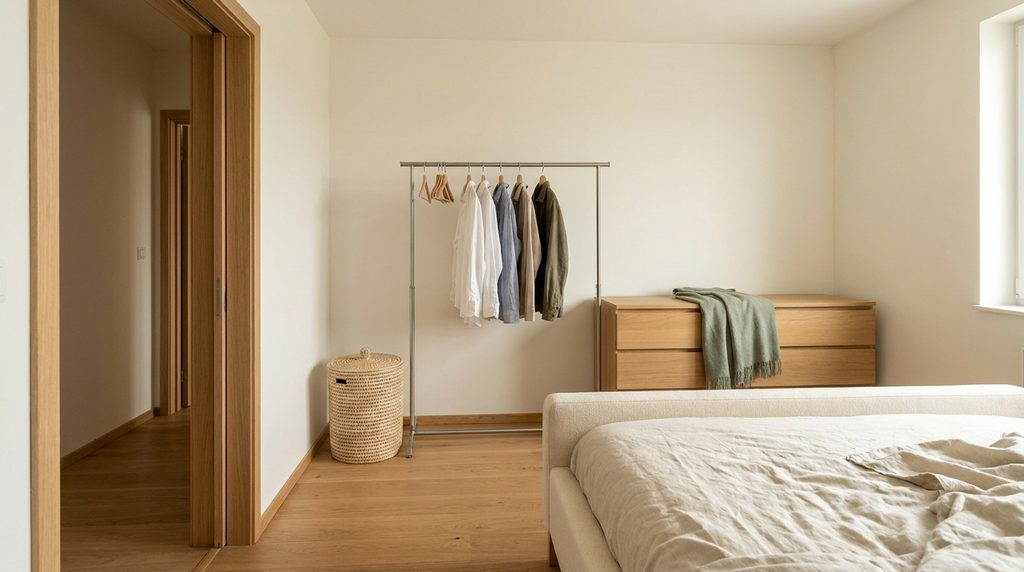
Once hanging storage is settled, put folded clothing nearby. An existing chest of drawers or low cabinet can work alongside the rail; lacking a closet does not mean you have to remove furniture that already serves you. If drawers are missing too, our guide to a small bedroom without a dresser covers shelf bins and practical folded-clothing storage.
For example, imagine a clear wall beside the bedroom entrance. A compact rail could occupy one section, with an existing low cabinet next to it. Shirts and trousers go on the rail, small essentials stay in the cabinet, and a laundry basket sits where it does not interrupt the door swing. This is a layout to test against your room, not a fixed furniture formula.
Give clothing you plan to wear again a limited place separate from clean storage and dirty laundry. One part of the rail or a suitable hook may be enough. Shoes need their own spot too, with enough separation that soles do not touch hanging hems.
Try the arrangement when the laundry is put away, not only when half your clothes are in the wash. If everything becomes difficult to reach, move occasional pieces to another appropriate storage location or reconsider the capacity of the main setup. Adding another basket will not solve an overcrowded hanging rail.
Common Questions
How can I keep clothes covered without a built-in closet?
Choose a wardrobe with doors, a compatible covered rail system, or appropriate garment covers for occasional pieces. Covers should fit without bunching clothes together. Store clothing clean and fully dry, and keep the surrounding area accessible for cleaning.
What if there is no room for a full-size wardrobe?
Compare a smaller rack or a suitable wall rail against the depth of your actual hanging clothes. Keep only everyday pieces in the bedroom if other storage is available. If every option blocks movement, reconsider the layout before buying a narrower unit that may still be awkward to use.
Can I use a clothes rack in a rental without drilling?
Some racks are designed to stand independently, while others require wall attachment. Check the specific assembly instructions before buying. Choose a model that suits both your mounting restrictions and clothing load rather than leaving required anchors unused.
A small bedroom without a closet works better when hanging space, folded storage and laundry all have clear places. Start with one main clothing setup, test it with the clothes you actually wear, and leave enough room to use it comfortably every day.