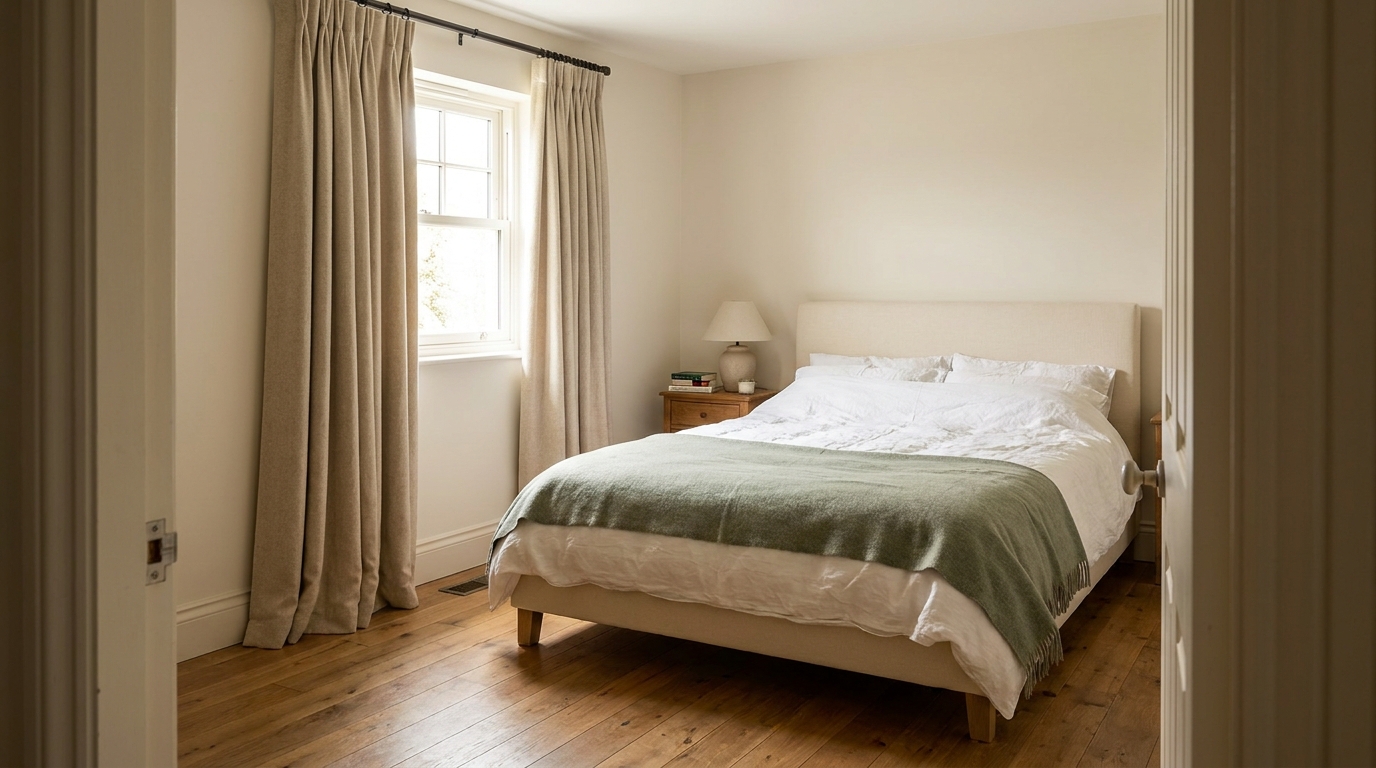
How to Choose Curtains for a Small Bedroom
Choosing curtains for a small bedroom starts with what happens at the window: morning light, an overlooking neighbor, a bedside table in the way, or fabric that catches whenever you make the bed. The right treatment should solve those problems and still be easy to open every day.
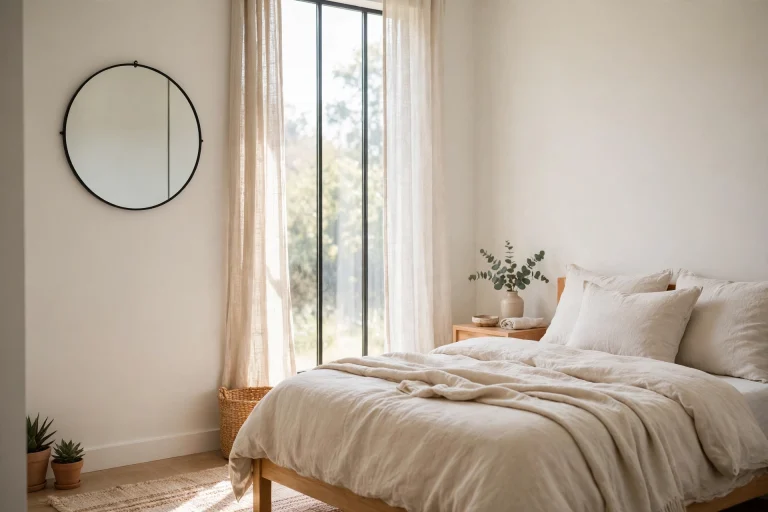
For an unobstructed window, curtains that finish just above the floor are a useful starting point. Where a desk or bed sits underneath, a shorter curtain or a blind may fit the room better. Decide how much privacy and darkness you need first, then work out the dimensions before choosing a color.
Curtains for a Small Bedroom: Privacy and Light Control
Think about the room at two different times: when you are getting dressed with the lights on, and when you want to sleep. A curtain that feels private on a bright afternoon may not provide enough screening after dark.
Sheer fabric softens daylight but should not be your only layer if nighttime privacy matters. Light-filtering fabric lets some daylight through; room-darkening and blackout options reduce more light. Read the individual product description rather than judging performance from the fabric color. A pale curtain can have a blackout backing, while a dark unlined fabric can still transmit light.
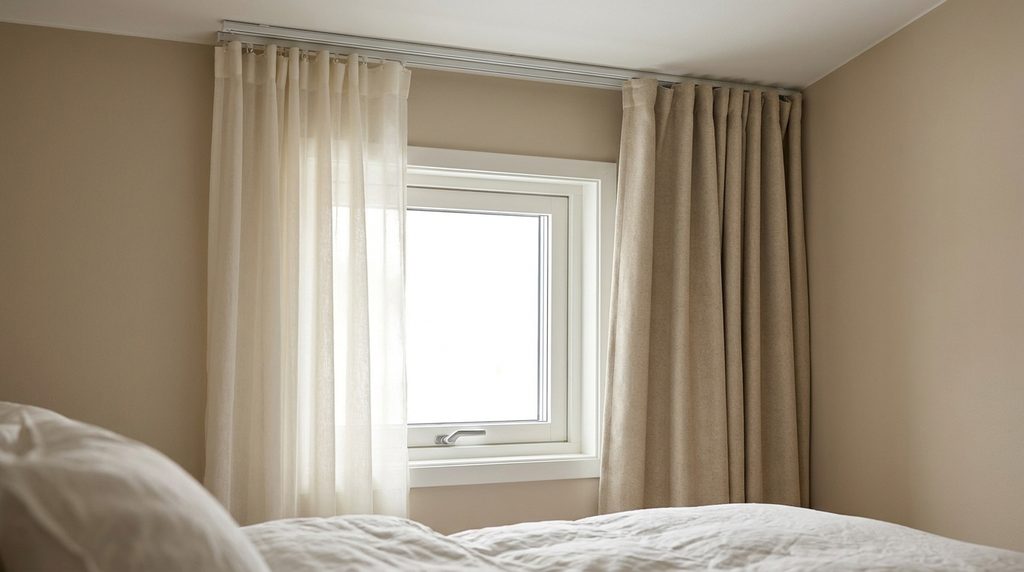
If you need both daytime screening and nighttime darkness, consider two independently operated layers. That could mean a sheer behind a lined curtain, or a suitable blind behind a lighter decorative curtain. Check that the brackets have room for both layers without the fabric brushing the window handle.
An existing blind may already do the practical work. In that case, adding another heavy layer may make the window harder to use without improving your routine. Start with what is already fitted and identify the missing function.
Check Where the Curtains Will Sit When Open
Closed curtains cover the window; open curtains need somewhere to gather. This gathered bundle is often called the stack. In a small bedroom, it may compete with a wardrobe, bedside lamp or the only clear part of the wall.
Look at both sides of the window before deciding how far the pole should extend. More space can help the fabric clear the glass, but extending a pole into a wardrobe door’s path creates another problem. Heavy lined fabric also takes up more room when gathered than a thin panel.
If the window is close to a corner, an uneven arrangement can be more practical than forcing two equal stacks. A single curtain that draws toward the open side is one possibility, provided the chosen track or pole supports that arrangement and the panel covers the full opening when closed.
Stand where you would normally reach to open the curtain. If a lamp or table blocks your hand, adjust the furniture before ordering fabric. Our small bedroom nightstand alternatives can help when the bedside surface is using the window’s working space.
Measure the Pole, Fabric Width and Finished Drop
Use three separate notes: the usable pole or track width, the required fabric width, and the finished drop. The width of the glass alone does not tell you what size curtains to buy.
Measure the fitted pole between its decorative ends, or follow the track supplier’s instructions. Then check the curtain maker’s fullness recommendation: fabric needs extra width to form folds. Confirm whether the advertised size describes one flat panel, a pair, or an already pleated finished width.
A worked example: suppose your usable pole is 160 cm wide and the selected flat-panel curtain specifies twice that width in total fabric. You would need about 320 cm across both panels, such as two 160 cm panels. This illustrates the calculation; it is not a universal specification for every heading style.
For the drop, use the measuring point specified for the curtain heading and hardware. Eyelets and curtains hung from hooks do not necessarily use the same starting point. Measure down to the intended hem, checking more than one position if the floor is uneven. Dunelm’s curtain measuring guide explains the distinction between heading types and fabric fullness.
Keep a photo of the hardware beside your measurements. If a product page is unclear about panel sizes or hooks, ask the seller before ordering. This is easier than discovering that a pair covers only half the window or hangs below the intended hem.
Choose a Length That Works Around Furniture
Floor-length curtains can create a continuous line down a clear wall, but they are not the best fit for every small bedroom. Choose the hem position around the objects that will remain beneath or beside the window.
| Window area | A practical starting point |
|---|---|
| Clear wall and floor underneath | A hem just above the floor, with room for the curtain to move freely. |
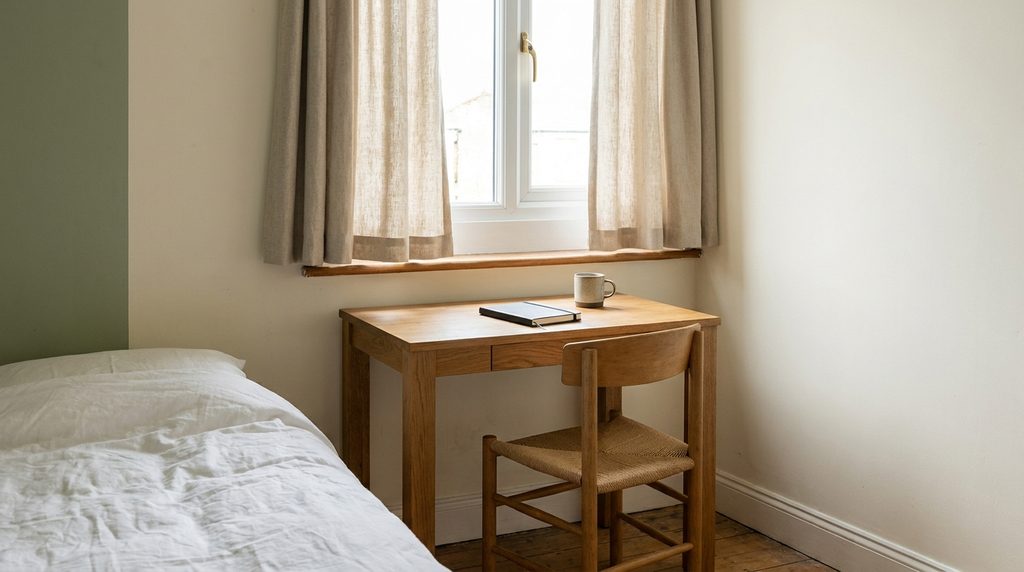
| Desk, chest or headboard beneath the window | A sill-length curtain or suitable blind that clears the furniture. |
| Heater or vent underneath | A treatment that meets the appliance’s clearance requirements and leaves airflow unobstructed. |
Avoid choosing a long curtain simply to hide the gap behind a headboard. Fabric trapped between the bed and wall is awkward to draw, and you still need access to the handle and window. If the bed can move slightly, test that change first; if it cannot, work with the available space.
For a shorter curtain, make the finish deliberate. A hem that clears the sill looks more considered than a ready-made panel stopping at an arbitrary point halfway down the wall. Check coverage from the bed as well as from the doorway, especially if light enters below the hem.
Pooled fabric takes up floor space and must be moved when cleaning. In a room where you pass close to the window, a hem clear of the floor is usually easier to live with. Keep fabric away from heaters and follow the appliance’s stated clearances rather than using a generic curtain-to-heater distance.
Compare Color and Texture in Your Own Room
A color close to the wall creates a quieter transition around the window. A contrasting color gives the window more emphasis. Neither choice is automatically right for a small room; consider whether you want the curtains to blend into the background or become one of the room’s main features.
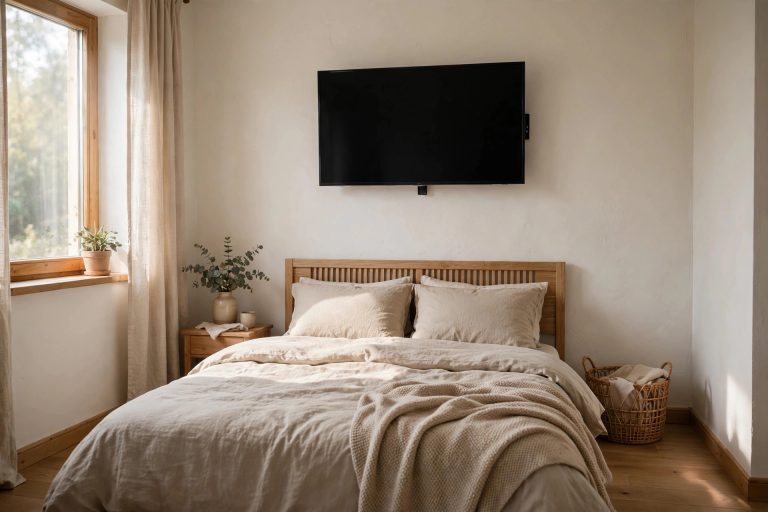
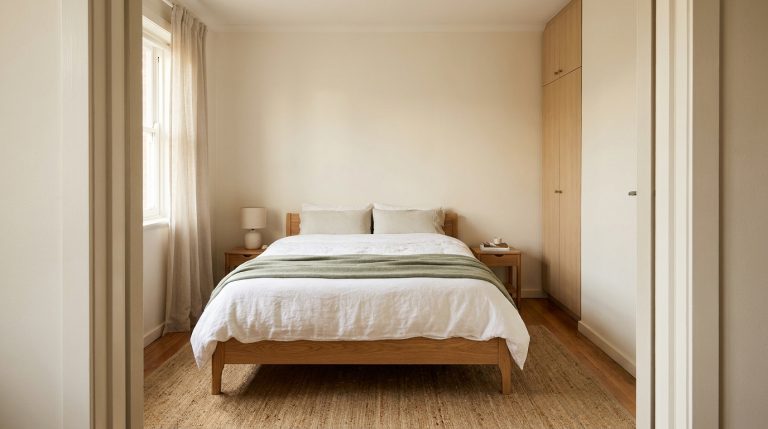
Start with a color already present in the bedding, artwork or rug. For example, warm ivory walls and an oak bed might work with oatmeal fabric, while a muted green from the bedding could become the curtain color. Repeating an existing shade gives the decision a clear connection to the room.
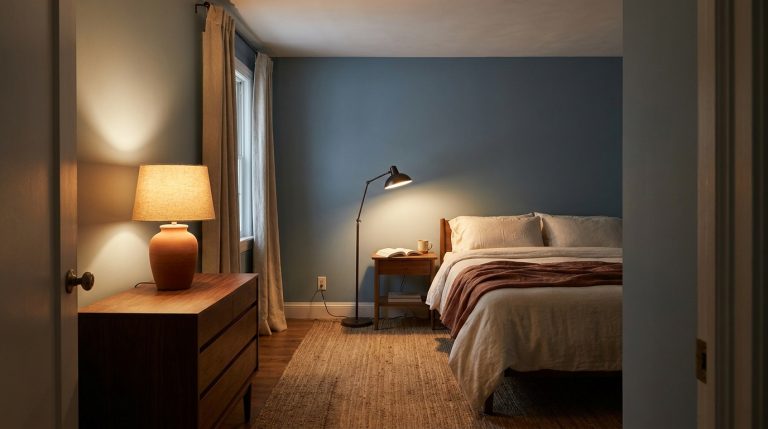
Hold a sample upright beside the window rather than judging it flat on a table. Look at it in daylight and under the bedside lamp. Check its texture from the doorway, too: a weave that looks subtle up close may read as a stronger pattern across a larger area.
If the bedding already has a busy print, try a plain curtain sample first. If the room is mostly solid colors, a restrained stripe or small pattern may add the detail you want. For the rest of the layout, our small bedroom ideas cover how the bed, lighting and storage can work together.
Check the Details Before You Buy
Before ordering, confirm the number of panels in the pack, compatible hardware, fabric weight, lining and care instructions. Include any rings, hooks, brackets or hemming work in the cost. Existing hardware should be suitable for the complete curtain weight, including additional lining.
Choose a care routine you can realistically follow. A curtain that requires professional cleaning is a different commitment from one that can be washed at home. Check the label for shrinkage information and washing instructions before deciding when and how to hem it.
Once fitted, test the curtains during an ordinary day: open them fully, reach the window, make the bed and close them after dark. Check for light at the edges and whether the
Frequently Asked Questions
Should curtains touch the floor in a small bedroom?
For a clear wall and floor underneath, a hem just above the floor is a useful starting point. Where a desk, chest, or headboard sits beneath the window, choose a sill-length curtain or a blind that clears the furniture, and avoid pooled fabric, which takes up floor space.
What color curtains make a small bedroom look bigger?
A color close to the wall creates a quieter transition and helps the window recede. Start with a shade already present in your bedding, artwork, or rug, and hold a sample upright beside the window in both daylight and lamplight before deciding.
How wide should curtains be for a small window?
Measure the usable pole between its decorative ends, then check the curtain maker’s fullness recommendation, since fabric needs extra width to form folds. For example, a 160 cm pole with flat panels specifying double fullness needs about 320 cm of total fabric.
Are blinds better than curtains in a small bedroom?
Where furniture sits under the window, a shorter curtain or a suitable blind often fits better than full-length curtains. For both daytime screening and nighttime darkness, consider two independently operated layers, such as a sheer behind a lined curtain.