15 Small Bedroom Ideas for a Calm, Comfortable Space
Small bedroom ideas work best when they solve the things that make the room awkward every day. Perhaps a wardrobe door hits the bed, your bedside table collects everything, or there is nowhere to put tomorrow’s clothes. Start with those problems before choosing another cushion or storage basket.
A comfortable bedroom needs room for sleeping, getting dressed, and putting things away. It does not need every piece of furniture shown in a matching bedroom set. These 15 ideas will help you work out what deserves space and what you can simplify.
1. Plan Around Your Morning and Evening Routine
Walk through what you actually do in the room. Where do you stand to get dressed? Which side of the bed do you use? Where do your glasses, phone, and water go at night? Notice where you turn sideways, move a chair, or leave things on the floor.
Sketch the room with its doors, windows, outlets, and fixed furniture. Mark the routes you need to keep clear. A layout that looks balanced in a photograph can still be frustrating if you cannot reach your clothes without walking around the bed twice.
2. Measure the Whole Bed Frame Before Buying
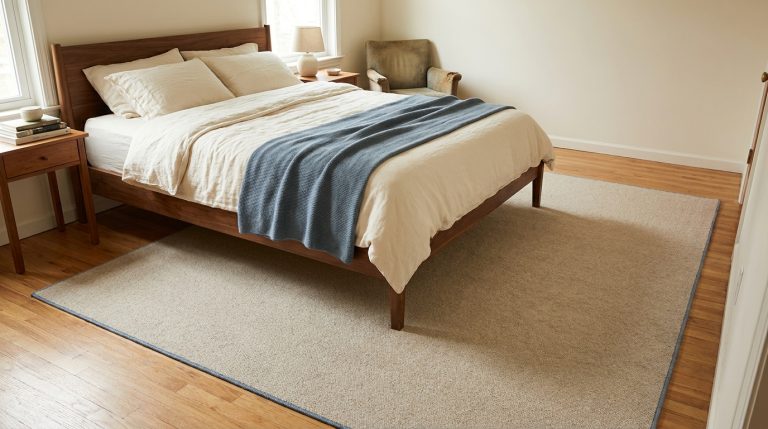
Measure the outside of the whole bed frame, not just the mattress. Upholstered rails, a projecting footboard and a deep headboard can occupy space you expected to use for moving around the bed.
Consider a hypothetical room that is 300 cm wide, with a bed centered between two otherwise clear walls. A 174 cm-wide frame leaves (300 − 174) ÷ 2 = 63 cm on each side. A 158 cm-wide frame leaves 71 cm. If both frames take the same 150 cm-wide mattress, the slimmer frame gives back 8 cm on each side without changing mattress size.
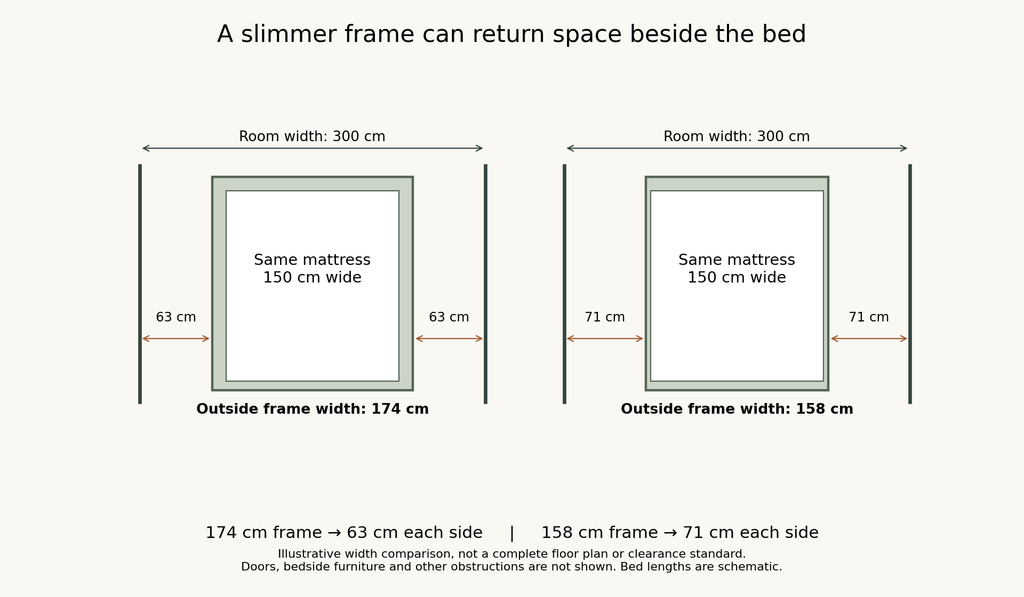
This is a width calculation, not a complete room plan or a recommended minimum clearance. Bedside furniture, a radiator, skirting, open drawers and the entrance door can reduce the usable space. Measure at the narrowest point and allow for the way you actually move, including any mobility equipment you use.
Mark the frame’s complete footprint on the floor. Open nearby doors and drawers, walk around it, and try the movement needed to change the bedding. Keep your sleeping needs central: compare less bulky frames before assuming that you need a smaller mattress.
3. Choose Bed Placement Before Adding Storage
Try positioning the bed against the wall that leaves the most useful access to the wardrobe and doorway. In a shared bedroom, access from both sides may matter more than fitting in a large chest of drawers.
For one person, placing one side nearer a wall can free up usable floor space, but consider how you will change the sheets. Keep windows and necessary exits accessible, and avoid obstructing heaters or vents. Test the arrangement with your existing bed before buying furniture to fill the remaining gaps.
4. Use Bedside Furniture That Fits Your Essentials
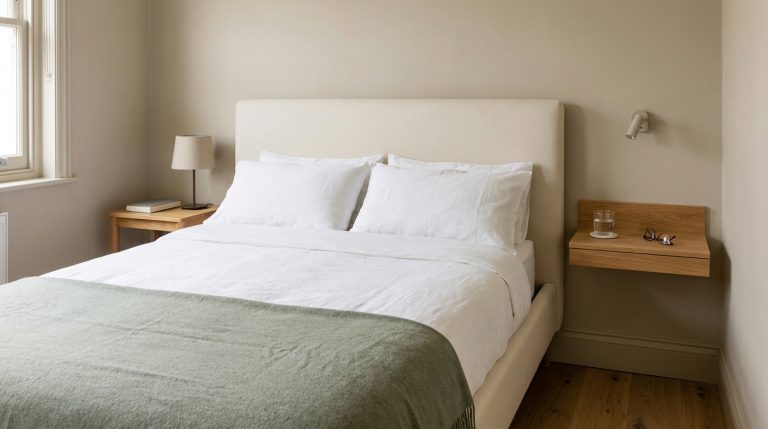
Make a short list of what you genuinely use beside the bed. A lamp, a book, and a glass of water may need only a narrow table. If you keep medication, charging cables, or several small items nearby, a drawer can be more useful than an open shelf.
The two sides of a double bed do not have to match. One person might need a small drawer unit while the other needs a slim ledge. Check that you can reach the surface comfortably and that furniture corners do not intrude into your route around the bed.
If a standard bedside cabinet feels too bulky, explore these small bedroom nightstand alternatives, with options for narrow gaps, clear floors and setups that do not require drilling.
5. Match Under-Bed Storage to the Available Access
Under-bed storage is useful only when you can get into it. Pull-out drawers need clear space beside the bed; loose boxes can become inconvenient if you must move furniture every time you use them.
Measure the clearance and choose containers that slide out from an accessible side. Store spare bedding or seasonal clothing here, leaving daily essentials somewhere easier to reach. If considering a lift-up storage bed, check the opening mechanism, manufacturer’s instructions, and whether you can operate it comfortably. Avoid buying extra storage simply to keep things you no longer need.

6. Give Wardrobe Doors and Drawers Room to Open
An empty-looking gap is not necessarily wasted space. It may be the standing area you need to open a drawer, browse hanging clothes, or get dressed.
Open every wardrobe door and drawer fully before deciding where to put a bedside table or laundry basket. Sliding doors can help in some layouts, though they restrict how much of the wardrobe you can see at once. If replacing a wardrobe, compare its usable interior and door operation as carefully as its overall width.
Test two separate spaces: the area the door or drawer sweeps through, and the place where you stand to use it. A drawer that technically opens may still be awkward if it presses against your legs. Mark its fully open position with tape, then stand where you would normally reach inside. If the two spaces conflict, rearrange the furniture or change which storage opens into that gap.
7. Improve the Wardrobe Interior Before Adding Another Unit
A wardrobe can look full while still containing awkward unused space. Separate long hanging items from shorter clothes and check whether shelves are spaced too far apart for what they hold.
A shelf divider, small drawer insert, or suitable additional rail may help you use the existing interior. Measure first and respect the fittings’ weight limits. Put everyday clothing within easy reach, with less-used items higher up. This can remove the need for another dresser and preserve room for moving around the bed.
If a chest of drawers will not fit, explore these ways to organize a small bedroom without a dresser.

8. Consolidate Small Storage Pieces
Several baskets, a narrow bookcase, and two little drawer units can make a small bedroom feel busier without storing things efficiently. Group your belongings by type and see whether one appropriately sized closed unit could replace several scattered pieces.
Use open shelves selectively for things you enjoy seeing, rather than every spare cable and toiletry. Secure furniture appropriately: the U.S. Consumer Product Safety Commission’s Anchor It! guidance recommends anchoring furniture with drawers, doors, and shelves to help prevent tip-overs. Follow the furniture and anchoring hardware instructions for your wall type.
9. Give Worn Clothes a Specific Landing Place
Clothes that are not ready for the laundry often end up on a chair, then spread to the bed. Decide where those clothes will go before introducing more decorative storage.
A few suitable hooks or a small section of hanging space may be enough. Give dirty laundry its own accessible container, and check that the basket does not block a wardrobe door. If a bedroom chair exists only to hold clothing, try removing it for a week and using the designated spot instead.
If you are still deciding where the hamper should go, our guide to placing a laundry basket in a small bedroom compares accessible spots and the space needed to fill, open and carry it.
10. Move Reading Light Off a Crowded Bedside Surface
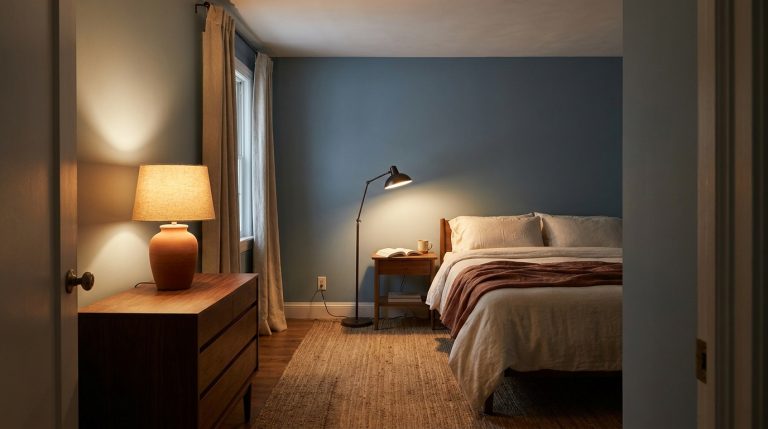
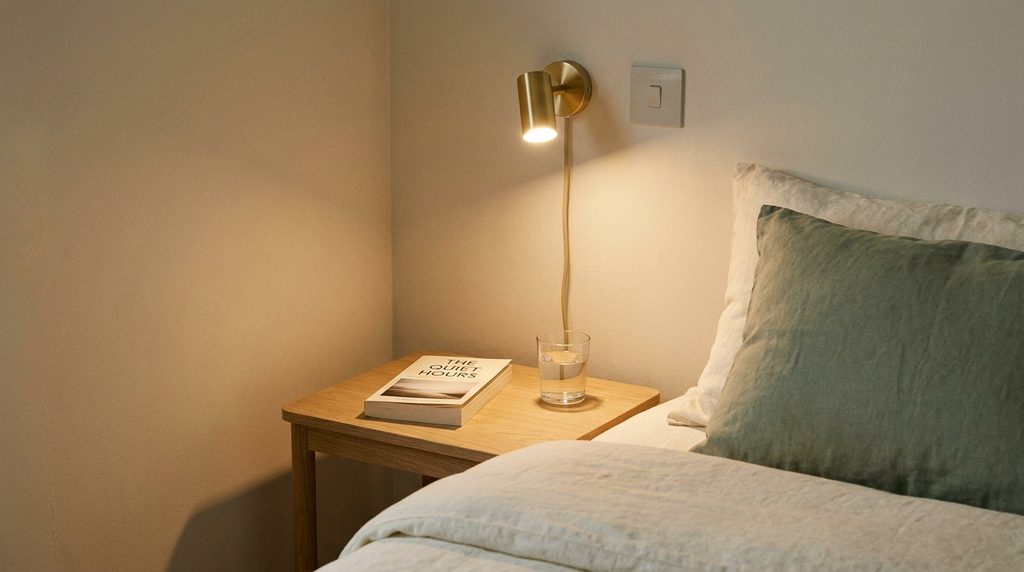
A wall-mounted reading light can free up bedside space, but position it for the way you sit and read. Check the reach, switch location, and direction of the light before fixing anything to the wall.
In a rental, a compact table lamp may be simpler than making holes. Plug-in wall lights still need a suitable mounting method and neatly routed cords. Keep cords out of walking routes. For a shared room, independently controlled lights let one person read without brightly lighting the entire bedroom.
11. Choose Curtains for Privacy and Darkness
Choose bedroom window coverings around privacy, daylight, and your preferred sleeping conditions. A sheer curtain may soften daytime light but will not give the same darkness as an opaque lining or blackout blind.
Check how much wall space the curtains occupy when open. In a narrow room, a blind can leave more space beside the window for furniture, provided it remains accessible. Keep fabric clear of heaters and follow the window covering manufacturer’s safety instructions. Choose a treatment you can open and close without climbing over the bed.
For help choosing fabric and getting the fit right, see our guide to choosing curtains for a small bedroom, including panel width, finished length and options for windows above furniture.
12. Repeat a Small Number of Colors and Materials
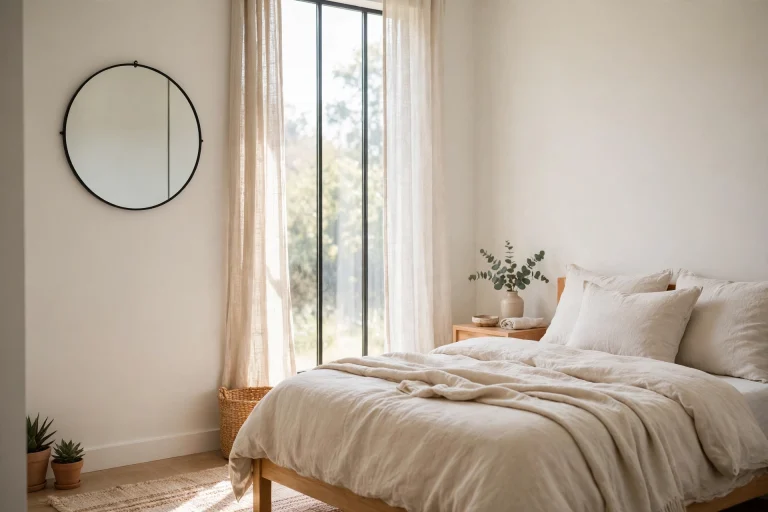
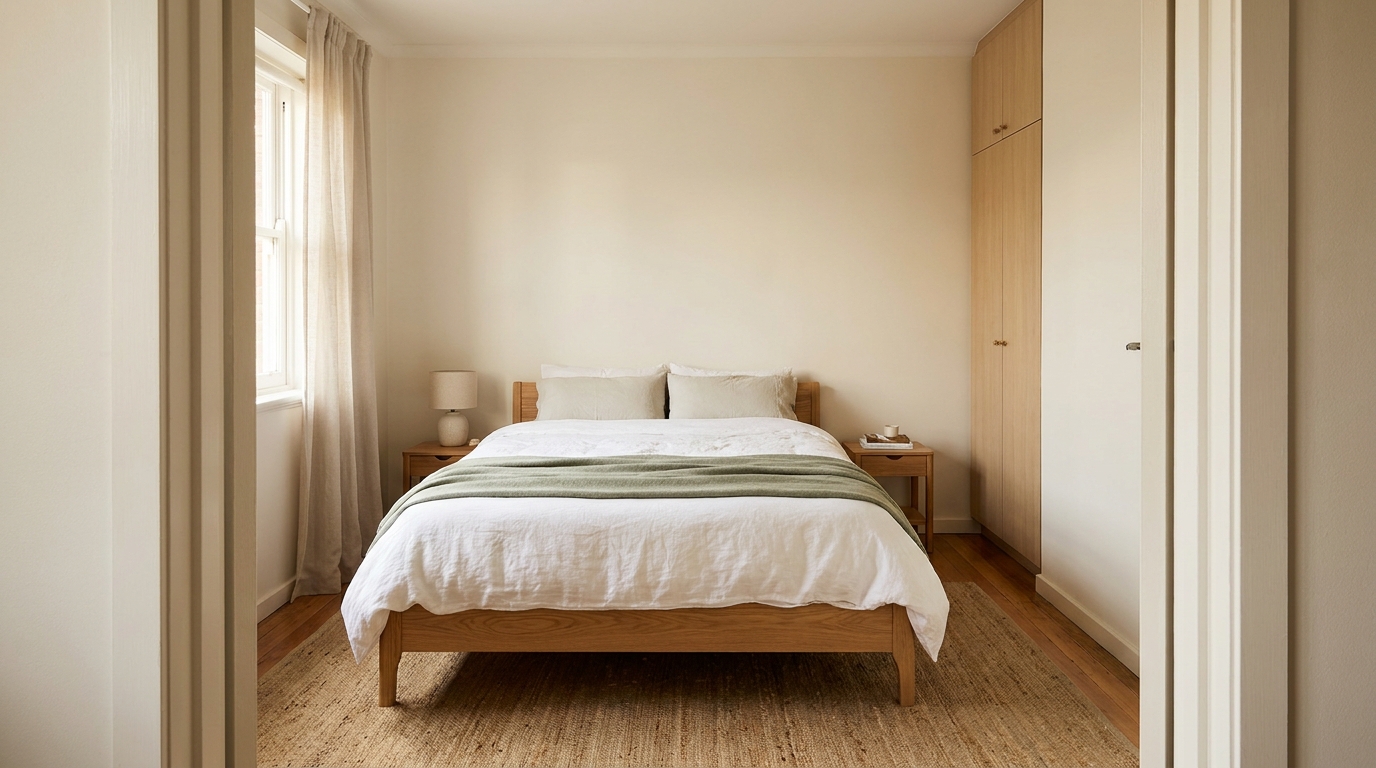
A limited palette can make separate pieces feel more connected. You might combine warm off-white walls, muted green bedding, and light wood, or use a deeper wall color with simpler neutral textiles.
Small bedroom ideas do not have to mean an all-white room. Test paint samples in daylight and with your evening lighting before committing. Repeat one or two colors across the bedding, curtains, or artwork, and let texture provide variety. You can create a coherent room without replacing every item you already own.
13. Keep the Bedding Easy to Use
The bed is usually the largest visible surface, so its bedding has a strong effect on how the room feels. Start with bedding that fits the mattress and suits your comfort, then add only the layers you actually use.
A duvet or coverlet, sleeping pillows, and perhaps one throw may be enough. Extra decorative cushions need somewhere to go at night; if that place is the floor, reduce them. A bed that takes a minute to straighten is easier to keep inviting than one that needs daily rearranging.
If you are choosing the main bed covering, compare a duvet vs comforter around your laundry routine, preferred warmth and the amount of bedding you want to manage.
14. Place a Mirror Where It Serves a Purpose
A mirror near your clothes can make getting dressed easier and may reflect daylight or a view you enjoy. Check the reflection from the doorway and bed before choosing its position. Reflecting a cluttered shelf can make that clutter more noticeable.
Consider a securely fitted wardrobe mirror if a separate floor mirror would occupy useful space. Use the correct fixing method for the mirror’s weight and your wall. The goal is a helpful dressing spot, not a mirror added simply because every small-room checklist mentions one.
15. Make Any Work Corner Easy to Close Down
If your bedroom also holds a desk, define what belongs there. Choose a surface deep enough for your actual equipment and a chair you can use comfortably, then check that the chair can move without blocking the bed or wardrobe.
Keep work supplies together in a drawer or container so you can clear the surface at the end of the day. If you rarely work in the bedroom, consider whether the desk deserves the space. For a sitting area elsewhere in your home, our small living room ideas offer more ways to plan furniture around everyday use.
Start With the One Change You Will Notice Every Day
Before buying anything, choose the problem that bothers you most: an obstructed wardrobe, a crowded bedside table, or clothing with no home. Make one change and live with it for a few days.
The most useful small bedroom ideas help you move, dress, rest, and tidy up with less effort. Once those basics work, finishing touches become easier to choose—and you will have a clearer idea of what the room actually needs.
Frequently Asked Questions
Where is the best place to put a bed in a small bedroom?
Start with the wall that leaves the most useful access to the wardrobe and doorway, and test the arrangement with your existing bed before buying anything to fill the gaps. In a shared bedroom, access from both sides may matter more than fitting in a large chest of drawers. For one person, placing one side nearer a wall can free up usable floor space, but check that you can still change the sheets comfortably. Always measure the outside of the whole bed frame, not just the mattress, since upholstered rails and a deep headboard can take space you expected to use for moving around the bed.
What size bed works best in a small bedroom?
Compare slimmer frames before assuming you need a smaller mattress. In the example from this guide, a 300 cm-wide room with a 174 cm-wide frame leaves 63 cm on each side, while a 158 cm-wide frame leaves 71 cm on each side with the same 150 cm mattress, giving back 8 cm per side without changing mattress size. Mark the frame’s complete footprint on the floor, open nearby doors and drawers, walk around it, and try the movement needed to change the bedding. Keep your sleeping needs central and measure at the narrowest point.
How can I add storage to a small bedroom without a dresser?
Improve the wardrobe interior first: separate long hanging items from shorter clothes, check whether shelves are spaced too far apart, and add a shelf divider, small drawer insert, or extra rail where measurements allow. Under-bed storage helps only when you can reach it, so measure the clearance and choose containers that slide out from an accessible side, storing spare bedding or seasonal clothing there. Several scattered baskets and small units often store less than one appropriately sized closed unit, so consolidate before buying more.
How do I make a small bedroom look bigger?
Repeat a small number of colors and materials so separate pieces feel connected: warm off-white walls with muted green bedding and light wood, or a deeper wall color with simpler neutral textiles, testing paint samples in daylight and evening light first. Place a mirror where it serves a purpose, such as near your clothes for getting dressed, and check the reflection from the doorway and bed before fixing it. Move reading light off a crowded bedside surface with a wall-mounted light, and choose window coverings for privacy and darkness without occupying wall space the room needs.
Can I fit a desk in a small bedroom?
Yes, if you define what belongs there and keep the work corner easy to close down. Choose a surface deep enough for your actual equipment and a chair you can use comfortably, then check that the chair moves without blocking the bed or wardrobe. Keep work supplies together in a drawer or container so you can clear the surface at the end of the day. If you rarely work in the bedroom, consider whether the desk deserves the space at all.