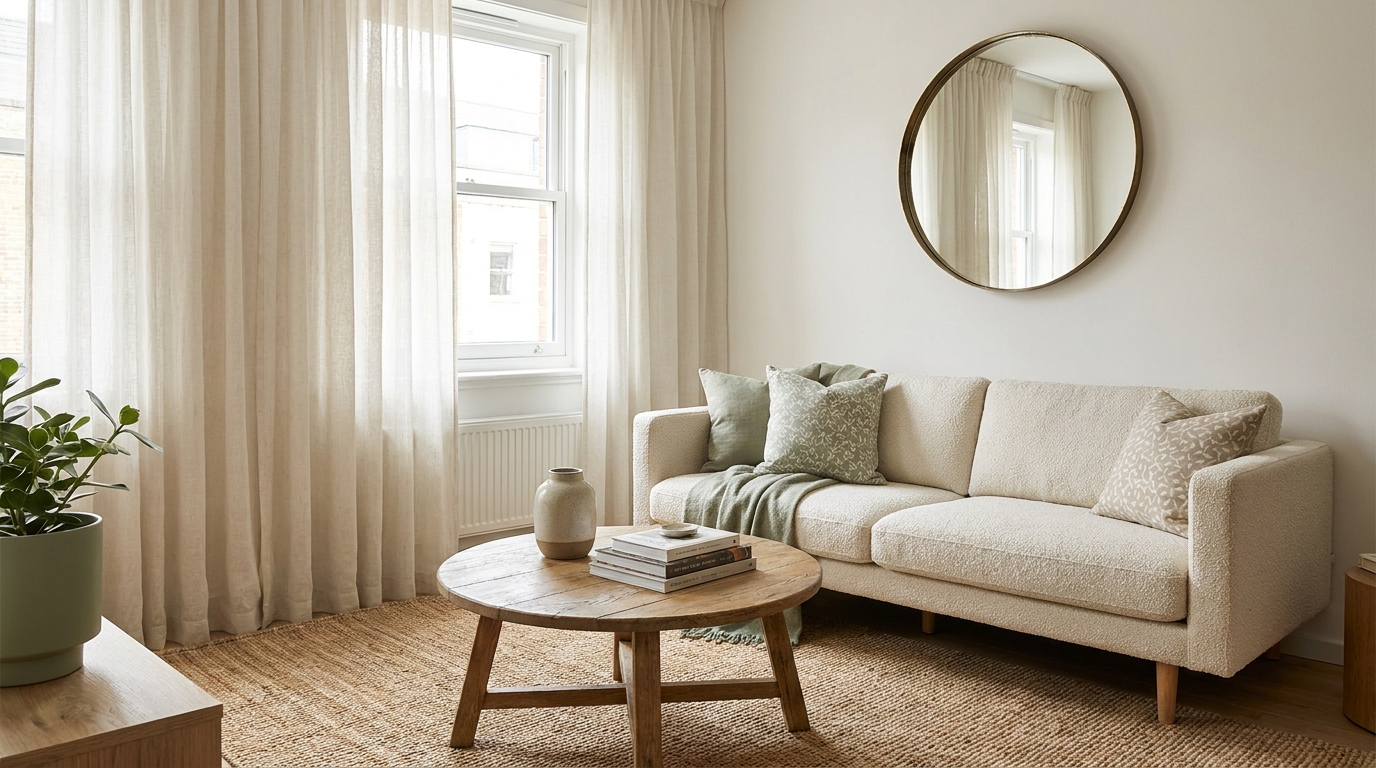
17 Small Living Room Ideas That Make Your Space Feel Bigger
A small living room can feel crowded even when it contains very little furniture. Sometimes the problem is a coffee table that interrupts the walkway, curtains that cover most of the window, or several small storage pieces competing for attention.
Before buying anything, look at how you move through the room and where your eye lands. The most useful small living room ideas make everyday life easier while giving the space a little more breathing room.
You do not need an all-white room or a tiny sofa to get there. These 17 ideas offer practical ways to work with the space you already have, whether it is a narrow apartment lounge or a compact family living room.
1. Plan the Main Walkway Before Placing Furniture
Start with the route you use most: from the doorway to the sofa, through to the kitchen, or across to a balcony. That route should feel obvious and comfortable, without requiring you to turn sideways around a table.
Use painter’s tape to mark furniture footprints on the floor. Walk through the layout while carrying a laundry basket. If an arrangement only works when nobody is moving, adjust it before committing to it.
2. Choose a Sofa by Its Dimensions, Not Its Label
A sofa described as “apartment size” is not automatically right for your room. Compare its total width and depth with the usable seating space. Thick arms and an oversized back can occupy precious floor area without giving you much more room to sit.
A slim-arm sofa may provide the seating you need in a smaller footprint. Check comfort as well as measurements: a shallow seat is useful only if you enjoy sitting on it.
3. Let Some Floor Show Beneath the Furniture
A sofa or armchair on visible legs can make a compact seating area look less visually heavy. The exposed floor helps your eye follow the room beneath the furniture instead of stopping at a solid upholstered base.
You do not need raised legs on every piece. Pairing a legged sofa with a closed storage cabinet can give you both an open appearance and somewhere to hide everyday clutter.
4. Use One Rug to Connect the Seating Area
A tiny rug floating between the sofa and chairs can make the arrangement look disconnected. Try a rug large enough for at least the front legs of the main seating pieces to rest on it.
Measure around door swings, vents, and the room’s edges before choosing a size. In a combined living and dining space, the rug can define the lounge without adding another physical divider.
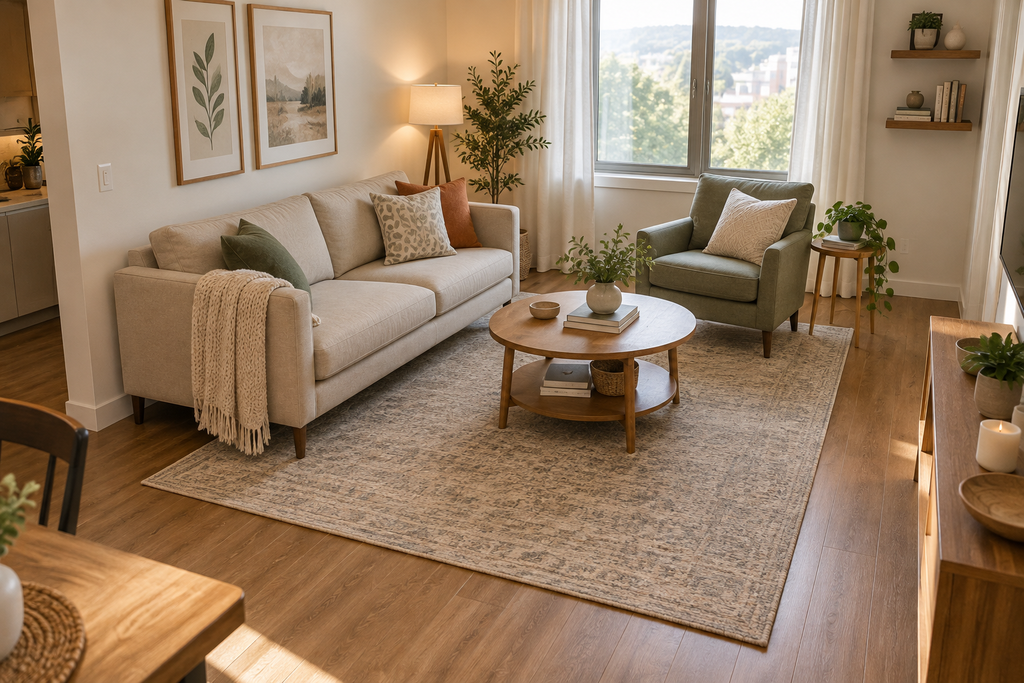
5. Keep the Largest Surfaces in a Related Color Palette
For a calm starting point, choose wall, curtain, and sofa colors that sit comfortably together. Warm ivory, oatmeal, muted olive, and natural wood can form one palette; soft gray, dusty blue, and charcoal can form another.
The aim is continuity, rather than making every surface identical. Add contrast through smaller details, such as a dark lamp, a patterned cushion, or a picture frame. Test paint samples in your actual daylight and evening lighting.
6. Give Curtains Room to Open Fully
Curtains can frame a window beautifully, but bulky panels covering the glass may make the room feel dim. Where wall space allows, extend the curtain rod beyond the window so the fabric can stack mostly beside it when open.
Hanging curtains above the window frame can also draw attention upward. Choose a length that just meets the floor instead of pooling into a narrow walkway, and keep fabric clear of heaters.
7. Place a Mirror Where the Reflection Helps
Before hanging a mirror, check what it will reflect from the sofa and the doorway. A window, an attractive lamp, or a quiet corner is usually more useful than an overflowing shelf or a tangle of cables.
A mirror on a wall beside a window may catch a pleasant view without creating uncomfortable glare. Use fixings suitable for the wall and the mirror’s weight, especially for a large piece.
8. Try a Round Coffee Table in a Tight Seating Area
A round coffee table removes the projecting corners of a rectangular design, which can make movement around a compact seating arrangement feel easier. It works particularly well where people approach the sofa from more than one direction.
Check the base as carefully as the tabletop. Wide, splayed legs may still get in the way. Leave enough space to stand up comfortably while keeping the surface within easy reach.
9. Replace the Coffee Table When It Does Not Fit Your Routine
Some small living rooms work better without a central table. A side table beside the sofa may be enough for a drink and a book, leaving the middle of the room available for play, stretching, or simply walking through.
Nesting tables offer another option: bring out the extra surface when someone visits, then tuck it away afterward. Choose the arrangement around what you actually do in the room.
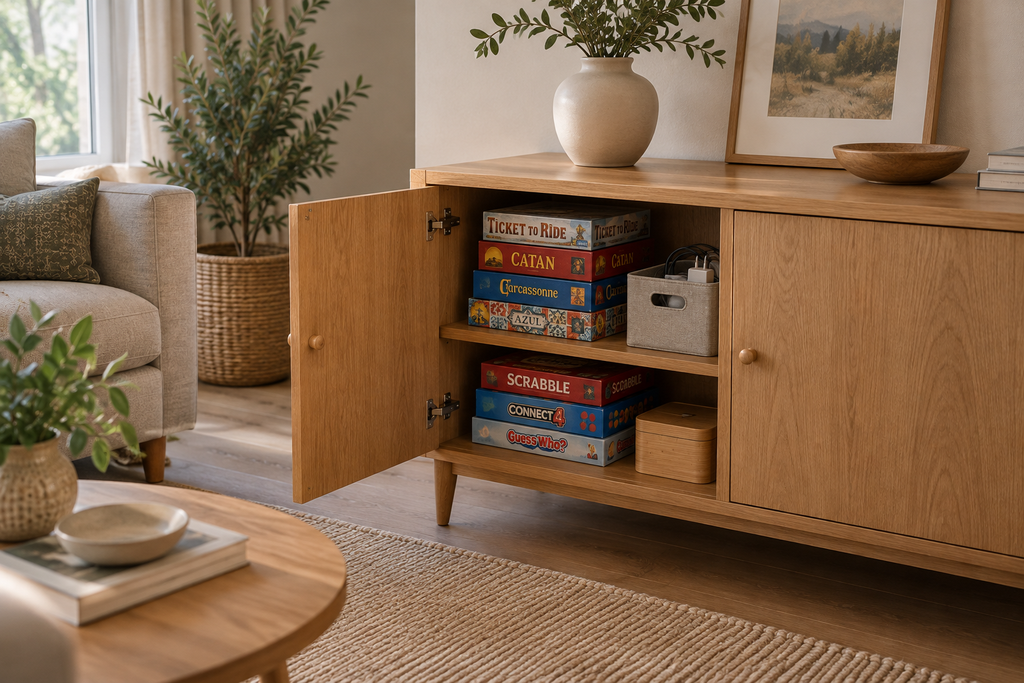
10. Use Closed Storage for the Untidy Essentials
Remotes, chargers, games, and spare cables are useful, but they do not all need to stay on display. A cabinet with doors can make a room look calmer without asking you to own less than you need.
Give each category a place inside. A small tray for remotes and a box for charging accessories are easier to maintain than one deep drawer containing everything. Reserve open shelves for things you enjoy looking at.
11. Choose Shallow Storage Where Floor Space Is Tight
Depth matters as much as width. A deep cabinet can pinch a walkway even when it fits neatly against the wall. Compare shallower options, then check whether your books, baskets, or electronics will actually fit inside.
A wall-mounted cabinet may leave more floor visible, but it still needs appropriate support. Keep access to sockets and any ventilation required by electronics in mind when planning its position.
12. Make One Wall the Main Focal Point
In a small room, a television, busy gallery wall, bold shelving display, and oversized clock can all compete for attention. Choose one main focal point and let the surrounding walls feel quieter.
For example, place a large artwork above the sofa and keep the adjacent wall simple. If the television is the focus, a restrained media cabinet and neatly managed cables can help that area feel deliberate.
13. Bring Light to More Than One Part of the Room
A single ceiling light may leave the corners feeling disconnected from the seating area. Try combining general overhead light with a reading lamp or a small table lamp near the sofa.
Choose the lamp’s footprint carefully. A compact base or a wall light can be useful where a large floor lamp would block movement. Position shades so the light feels comfortable at seated eye level rather than shining directly into your face.
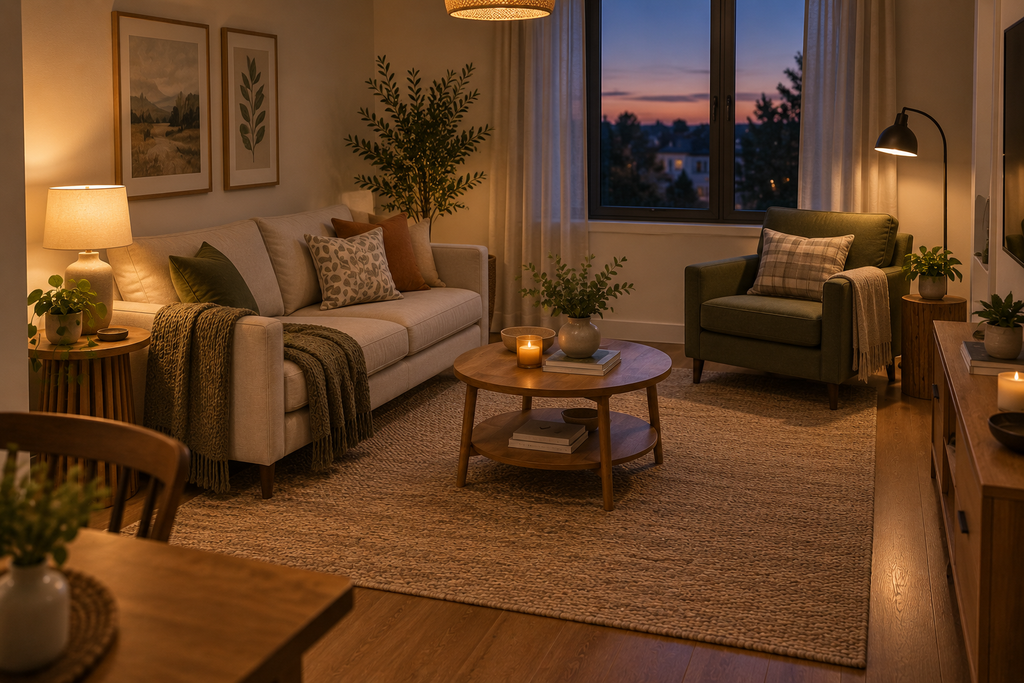
14. Turn an Awkward Corner into One Useful Spot
An unused corner does not always need another storage unit. It might become a reading spot with a compact chair and a light, or a simple plant corner that softens the room.
Give it one clear purpose. Adding a chair, shelf, basket, side table, and several plants to the same small corner can quickly make it feel congested. Leave enough room for the furniture to be used comfortably.
15. Add Flexible Seating Instead of Permanent Bulk
If you only need extra seats occasionally, a second large sofa may take up more space than it earns. Consider a lightweight accent chair, a sturdy stool designed for seating, or a pouf that can move easily.
Think about where the extra seat will live between visits. A flexible piece is only helpful if its everyday parking spot does not obstruct a door, cabinet, or walkway.
16. Edit the Display, Then Add Texture
Instead of covering every surface with small decorations, choose a few pieces you can appreciate from across the room. A ceramic bowl, a framed print, and a branch in a vase may be enough for one display area.
Bring warmth through materials: a woven cushion, a linen curtain, a wool throw, or a wooden table. Texture gives the room interest without requiring lots of separate objects. Leave some surfaces partly empty for daily use.
17. Try the Layout Before Buying More
Live with your revised arrangement for a few days. Open the drawers, stretch out on the sofa, watch television, and notice where you naturally put your mug or phone.
Keep a short list of specific problems. “Nowhere to put a drink beside the armchair” is a useful reason to buy a small table. “The room still needs something” is a reason to pause and look again. The best finishing piece solves a real gap.
Where to Start in Your Own Living Room
Choose the change that addresses your biggest frustration. If walking through the room is awkward, start with the layout. If surfaces always look busy, sort the storage. If the room feels dull, review the curtains and lighting before adding more furniture.
Then make one change at a time. A small living room does not need to look empty to feel spacious. It needs furniture that fits, a comfortable route through it, and enough room for the way you live.