Where to Put a Christmas Tree in a Small Living Room
If your living room is under 150 square feet, a Christmas tree can feel like a dare. It looks perfectly reasonable in the store, then swallows your whole sofa the moment you get it home. Here is the part most guides skip: placement matters more than size. A well-placed slim tree takes up less floor space than a laundry basket, while a badly placed tree can block your walkway no matter how small it is.
This guide ranks the five best spots for a Christmas tree in a small living room by actual footprint in square feet. Run the 10-minute tape test at the end before you buy anything, and you will know exactly which spot fits your room.
How Much Floor Space a Christmas Tree Really Takes
Stop thinking in tree height and start thinking in footprint. Height is what the box advertises; footprint is what your room feels. Here are the real numbers for a standard 7-foot tree:
- Full tree: 48 to 60 inches across at the base, roughly 14 to 20 square feet. This is the one that eats small rooms.
- Slim tree: 30 to 36 inches across, roughly 5 to 7 square feet. The sweet spot for most small living rooms.
- Pencil tree: 20 to 24 inches across, roughly 2 to 3 square feet. Less than a laundry basket.
- Half tree (flat back against the wall): about 36 inches wide and 24 inches deep, roughly 6 square feet, with only 3 square feet projecting into the room.
- Wall-mounted tree: zero square feet of floor space.
Two more numbers before you shop. First, ceiling height minus 12 inches is your maximum tree height, which leaves room for the topper and a little breathing space. An 8-foot ceiling means a 6.5 to 7-foot tree at most. Second, keep the tree at least 3 feet from any heat source: fireplace, radiator, or heating vent. That is the National Fire Protection Association guideline, and it rules out more spots than most people expect.

The Corner Test: Two Sight Lines Decide the Spot
Here is the fastest way to pick a spot. Stand in your front doorway and look into the living room. Now sit on your sofa and look around. The corner you can see clearly from both positions is your tree corner. It passes what designers call the sight-line test: the tree reads as decoration from the two places you spend the most time looking, instead of lurking behind furniture where it just takes up space.
Corners win for a second reason. A tree tucked into a corner is braced by two walls, so it feels anchored rather than plonked in the middle of traffic. Every spot below is really a variation on this idea: find the corner your room already wastes, and give it to the tree.
Spot 1: The Front Corner by the Window
Footprint: 3 to 7 square feet, depending on tree type.
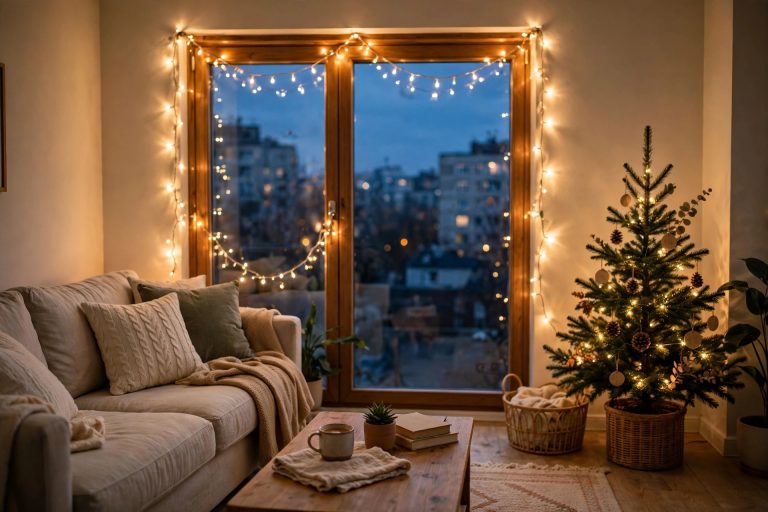
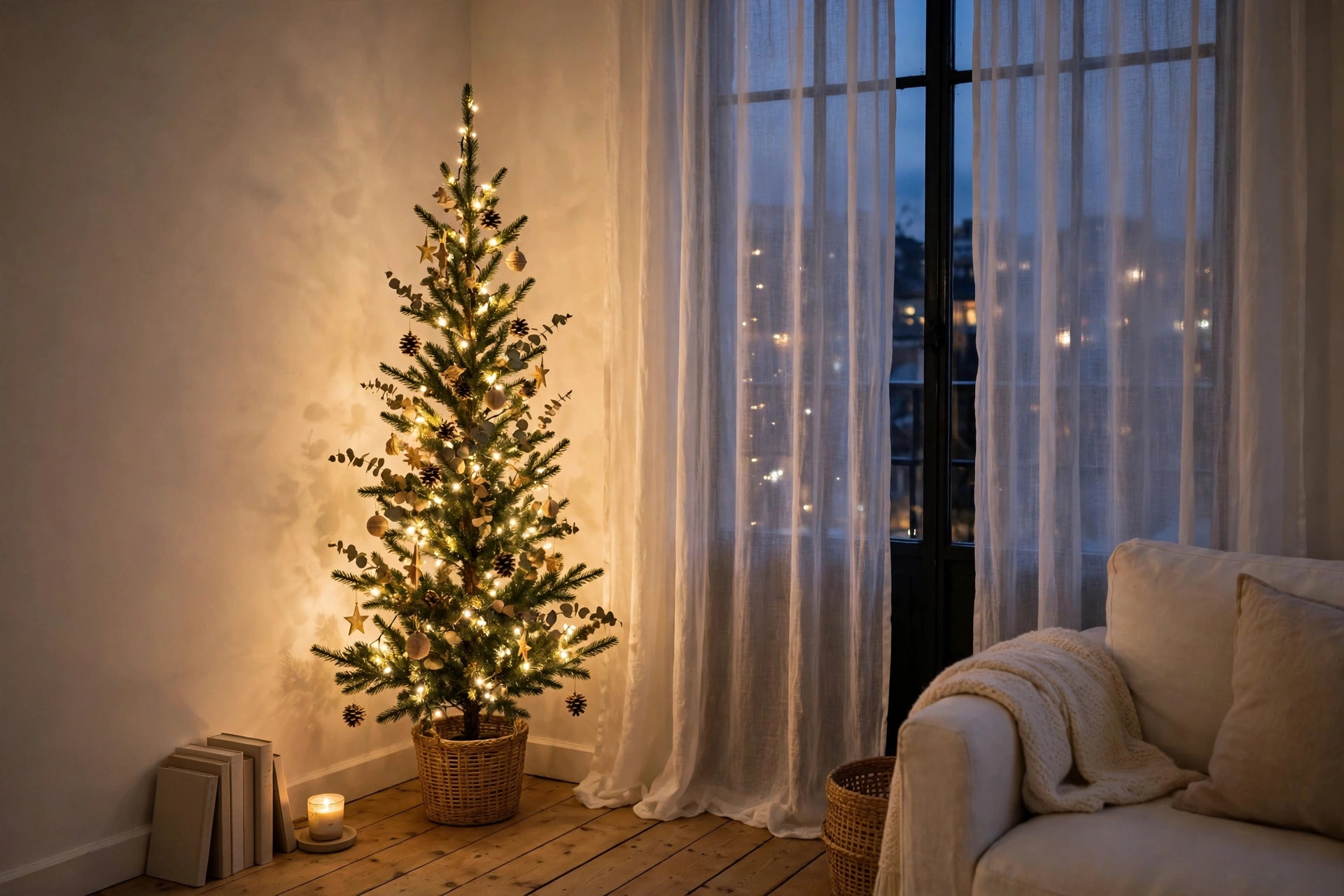
The corner between your window wall and the front wall is usually dead space. Nothing else wants to live there: it is too far from outlets for lamps, too cramped for a chair, and the window makes one wall unusable for shelving. A slim or pencil tree fits a 24 to 30-inch corner perfectly.
Check two things. First, the 3-foot heat rule: if your radiator sits under the window, this spot is out, full stop. Second, curtain clearance: keep the branches 6 inches clear of curtain fabric so the tree does not snag or crush them every time the curtains move. If your curtains are floor-length and the corner is tight, swap to sill-length panels for December or tie the panels back on the window side.
Spot 2: Beside the TV Console
Footprint: 2 to 4 square feet.
Most TV consoles leave an awkward 18 to 24-inch gap between the console and the side wall, a strip too narrow for furniture but perfect for a pencil tree. This spot works beautifully in rooms where the front corner is taken by a radiator.
Two placement rules here. Put the tree slightly behind the plane of the TV screen, not beside it, so the lights never reflect on the screen during movie night. And keep it on the far side from your main walkway. If the console sits against the long wall, the tree goes on the end farthest from the door swing.
Spot 3: Behind the Sofa
Footprint: 2 to 3 square feet.
If your sofa floats even a foot off the wall, the strip behind it is a tree spot hiding in plain sight. This works best when the back of the sofa faces the front door or the dining area, because then the tree rises above the sofa like a backdrop and is visible the moment you walk in.
December trade: the console table or shelf that normally lives behind the sofa moves to the bedroom for the month. A pencil tree needs only 20 to 24 inches of depth, which is less than most sofa tables anyway. Measure from the wall to the back of the sofa; if you have 24 inches, you have a tree spot.

Spot 4: The Dining Corner or Open-Plan Edge
Footprint: 4 to 7 square feet.
In a studio or open-plan room, stop thinking of the tree as something to squeeze into the living zone and start using it as the divider between zones. A slim tree at the edge where the living area meets the dining corner marks the boundary better than any rug, and it borrows floor space from the transition area that belongs to neither zone.
The trick is orientation: turn the tree’s fullest side toward the living area and let the thinner back face the dining side. Nobody photographs the back. This is also the best answer for rooms where every living-room corner fails the heat rule, because dining corners rarely sit near radiators.
Spot 5: Go Half or Go Up
Footprint: 0 to 6 square feet.
When no corner passes the test, change the tree instead of the room. A half tree has a flat back that sits flush against the wall, projecting only about 24 inches into the room while giving you a full, decorated front. The honest trade-off: it looks thin from the side, so this only works against a wall you view head-on.
The zero-footprint option is a wall-mounted tree: branches on a flat frame or a spiral of garland and lights hung directly on the wall. It gives you the decorated focal point with literally no floor space lost, which makes it the only real answer for rooms under 100 square feet. Hang it at the same height a standing tree’s decorated zone would sit, roughly 2 to 6 feet off the floor.

The December Furniture Shuffle
A tree fits a small room when something else temporarily leaves it. For December, relocate ruthlessly:
- The armchair or accent chair moves to the bedroom corner. You will not miss it for four weeks.
- Side tables consolidate: one side table serves the whole sofa in December.
- The plant stand or floor lamp in the tree corner moves to the opposite side of the room.
- Keep every walkway at least 30 inches clear. If the tree forces a walkway under 30 inches, that is the wrong spot, not a cozy one.
Put the displaced pieces somewhere you will actually use them, not stacked in a hallway you trip over. A chair in the bedroom becomes a reading chair; a side table beside the bed holds the December novels.
The 10-Minute Tape Test
Before you buy or haul a tree home, do this. Cut painter’s tape to the diameter of the tree you are considering: 24 inches for a pencil, 32 for a slim, 48 for a full. Tape the circle on the floor in your chosen spot and live with it for 24 hours. Walk your normal routes: front door to sofa, sofa to kitchen, the path you take half asleep at night. If you step inside the tape even once, the spot fails.
This test has saved more small living rooms than any tree-buying guide. A tree you can walk around without thinking about it is a tree you will actually enjoy all December.
Frequently Asked Questions
Can I fit a Christmas tree in a 10×10 living room?
Yes. A 100-square-foot room fits a slim or pencil tree (24-inch diameter is about 3 square feet) in the front corner. Run the tape test first, and keep walkways at least 30 inches clear.
What size Christmas tree is best for a small living room?
Diameter matters more than height. For an 8-foot ceiling, choose a 6 to 6.5-foot slim or pencil tree: 24 to 32 inches across at the base. That gives you presence without swallowing the room.
Where should you never put a Christmas tree?
Within 3 feet of a fireplace, radiator, or heating vent; blocking the front door swing; or in the middle of your main walkway. All three are fire or trip hazards, not just inconveniences.
How far should a Christmas tree be from a heat source?
At least 3 feet, per National Fire Protection Association guidelines. This includes radiators under windows, which rules out the front corner in many apartments.
Real or artificial tree for a small apartment?
Artificial slim trees win for small apartments: no needle mess in tight quarters, they break down flat for closet storage, and you can buy the exact 24-inch footprint you measured for. A real tree works if your building allows it, but budget for daily watering and needle cleanup in a small space.