How to Hang Christmas Lights in a Small Apartment Without Damaging Anything
Christmas lights are the highest impact decoration a small apartment has. One warm strand can make a plain room feel festive without taking a single inch of floor space, which is exactly why they beat a second garland or another tabletop display in a small home. The catch is the hanging. Most light guides assume walls you can nail into and a house exterior with gutters and eaves. A renter has painted drywall, a lease, and a deposit on the line.
The good news: every spot in a small apartment already has a damage-free way to hold lights. The trick is matching the method to the surface, buying the right length before you start, and taking everything down the way the packaging tells you to. This guide covers all three, surface by surface.
The Deposit-Safe Toolkit
You need four things, and only four. Everything else is a variation.
First, removable adhesive hooks and clips, rated for the weight you will hang. A single 70-count fairy light string weighs very little, but a heavy garland-style string with thick wire weighs more, so check the rating on the package and stay under it. Buy clear mini clips for window frames and small hooks for walls.
Second, a tension rod. Wedged inside a window frame or a doorway, it holds a curtain of lights or a swag with zero wall contact. Size it to the opening and twist until snug, and test it with a tug before you load it.
Third, an over-the-door hook or a curtain rod you already own. Lights drape over a curtain rod beautifully, and a door hook carries a swag over an interior door without touching paint.
Fourth, suction hooks, for glass only. They hold light strings on windows and glass doors, and nothing else. Never use suction on painted drywall, where it will fail and can pull paint with it.
What to leave in the drawer: nails, staples, pushpins, and permanent double-sided tape. Each one leaves a mark that costs money at move out, and none of them holds better than the four methods above for a lightweight string.
One rule protects every surface: test in a hidden spot first. Press one hook behind a door or in a closet corner, leave it a day, remove it exactly as the packaging directs, and check the paint. Old paint, textured walls, and fresh paint all behave differently, and a 30 second test beats a deposit deduction.
Measure First: How Much String Each Spot Needs
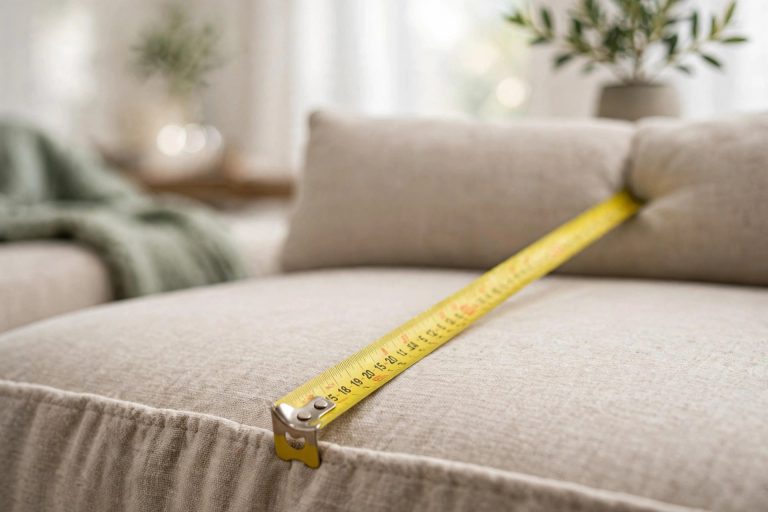
Guessing the length is how you end up with a dark gap in the middle of the window or three extra feet coiled behind the sofa. Measure the route with a piece of string or a tape measure, then add slack for the drape.
Use these planning numbers, then confirm against your own measurement. One standard window outline takes one 50-count string. A headboard accent takes one 70-count string. A full ceiling perimeter in a small living room takes two to three 70-count strings, 140 to 210 lights. A doorway arch takes one 50-count string plus a little extra for the swag dip in the middle.
For a swag or a scallop, add about 20 percent to the straight-line distance, because the dip eats length. For a curtain of lights hanging from a rod, measure the drop, not the width, and buy a curtain set rated for that drop rather than joining two short strings end to end.
Count your outlets before you buy. A string that ends three feet from the nearest outlet needs an extension cord, and an extension cord across a walkway is a trip hazard. Plan the route from the outlet outward, not from the prettiest corner inward. If the only outlet is behind the sofa, start there and let the design follow.
Windows and Glass
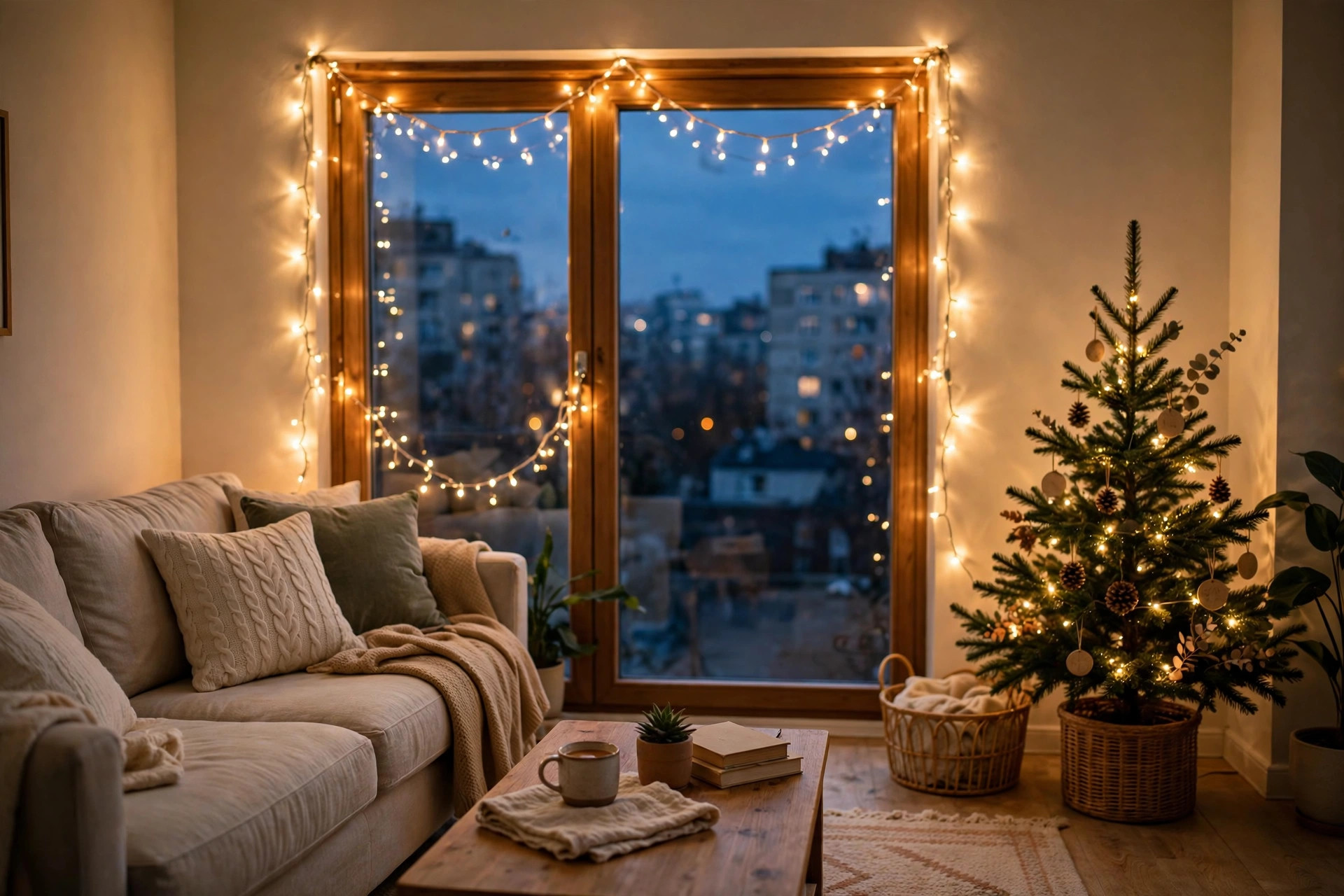
Windows are the best lights spot in a small apartment for three reasons: they are visible from inside and outside, they need no wall contact, and they frame the light instead of letting it sprawl. Start here if you only hang one strand.
For a window outline, use clear mini clips on the frame, spaced every 12 to 18 inches, or drape the string along the curtain rod and let it fall in a soft scallop. The curtain rod method needs no clips at all, which makes it the safest option for strict leases. If your window has a deep sill, run the lights along the sill edge and add a small electric candle bridge for a second layer of glow.
For glass itself, suction hooks hold a light string or a single illuminated star. Clean the glass first, wet the cup lightly, press firmly, and let it sit for an hour before adding weight. Reserve suction for strings under 2 pounds, and recheck it in cold weather, when suction cups are most likely to let go.
Keep lights off the curtains. Fabric against warm bulbs is a fire risk with old incandescent strings, and even with cool LEDs, a curtain draped over a string hides the light and looks messy. If your curtains cover the rod ends, use clips on the frame instead of the rod.
If you are decorating the whole room and not just the window, decide the window first and let the tree and wreath follow. Our guide to no-floor-space Christmas decor in a small living room shows how one lit window anchors the rest.
Walls Without Holes
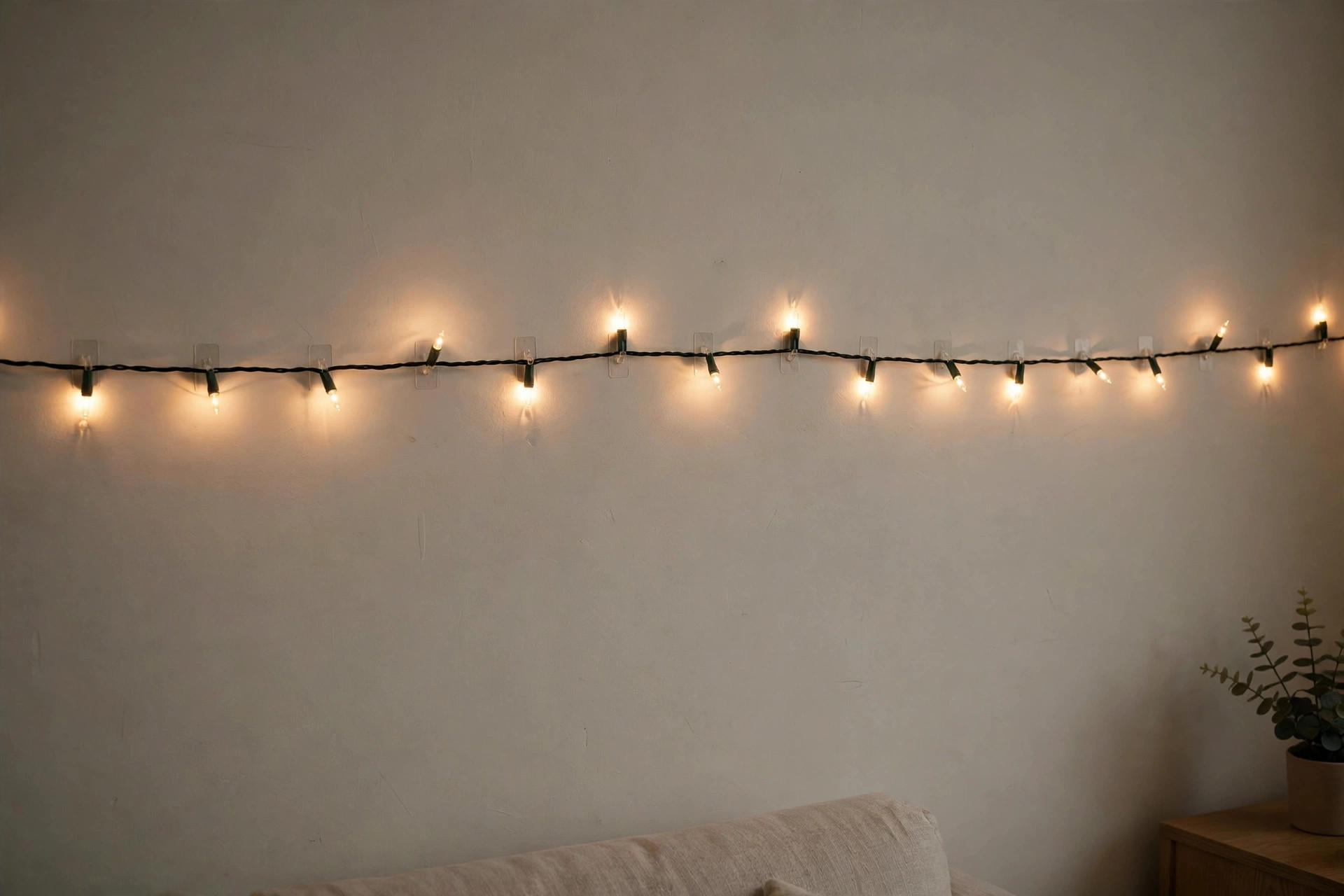
A wall of lights, one lit wall instead of lights scattered everywhere, is the move that makes a small room feel intentional rather than cluttered. Pick the wall the sofa faces or the wall behind the bed, and light only that one.
Space adhesive hooks every 12 to 18 inches along your planned route, and press each one for the time stated on the packaging, usually 30 seconds, then wait the full curing time before hanging weight. Hanging early is the most common reason hooks fail, and a fallen string at midnight is how walls get scuffed.
For a straight line along the ceiling edge, run the string along the line where wall meets ceiling, with hooks on the wall just below the ceiling, not on the ceiling itself. Ceiling hooks fail more often because gravity pulls straight down on the adhesive. For a zigzag or a drape pattern, mark the high points with small pieces of painter’s tape first, step back, and check the shape before you commit hooks to the wall.
Textured walls are the exception. Adhesive grips poorly on heavy texture and can peel the high points off. On textured walls, skip adhesive and use a tension rod in a doorway, a curtain rod, or a freestanding frame like a tall bookshelf edge to carry the lights instead. When in doubt, decorate the furniture, not the walls.
If the wall also holds your wreath this year, keep the two displays apart. Lights behind a wreath wash it out, and a wreath hung over a lit wall competes for the same eye. Our wreath guide covers renter-safe hanging for that piece.
Balcony and Outdoor Rules
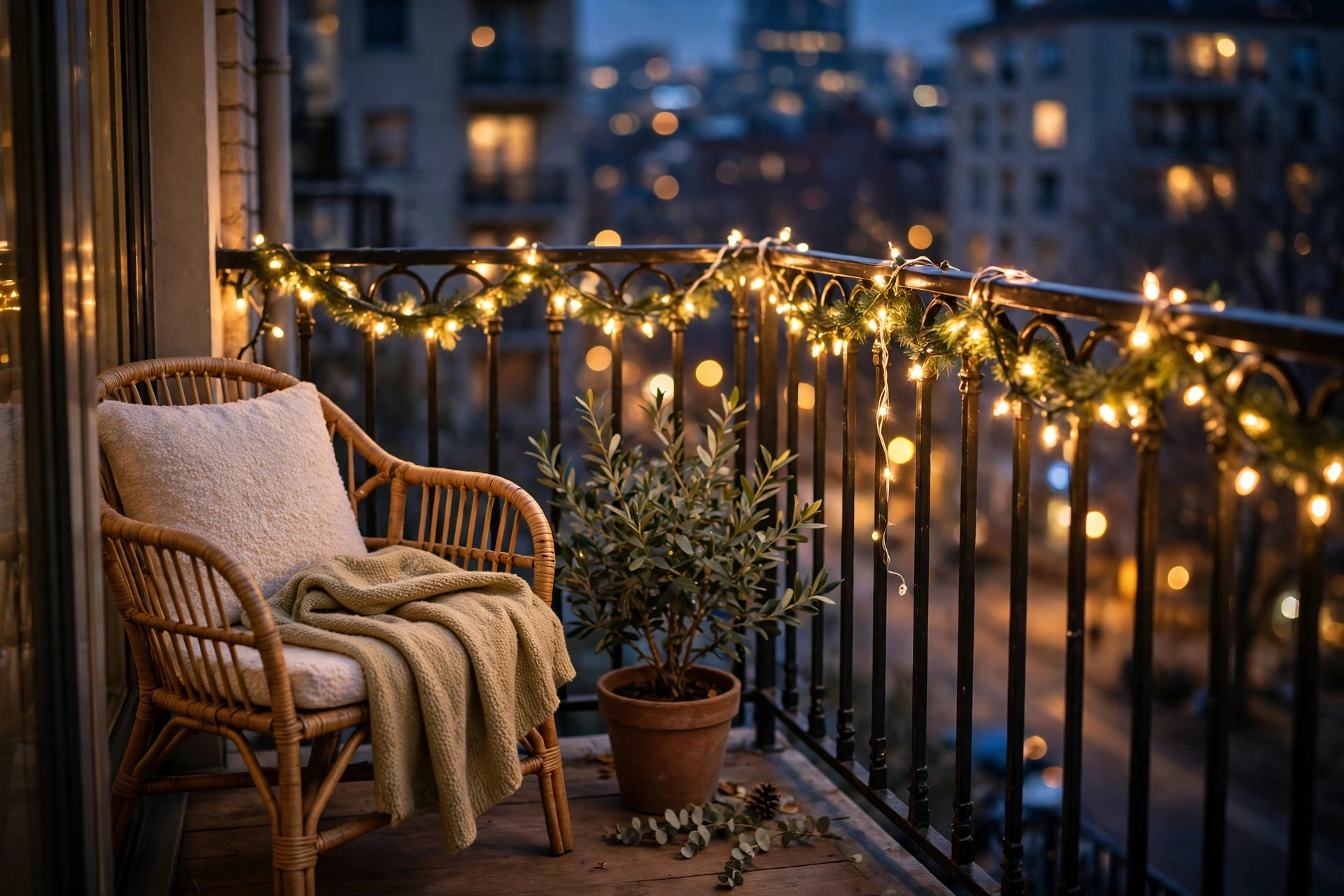
A balcony is the one place where apartment rules, not your lease alone, decide what you can hang. Check two things before you buy outdoor lights: your building’s decorating rules, and whether your balcony has a covered outlet or one rated for outdoor use. Many leases ban anything attached to the exterior railing or facade, and a fine beats a pretty balcony.
If lights are allowed, use outdoor-rated LED strings, even for a covered balcony. They stay cool, last longer, and handle damp air better than indoor strings. Attach them with zip ties to the railing or with clips made for railings, never with tape on painted metal, which peels finish. Keep the string inside the railing line, not draped over the outside, so nothing falls to the sidewalk below.
For a Juliet balcony or a window ledge with no railing, hang the lights inside the window instead. You get the same glow from the street, with zero rule risk and zero weather risk.
Take balcony lights down before the first hard frost if your building allows them only seasonally, and coil them loosely around a reel or a piece of cardboard. Tight coils kink the wire and shorten the string’s life, which is why last year’s lights always seem to have one dead section.
Power, Timers, and Safety
LED strings are the right call for a small apartment. They stay cool to the touch, use far less power than incandescent, and pose a minimal fire risk, which matters when lights run near curtains and bedding. If you still own incandescent strings, keep them away from fabric and never leave them on overnight.
Put every string on a timer. A simple plug-in timer that switches lights off at bedtime saves power, extends bulb life, and removes the nightly question of whether you remembered. Set the timer to switch on at dusk and off when you go to bed, and you never touch the plug again all season.
Do not chain more strings end to end than the packaging allows, usually three to five for LEDs. Overloading a single outlet with chained strings plus a space heater or a kettle on the same circuit trips breakers, and in a small apartment the kitchen and living room often share one circuit. If the breaker trips when the lights go on, move the string to a different circuit, not to a bigger power strip.
Keep lights away from heaters, radiators, and candles, and switch them off when you leave the apartment or go to sleep, even on a timer. A timer is a convenience, not a substitute for checking the string once a week for frayed wire or cracked bulbs.
Takedown Without Damage
Taking lights down badly causes more deposit damage than hanging them. Removal is where paint peels, so slow down in January even though you want the decor gone.
For adhesive hooks, pull the tab straight down along the wall, slowly, exactly as the packaging directs. Never pull outward, which is what peels paint. If a tab snaps, slide dental floss or fishing line behind the strip to saw it free, then roll the residue off with your thumb. Do not scrape with a blade.
For suction hooks, lift one edge of the cup to break the seal rather than yanking. For tension rods, twist to release before pulling, so the ends do not scrape the frame. Photograph each wall after removal, in daylight, so you have proof of condition at move out.
Store strings by wrapping them loosely around a reel, a piece of cardboard, or a purpose-made spool, and label the reel with the spot it belongs to, such as window or headboard. Next December, you will hang the same string in the same spot in half the time, and you will not buy a fourth string for a window that needed one.
Can I hang Christmas lights in a rental without losing my deposit?
Yes, if you use only removable methods: adhesive hooks and clips, tension rods, curtain rods, and suction hooks on glass. Test one hook in a hidden spot first, wait the full curing time before hanging weight, and remove tabs by pulling straight down, never outward.
How many lights do I need for a small apartment?
Start with one lit focal point. One 50-count string outlines a standard window, one 70-count string accents a headboard, and two to three 70-count strings cover a small living room ceiling perimeter. Measure your route first and add about 20 percent for swag dips.
Will adhesive hooks damage painted walls?
They can on old, fresh, or heavily textured paint, which is why a hidden-spot test matters. On sound, smooth, fully cured paint, quality removable hooks come off cleanly when the tab is pulled straight down as directed.
Are outdoor Christmas lights safe to use indoors?
Yes. Outdoor-rated LED strings are built tougher, stay cool, and last longer, and indoor conditions are gentler than what they are rated for. Their wire can be stiffer, so thin 5mm LED mini lights on white wire drape more easily in tight spaces.
Should I leave Christmas lights on overnight?
No. Put them on a timer that switches off at bedtime, keep them away from curtains, heaters, and bedding, and switch them off when you leave the apartment. Check the string weekly for frayed wire or cracked bulbs.