Where to Put a Coffee Maker in a Small Kitchen (No Counter Space)
If your kitchen counter fits a cutting board and not much else, a coffee maker can feel like a luxury you have no room for. Here is the reframe that solves it: the machine does not need the kitchen. It needs four things, and a kitchen counter is only one way to provide them. Once you shop for those four things instead of counter space, six perfectly good spots open up, and most of them are outside the kitchen entirely.
The Four Things a Coffee Maker Actually Needs
Every spot below passes the same four tests. If a spot fails one, it is out.
- A grounded outlet, ideally GFCI-protected if it is anywhere near a sink. Coffee makers draw 600 to 1,200 watts; they plug directly into the wall, never into a power strip daisy-chained behind furniture.
- A flat, stable, heat-tolerant surface. Wood is fine with a drip tray or silicone mat under the machine; the enemy is standing water, not warmth.
- Steam clearance: 15 to 18 inches of open air above the machine. Steam from a brew cycle will warp cabinet interiors and peel paint over time, so this number is non-negotiable.
- Water and mugs within a few steps. The workflow is grind, brew, pour, rinse. If fetching water means crossing the apartment, you will stop using the setup within a month.
The Clearance Numbers You Can’t Skip
Measure your machine before you shop for a spot. Typical footprints: drip machines run 8 to 12 inches wide and 10 to 14 inches deep; single-serve pod machines are narrower at 6 to 9 inches wide; home espresso machines run 9 to 12 inches wide and need the most depth for the portafilter swing. Add 2 inches of breathing room on each side for ventilation, and remember the 15 to 18 inches of steam clearance above. A machine that is 14 inches tall needs a shelf or cabinet opening at least 30 inches high to brew safely underneath it. Most kitchen wall cabinets give you only 18 inches, which is exactly why brewing under them fails.
Spot 1: A Rolling Kitchen Cart
Footprint: about 18 by 24 inches, and it moves.
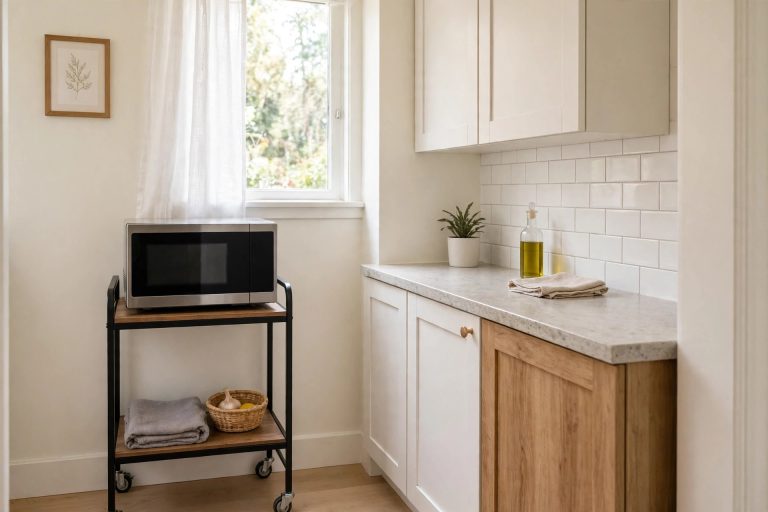
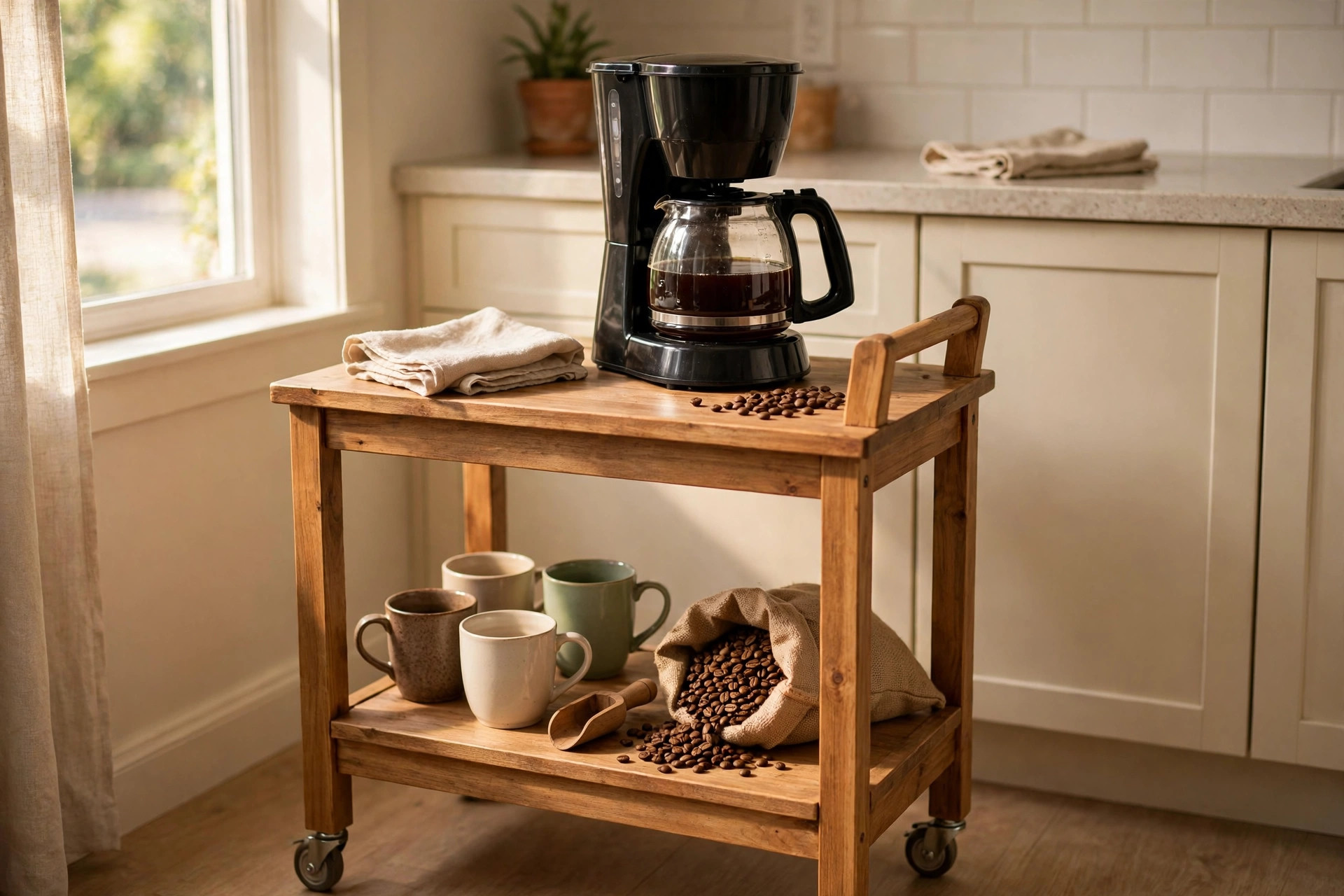
The rolling cart is the classic answer for a reason. A two-tier cart holds the machine on top and mugs, beans, and filters below; lock the wheels when you brew, unlock them to roll it against the wall when you need the floor space. Park it within 6 feet of a wall outlet and within a few steps of the sink. The honest trade-off: it becomes a permanent piece of furniture, so pick one that looks intentional, wood or matte black, not a wire utility cart that screams dorm room.
Spot 2: Inside a Cabinet or Appliance Garage
Footprint: zero new floor space.
If you have a deep lower cabinet with a pull-out shelf, the coffee maker can live inside it full time. The rule that makes this work: pull the shelf out to brew, push it back when you are done. Brewing under a closed cabinet door traps steam and will damage the cabinet interior within months. An appliance garage, the little tambour-door cubby some kitchens have, works the same way if it has an outlet inside and you brew with the door open. Measure first: the opening needs to clear your machine’s full height plus the 15 inches of steam space, which rules out most standard 18-inch cabinet openings.

Spot 3: A Floating Shelf Coffee Nook
Footprint: zero floor space; 24 by 12 inches of wall.
One sturdy shelf at 48 to 54 inches high creates a dedicated coffee nook on any empty wall, inside or outside the kitchen. Go 24 inches wide and 12 inches deep for a drip machine, and mount it into studs or with toggle bolts rated for at least 40 pounds; a filled machine plus a water reservoir is heavier than it looks. Put a second, shallower shelf above it at the full 18-inch steam clearance for mugs, never directly above the machine. This is the best-looking option of the six, but it is the only one that puts holes in the wall, so renters should read the renter section below before reaching for the drill.

Spot 4: The Hallway or Dining Corner
Footprint: 12 to 18 inches deep against a wall you already walk past.
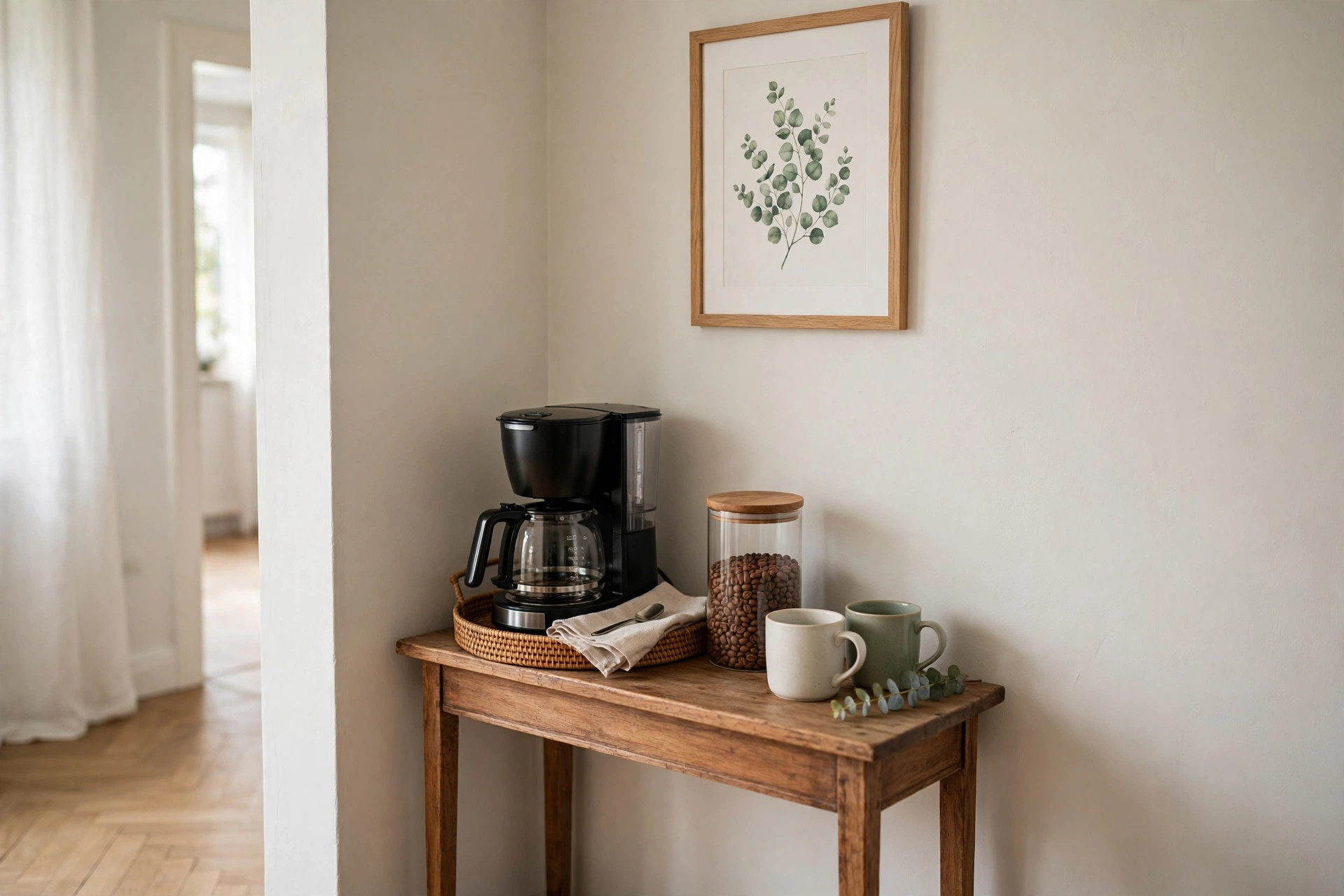
The most underused spot in a small home is the hallway or the corner of the dining area. A narrow console table, bookcase, or even a sturdy plant stand becomes a coffee station ten feet from the kitchen. This passes the workflow test as long as the kitchen is one room away, not two, and the outlet check matters more here: hallways often have only one outlet, so confirm it is grounded and not shared with a space heater or other heavy draw. The morning-traffic logic actually favors this spot: you grab coffee on the way out instead of doubling back through the kitchen.
Spot 5: The Pantry or Laundry Room Shelf
Footprint: one shelf you already own.
A pantry shelf or the folding counter in a laundry room often has exactly what a coffee maker needs: a flat surface, an outlet, and nobody competing for the space at 7 a.m. Two conditions: the shelf must be genuinely sturdy, not a wire pantry shelf that flexes, and the space needs ventilation for steam, so skip enclosed closets with no airflow. Keep the machine away from open detergent or cleaning supplies; coffee absorbs odors fast. This spot shines in galley kitchens where the laundry closet sits right off the kitchen anyway.
Spot 6: A Slim Side Table Against the Wall
Footprint: 12 to 16 inches deep, against any wall with an outlet.
The zero-renovation answer. A slim side table, nightstand, or narrow entryway bench placed against the kitchen-adjacent wall holds the machine at a comfortable brewing height with no drilling, no carts, no new furniture category. It works because it asks nothing of the kitchen itself. Style it deliberately, a small tray under the machine plus a canister for beans, and it reads as a coffee station rather than an appliance parked on a table.
Renter Rules: Nothing to Drill
If your lease forbids holes, skip the floating shelf and lean on the freestanding spots: the rolling cart, the side table, and the hallway console all need zero wall fixings. For mugs, heavy-duty removable hooks hold up fine on tile and painted drywall, but do not trust adhesive mounts with the machine itself; a filled coffee maker is a 15-plus-pound object full of hot liquid, and adhesive ratings assume perfect conditions. A tension-rod shelf inside a cabinet can add a mug tier without a single screw.
The Safety Bit: Outlets, Steam, and Cords
Three rules close the loop. First, the machine plugs directly into a wall outlet, ideally GFCI-protected, and the outlet should not be shared with another high-draw appliance on the same circuit; a tripped breaker at 6:45 a.m. is a bad start. Second, never run the cord across a walkway, even temporarily. A cord across the kitchen floor is a trip hazard carrying scalding liquid, which is worse than a trip hazard alone. Third, if the machine lives under any shelf or cabinet, slide it fully out before brewing so steam escapes upward, and set a reminder to wipe the underside of the shelf monthly; caught early, steam damage is a wipe, caught late, it is a refinish.
Frequently Asked Questions
Can I put a coffee maker inside a cabinet?
Yes, if you pull it out to brew. Brewing under a closed cabinet traps steam and will warp the cabinet interior within months. The cabinet needs an outlet inside or a cord routed safely to one nearby.
How much clearance does a coffee maker need above it?
15 to 18 inches of open air above the machine for steam. Most standard 18-inch kitchen cabinet openings are too short once the machine’s own height is counted, which is why under-cabinet brewing usually fails.
Can a coffee maker sit on a wooden shelf or table?
Yes, with a drip tray or silicone mat underneath. Heat is not the problem; standing water from drips and condensation is. Wipe up spills promptly and the wood will be fine.
Is it safe to use an extension cord for a coffee maker?
Avoid it. Coffee makers draw up to 1,200 watts and should plug directly into a grounded wall outlet. A cord run across a walkway is a trip hazard carrying hot liquid, which is worse than a spill alone.
Where should a renter put a coffee maker with no counter space?
A rolling kitchen cart or a slim side table against the wall: zero drilling, zero damage, and both move with you. Add removable hooks for mugs and you have a full coffee station with no lease violations.