Where to Put a Bookshelf in a Small Living Room
A bookshelf in a small living room is a balancing act. It needs to hold real books, not just look like it does, and it needs to do that without closing in the room or blocking the way to the sofa. The trick is not to buy a smaller shelf. It is to put a normal shelf on the right wall, at the right depth, with breathing room around it.
Most small rooms fail for the same reason: the shelf goes wherever there is an empty wall, and that wall turns out to be the one the room needs for walking, sitting, or watching TV. Choose the wall by what it does for the room, not by what is empty, and the shelf will feel built in instead of squeezed in.
The Depth-First Rule
Depth decides whether a bookshelf helps or hurts a small room. A standard bookshelf is 10 to 12 inches deep, which holds most paperbacks and hardcovers with a little room to spare. A deep media unit at 16 to 18 inches holds more, but it also pushes 6 extra inches into a walkway you may not have.
Measure the walkway after the shelf goes in, not before. You need at least 30 inches of clear passage for a main walkway, and 24 inches at a pinch point you only pass occasionally. If a 12-inch shelf leaves less than that, switch to a shallower shelf, a wall-mounted shelf, or a different wall. A shelf that forces you to sidestep every day is too big for that wall, no matter how good it looks.
Height is the second decision. A tall shelf draws the eye up and makes a low ceiling feel higher, but it also needs to be anchored to the wall, especially in a home with kids or pets. A low shelf keeps the room open and doubles as a display ledge, but it holds fewer books. In most small living rooms, one tall shelf on a side wall beats two medium shelves on two walls, because one anchor point leaves the rest of the room calm.
Beside the Sofa: The Safest Wall
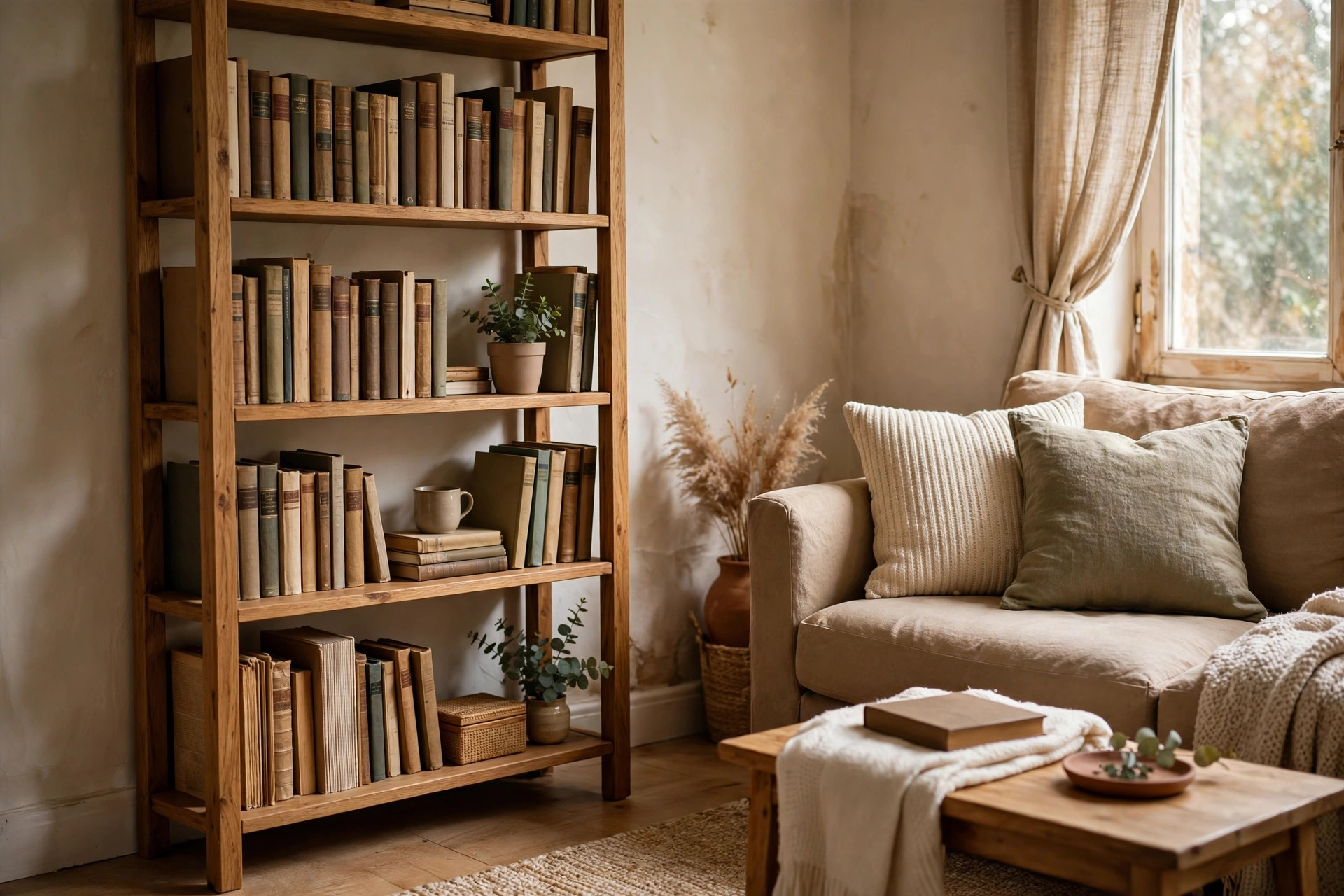
The wall beside the sofa, not behind it, is usually the best home for a bookshelf. It sits in your peripheral vision when you sit down, so it reads as part of the seating area instead of a wall you stare at. It also keeps books within arm’s reach, which is the whole point of a living room shelf.
Leave a small gap between the sofa arm and the shelf, about 2 to 4 inches, so you can pull a book without scraping the sofa and the shelf does not trap dust in a dark seam. If the sofa wall is short, a single narrow tower, 24 to 30 inches wide, fits better than a wide bookcase that crowds the sofa. Pair it with a floor lamp on the other side of the sofa for balance, and the corner will feel planned, not filled.
This is also the best wall for a reading nook effect. A shelf beside the sofa, a lamp, and a small side table give you a complete reading spot without adding a chair. See our guide on where to put a floor lamp in a small living room for lamp heights that work next to a shelf without glare on the pages.
Flanking the TV: The Built-In Look
Two narrow shelves flanking the TV create a built-in look without custom carpentry, and they solve the hardest small-room problem: what to do with the wall that already has the TV. The shelves frame the screen, hide the edges of the setup, and give books, consoles, and baskets a home that is not the floor.
Keep the shelves the same height as each other, and keep them slightly narrower than the TV wall allows, so the TV remains the center. A good rule is to leave at least 6 inches between the TV edge and the shelf edge, so the screen does not feel boxed in and you can reach cables. Put heavier books low, lighter items high, and use a basket on a low shelf for remotes and chargers. That keeps the TV wall tidy instead of turning it into a display of clutter.
This layout works best when the TV is wall-mounted or on a low console, not on a tall stand that already competes for height. If your TV layout is still undecided, read our small living room layout with TV guide first, because the sofa-to-TV distance decides whether flanking shelves will feel balanced or cramped.
The Narrow Wall Most People Ignore
Every small living room has a narrow wall that feels too small for furniture: the strip beside a doorway, the wall between two windows, the short return wall by the hall. That wall is often the perfect bookshelf wall, because a narrow tower fits it exactly and the wall was doing nothing anyway.
A tower 18 to 24 inches wide and 10 to 12 inches deep can hold a surprising number of books without touching a walkway. Anchor it well, because a tall narrow shelf tips more easily than a wide one. Keep the top third light, with a plant or a small object, and the bottom two thirds for books, so the weight stays low.
This is the wall to use when the sofa wall and the TV wall are already taken. It turns dead space into storage, and because it is narrow, it does not demand attention. The room still reads as a living room, not a library.
The Corner: For Awkward Rooms
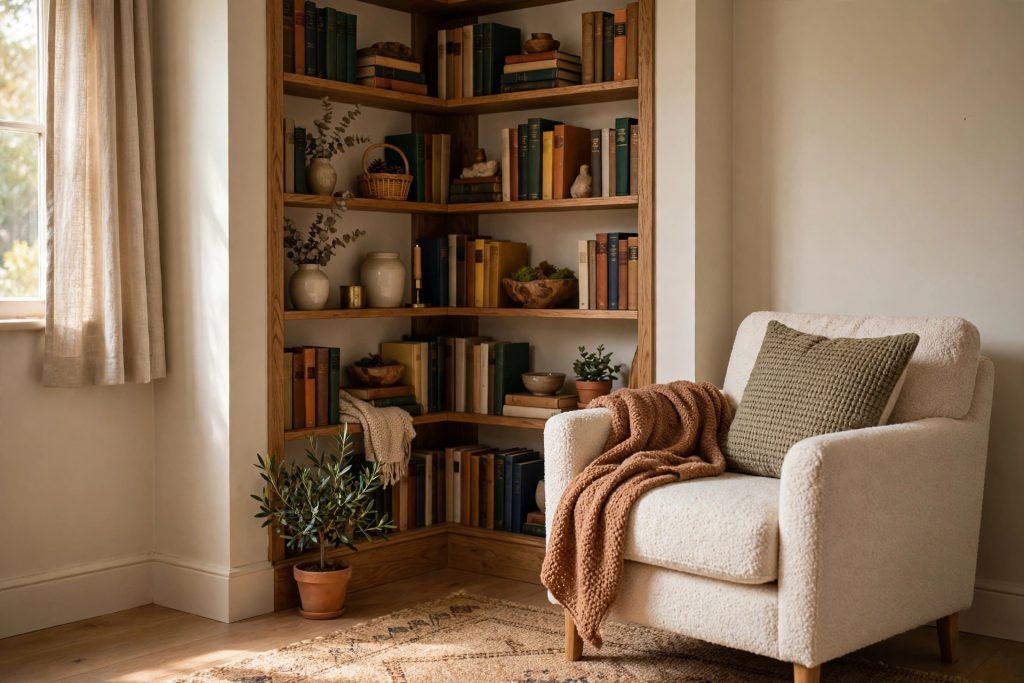
A corner shelf works when the room has a corner that nothing else can use: a corner too small for a chair, a corner by a radiator, a corner that catches a door swing. A triangular corner unit or a standard shelf turned at 45 degrees can use that space, but only if you can actually reach the books. A deep corner shelf that you cannot reach into is a dust trap, not storage.
Test the corner before you buy. Stand where you would stand to pull a book, and check that you can reach the back without moving furniture. If you cannot, use a narrow tower on one of the corner walls instead of a true corner unit. You will store almost as much, and you will actually use it.
Corners also suit a small rotating shelf or a ladder shelf, but ladder shelves lean, and a leaning shelf in a walkway is a hazard. If you choose one, anchor the top to the wall and keep the bottom shelf clear of the walkway.
Under the Window: The Low Option
A low bookshelf under a window is the most underused option in a small living room, and it has a clear advantage: it does not block light. A shelf 24 to 30 inches high under a sill leaves the window open, gives you a long run of storage, and creates a ledge for plants or a reading lamp.
Check two things first. The shelf must not block a radiator or a heating vent under the window, because trapped heat warps books and wastes energy. It must also leave the window easy to open for cleaning and for fresh air. A shelf that is too tall for the sill, or too deep to reach past, fails both tests.
Under-window shelves pair well with a window seat idea in a larger room, but in a small room, keep it simple: books, a few objects, and nothing that blocks the glass. The light coming over the shelf is part of what makes the room feel bigger.
What to Skip in a Small Living Room
Skip a deep, wide bookcase on the main walkway wall. It will look generous in the store and feel like a corridor at home. Skip a shelf behind the sofa if the sofa already sits close to the wall, because you will never reach the books without moving the sofa. Skip matching pairs on both sides of a room unless the room is truly symmetrical, because forced symmetry in an uneven room looks staged.
Skip overfilling every shelf. A shelf packed edge to edge reads as a wall of clutter, and it makes books hard to pull out. Leave one in five spots empty, or with a small object, and the shelf will breathe. That empty space is not wasted. It is what lets the eye rest, and it is what makes a small room feel calm instead of crowded.
Start with depth, then wall, then height. A 12-inch shelf on the sofa wall, a narrow tower on a dead wall, or a low run under a window will hold your books and leave your room intact. The best bookshelf is the one you reach for every evening without thinking about it, because it is exactly where your hand expects it to be.
For the rest of the room, keep the same rule: one anchor piece per wall, clear walkways, and nothing that forces a detour. Our small living room ideas and our guide to a small living room without a coffee table both use that logic, and a bookshelf placed this way fits right into it.
How deep should a bookshelf be in a small living room?
10 to 12 inches deep is best for most books. Deeper units at 16 to 18 inches push too far into walkways, so check that at least 30 inches of clear passage remains after the shelf goes in.
Where is the best wall for a bookshelf in a small living room?
Beside the sofa is usually safest, because it keeps books within reach and does not dominate the view. A narrow dead wall or flanking the TV are strong second choices.
Can I put a bookshelf behind the sofa?
Only if there is a gap to reach the books without moving the sofa. In most small rooms the sofa sits too close to the wall, so beside the sofa works better than behind it.
Should a bookshelf in a small room be tall or low?
One tall shelf on a side wall draws the eye up and stores more, but it must be anchored to the wall. A low shelf under a window keeps light open and works well when ceiling height or reach is limited.
How do I stop a bookshelf from making a small room feel crowded?
Leave about one in five shelf spots empty, put heavy books low and light items high, and keep at least 30 inches of walkway clear. A single well-placed shelf beats two crowded ones.