Where to Put an Air Purifier in a Small Apartment
An air purifier only cleans the air it can reach. In a small apartment that sounds easy, because every room is close together, but the usual hiding spots do the opposite of helping: pushed into a corner, tucked behind a sofa, or parked under the bed, a purifier pulls in far less air than its rating promises, and you breathe most of your air before it ever reaches the filter.
The fix is not a bigger machine. It is a better spot, chosen by one question: where do you spend the most hours breathing in this apartment? Answer that, give the machine room to breathe, and one well placed purifier beats a larger one squeezed into a dead corner.
Start With One Rule: Put It Where You Breathe, Not Where It Fits
Most placement guides list every room in the house. A small apartment needs a sharper rule, because you probably own one purifier, not four, and you cannot give each room its own machine.
Think in breathing zones, not rooms. Your breathing zone is roughly the air within 6 feet of your head, at the height where you actually breathe: bed height when you sleep, seated height on the sofa, desk height when you work. A purifier earns its place when its clean air output flows through that zone, and its intake pulls from near the source of the dust, pollen, pet hair, or cooking smoke.
That is why “out of the way” is usually the worst test for a spot. A purifier hidden behind furniture is out of sight, but it is also out of airflow. Put it where the air moves, even if that means it stays visible, and treat the visible footprint as the price of clean air, not a flaw to hide.
If You Own Only One Purifier, Put It Here First
If you have one purifier and a separate bedroom, put it in the bedroom first. You spend 7 to 9 hours there every night breathing the same air, which is more continuous exposure than any other room gives you, and a closed bedroom door at night turns that room into a small, cleanable box instead of asking one machine to filter the whole flat.
The exception is a clear, daily trigger elsewhere. If you work from home in the living room all day, cook in a studio with no door, or live with a pet that sleeps in the living room, that room wins, because that is where the hours and the source both sit. In every other case, the bedroom wins on hours alone.
Do not move the purifier from room to room during the day hoping to cover everything. Each move restarts the cleaning in a new room, and the room you left starts filling with dust again. Pick the highest hours room, leave the machine there, and let it run on a steady low or auto setting.
If a cat litter box is part of the problem, its placement matters as much as the purifier.
The Bedroom Spot That Actually Works
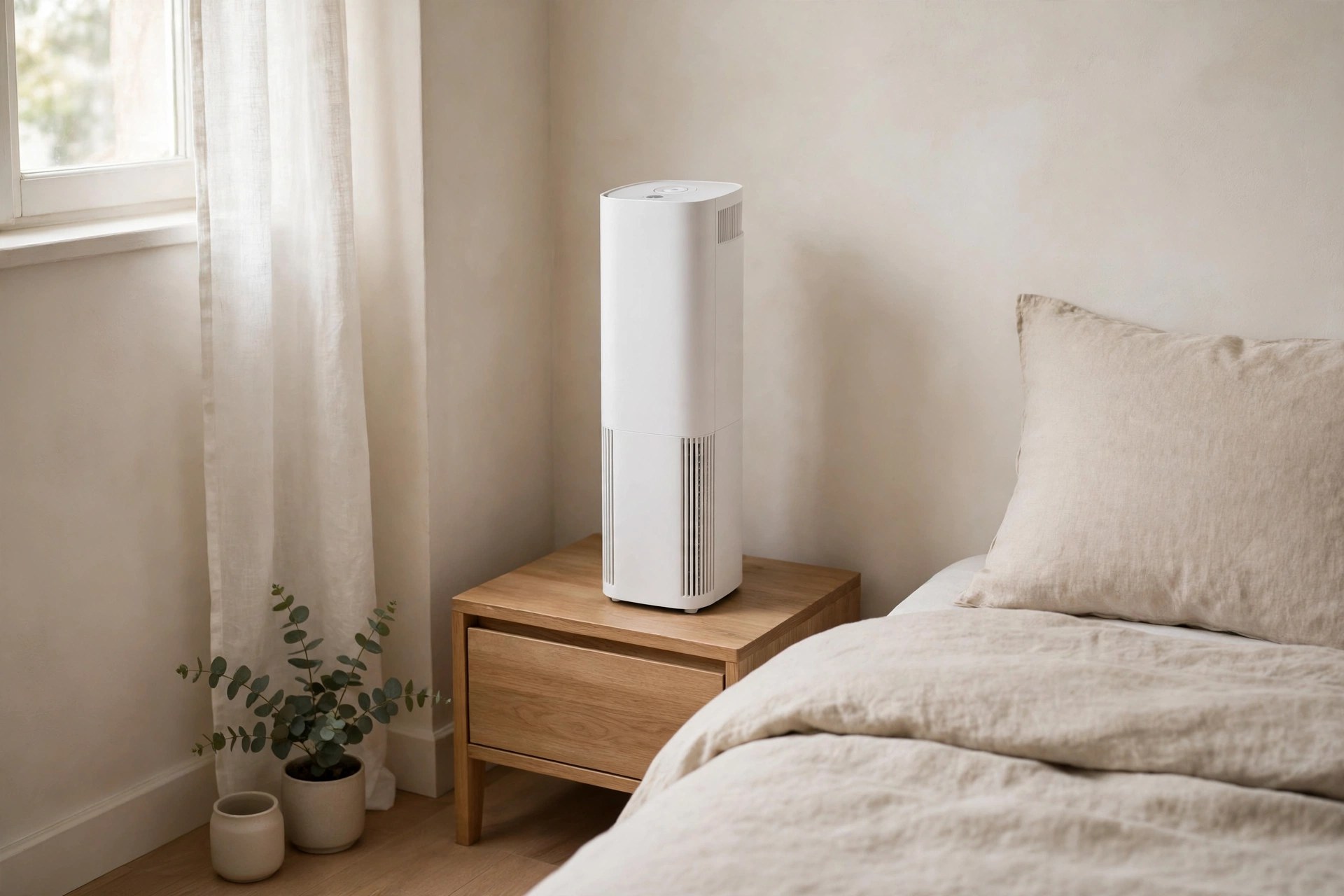
The best bedroom spot is a small piece of furniture on the far side of the room from the head of the bed, or on the floor 3 to 6 feet from the head of the bed, with its output pointing along the room toward you, not straight at your face.
A nightstand or dresser works well for a compact unit, because it lifts the intake toward bed height, where you breathe all night, and it keeps the machine out of the floor dust zone. A floor unit works too, provided it is not wedged against the wall: pull it at least 12 inches out, keep the intake side clear, and angle the output toward the bed rather than into a curtain.
Keep it 3 to 6 feet from your pillow, not right beside your head. Closer than 3 feet, even a quiet sleep mode becomes a draught across your face and a hum you notice at 2 a.m. Farther than 10 feet, in a bedroom with a closed door, the purifier still helps, but the clean air has to travel past furniture and bedding before it reaches you, and you lose the breathing zone advantage.
Run it for at least 30 minutes before bed with the door closed, then leave it on sleep or auto overnight. That pre-run clears the dust stirred up by bedding and evening activity, so you fall asleep in already cleaned air instead of asking the machine to catch up while you sleep.
The Studio Layout: One Room, One Purifier
A studio is the one layout where a single purifier can genuinely serve the whole home, because there are no interior doors blocking airflow. The trick is to place it between the sleeping zone and the living zone, not at either far end.
Put it near the middle of the room, on the side where the bed and the sofa sit, with its intake facing the room and its output aimed toward the bed at night or the seating area during the day. A spot beside the sofa, a few feet from the bed, covers both zones better than a spot by the front door, which filters hallway air you do not breathe, or a spot by the kitchen, which spends its power on cooking smoke that clears faster with a window and the range hood.
If your studio has a pet, shift the purifier toward the pet’s sleeping area, but keep it 3 feet or more from the litter box itself: you want it to catch airborne particles, not sit in the dustiest few feet of the room. The same rule applies to a desk: if you work from home in the studio, the purifier should sit within sight of the desk, not across the room behind a bookshelf.
The same one machine, one best spot logic applies when a portable washing machine shares a studio.
The Living Room Spot When You Have a Separate Bedroom
If the bedroom already has a purifier, or you spend your waking hours in the living room, the living room spot follows the same breathing zone rule at seated height.
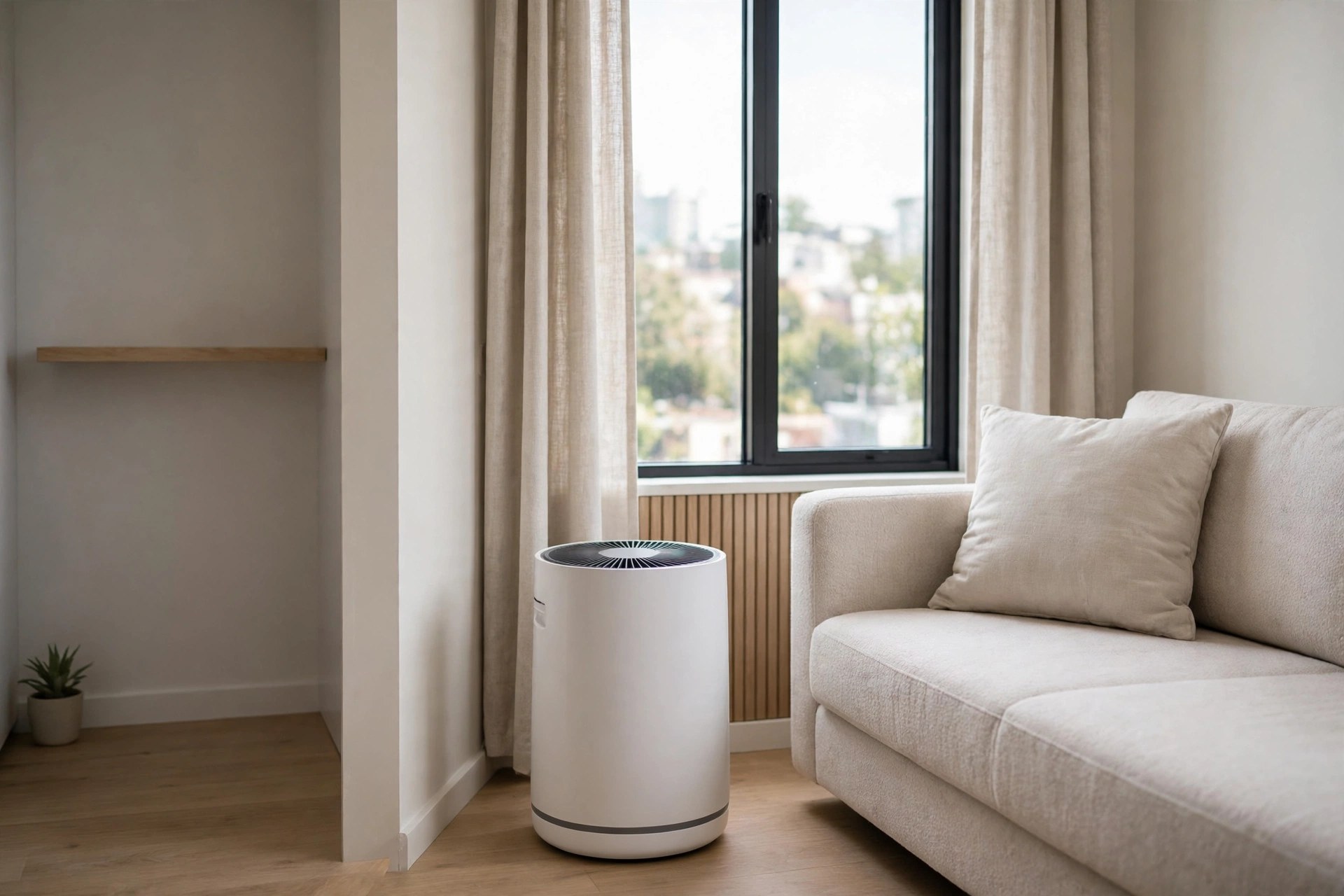
Place it beside the sofa, not behind it, with at least 12 inches of clearance on the intake side and its output pointing toward the seating area. A spot beside a window is tempting, but only works if the window stays closed most of the time: an open window pulls in outdoor dust and pollen faster than the purifier can filter it, and the machine ends up cleaning the street, not your sofa.
Avoid the TV corner. It looks tidy, because the purifier disappears behind the stand, but that corner is exactly where airflow stalls: two walls, a stand, and cables block two sides of the intake at once. If the only free spot is a corner, pull the machine a full 18 inches out from both walls and accept the slightly awkward look. The air it moves matters more than the corner it fills.
Clearance, Height, and Outlet Rules That Make or Break It
Three numbers decide whether a good spot stays good.
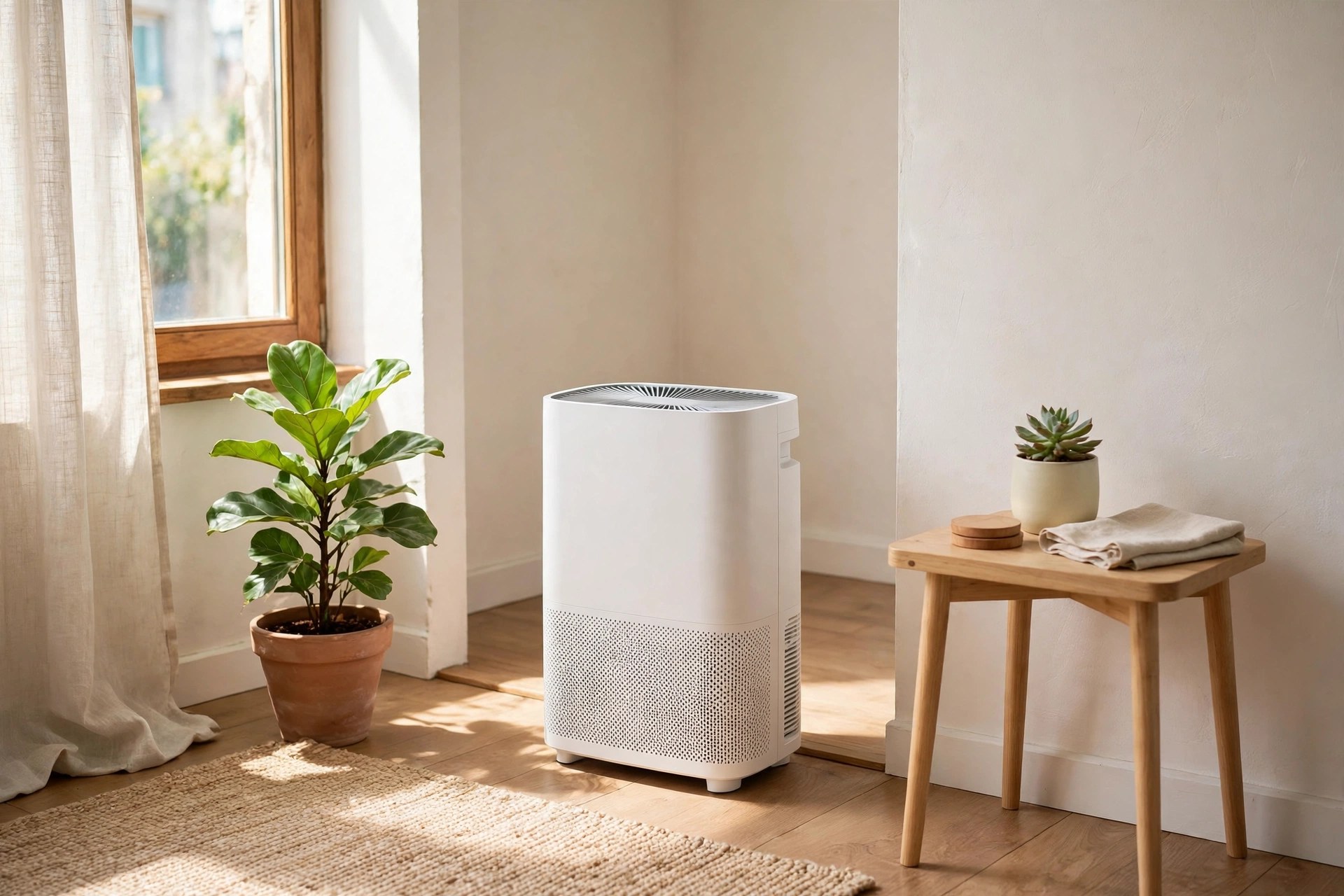
First, clearance: at least 12 inches on every intake side, and 18 inches if you can spare it. A 360 degree tower intake needs clearance on all sides, not just the front, while a front intake model needs its front kept clear above all else. Check your model’s manual for which side pulls air in, then protect that side first.
Second, height: 18 to 36 inches off the floor is the sweet spot for most rooms, because that is close to seated and bed height. A small unit on a sturdy nightstand, dresser, or side table beats the same unit on the floor, especially on carpet, where a bottom intake can be partly blocked and where floor dust reaches the filter faster.
Third, outlet: plug the purifier directly into a wall outlet within 6 feet, never into a long extension cord snaking across a walkway. Small apartments tempt you to run cords behind furniture, but a cord pinched behind a heavy unit is both a trip hazard and a reason the purifier ends up in the worst corner of the room. If the good spot has no outlet, move a small table to the outlet, not the purifier to a bad corner.
Spots to Never Use in a Small Apartment
Under the bed. The intake is blocked by the frame, the output blows clean air under the mattress where nobody breathes, and dust collects there faster than anywhere else in the bedroom.
Inside a closet or cabinet, even with the door open. An enclosed space starves the intake and recirculates the same small pocket of air, so the rest of the room barely improves.
Pressed into a corner behind a curtain or a tall plant. Curtains drape over the intake, plants shed soil dust right next to it, and the corner itself has the lowest natural air circulation in the room.
On top of a radiator, a heater vent, or a damp bathroom floor. Heat dries filters and warps housings, and a bathroom purifier in constant steam needs a model rated for humidity, not a standard bedroom unit parked beside the shower.
Directly beside the litter box or the stove. Both spots put the machine in the highest particle load in the home, which clogs the filter early and means the clean air never reaches your breathing zone. Keep at least 3 feet between the purifier and either source, and let the intake face the room, not the source.
A Quick Sizing Check Before You Move It Again
Placement cannot rescue a purifier that is far too small for the room. Before you blame the spot, check the size math.
A common rule is that the clean air delivery rate, or CADR, for smoke should be at least two thirds of the room’s floor area in square feet. A 150 square foot bedroom needs a smoke CADR of about 100, while a 300 square foot studio needs about 200. If your purifier is rated for a much smaller room, it will run at full speed all night, stay noisy, and still not keep up, and no corner of the room will fix that.
Also check the coverage figure on the box with care: manufacturers often quote a maximum room size under ideal, open air test conditions. Treat that number as a ceiling, not a comfortable working size, and size up one step if your room has high ceilings, an open door to a hallway, or a pet.
If the size checks out and the air still feels stale, move the machine once, using the rules above, then give it a full night before judging it. Air cleaning is slow work, and a spot that looks wrong in the first ten minutes can be exactly right by morning.
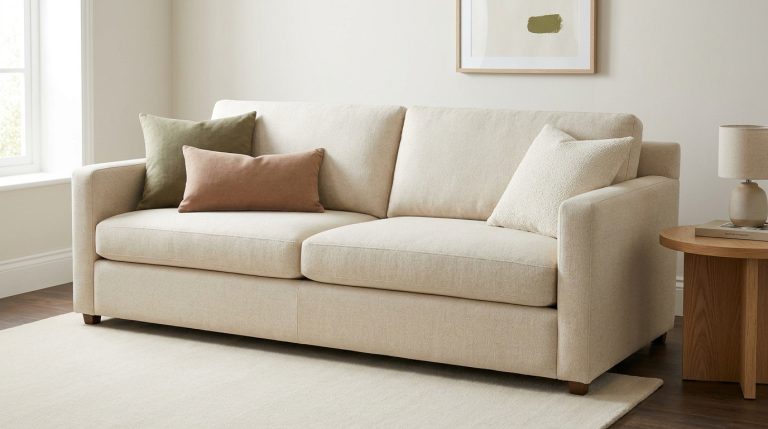
The same breathing zone test helps when you arrange a small living room around a sofa and a purifier.
Frequently Asked Questions
Can I put an air purifier in a corner if it is the only free spot?
You can, but pull it at least 18 inches out from both walls and keep the intake side completely clear. A corner is the worst spot for airflow, so the clearance matters more there than anywhere else.
How far should an air purifier be from my bed?
About 3 to 6 feet from the head of the bed, with its output pointing along the room toward you, not straight at your face. Closer than 3 feet can feel draughty and noisy at night.
Should an air purifier sit on the floor or on a table?
On a sturdy table, nightstand, or dresser, 18 to 36 inches high, is usually better, because it lifts the intake toward the height where you breathe. A floor unit works if it has full clearance on its intake side and is not sitting on thick carpet that blocks a bottom intake.
Can one air purifier clean a whole small apartment?
In a studio with no interior doors, one well placed purifier can help the whole space. In a one bedroom apartment, one purifier cleans the room it sits in best, so put it in the bedroom first and keep the door closed at night.
Does an air purifier work with the door open or closed?
Closed works better for the room you are cleaning, because an open door lets the purifier pull air from the hallway and the rest of the flat. Close the bedroom door for the pre-bed run and overnight, and air the room briefly in the morning instead.