Where to Hang Coats in a Small Entryway Without a Closet
A small entryway without a closet has one job: get coats off the floor and off the chairs without turning the front door into a pile. The answer is almost never more hooks. It is one hook per person for daily coats, a separate home for off-season coats, and a spot for guests that is actually empty when they arrive. This guide gives you the five workable setups for a closet-free entryway, with the spacing, weight, and clearance numbers that decide which one fits your wall, your door, and your lease.
The Hook Math: How Many You Actually Need
The rule is two hooks per person who lives there, plus two for guests. One hook holds the daily coat, and the second holds a bag or a second layer, and the guest hooks stay empty on ordinary days. More hooks invite more coats, and a rail full of coats nobody wears is just a closet without a door. Space hooks 8 to 10 inches apart. Hang them at a height everyone can reach, usually 60 to 66 inches for adults and lower for children. If a child cannot reach the hook, it is decoration and the coat ends up on the floor. Keep at least 36 inches of clear walking space. If the corridor is 48 inches wide, storage furniture must be 12 inches deep or less.
1. A Peg Rail on the Wall You Pass
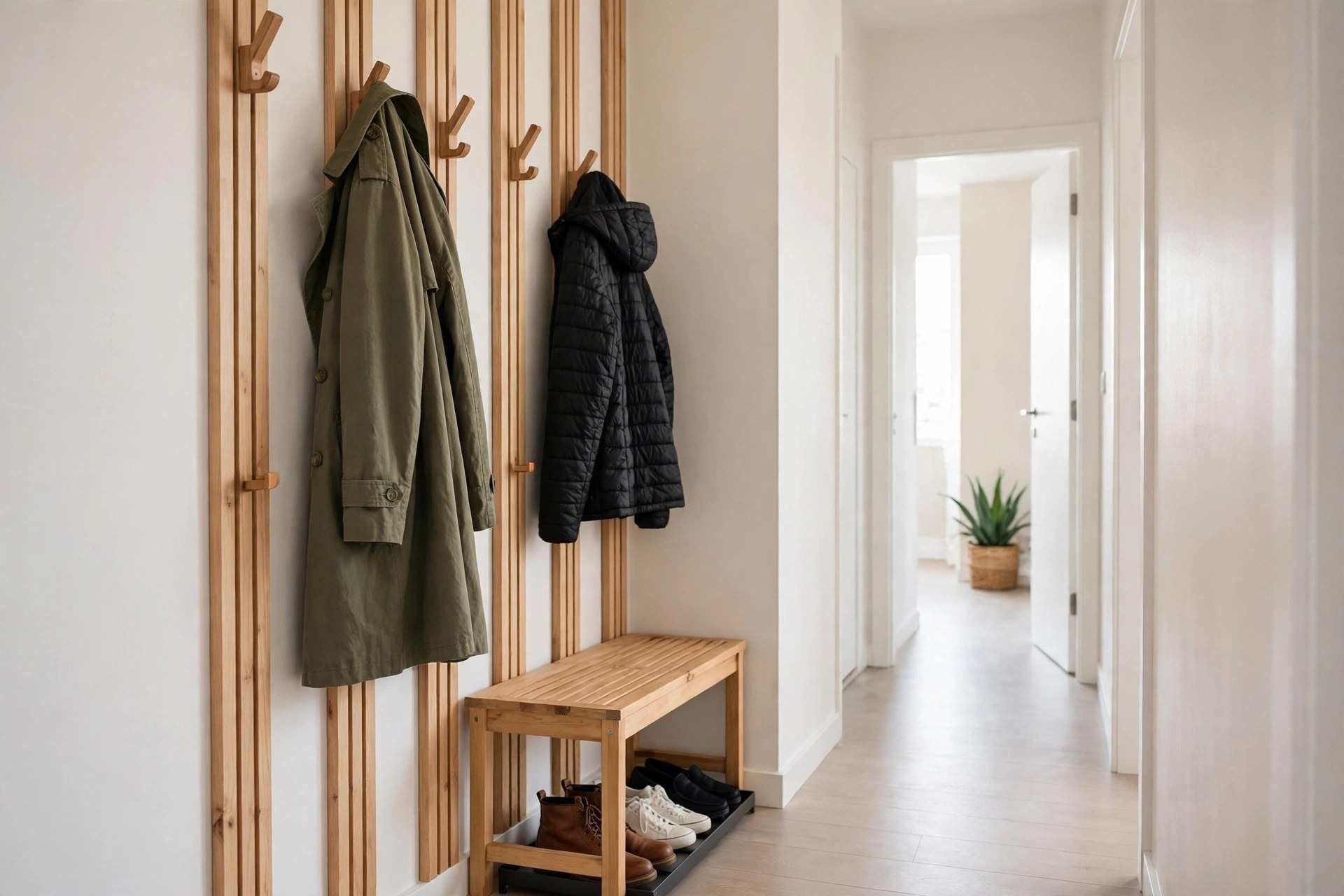
The best default is a peg rail on the side wall beside the door, not the prettiest wall, because convenience beats looks and a rail you walk past gets used. Use individual hooks or a rail with hooks spaced 8 to 10 inches apart, and screw into studs if you can: a wool coat plus a bag can weigh 8 to 12 pounds per hook. If you are renting and cannot drill, adhesive hooks work, but check the weight rating against your heaviest coat and test one hook in a low spot first. Adhesive hooks fail on textured walls, wallpaper, and some matte paints, and they can lift paint in poor condition when removed. Pull the removal tab slowly and straight down, exactly as the instructions say. A rail needs a drip plan: put a boot tray or a washable rug under it so wet coats do not drip onto the floor.
2. Over-the-Door Hooks
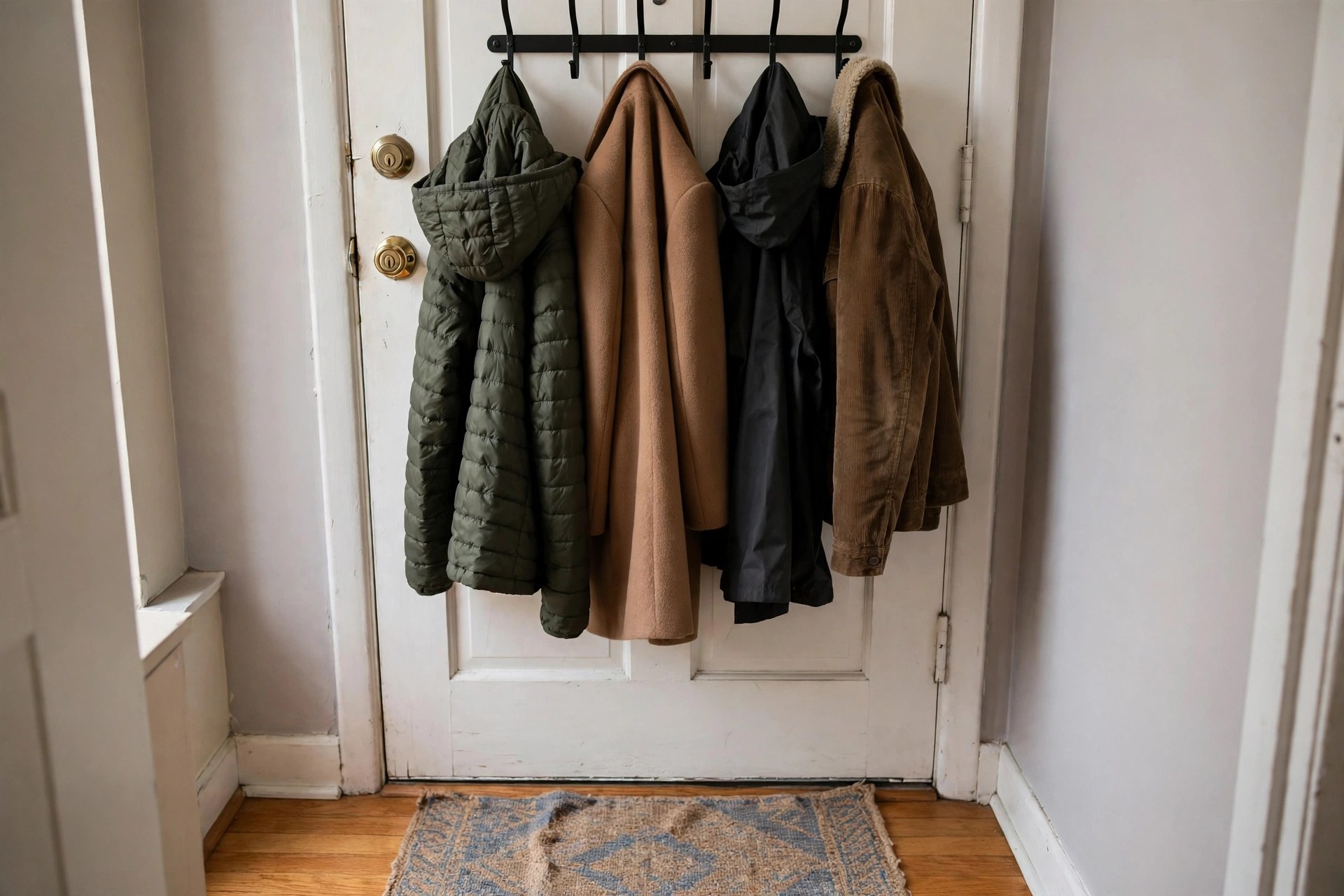
Over-the-door hooks cost nothing to install, need no drilling, and work on almost any interior door. They are best if you have zero free wall or a strict lease. The trade-offs: the door must still close fully with the hooks on, and the hooks must not scrape the frame. A door full of heavy coats is harder to open and can stress the hinges, so keep to daily coats only, not the whole collection. Coats on the back of the front door swing with the door and can knock into the wall or block the door from opening fully if the hallway is tight. If the front door opens into a narrow hall, put over-the-door hooks on a bedroom or closet door nearby and keep the front door clear.
3. A Slim Freestanding Rack
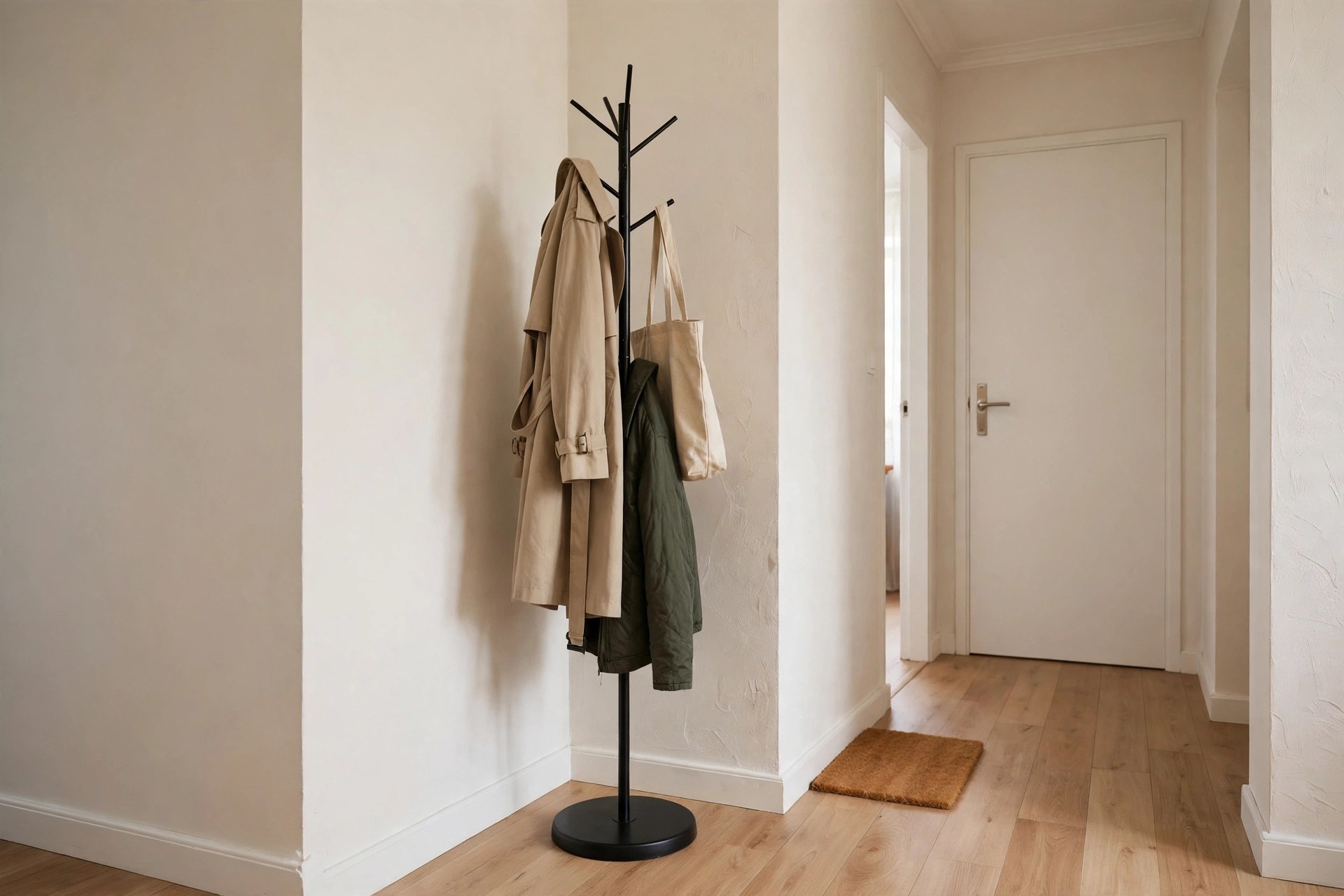
A slim freestanding rack is best if you cannot drill and have a corner to spare. Choose a wide or weighted base so it stays upright under winter layers: a rack that tips over once will never be trusted again. Look for a footprint under 18 inches across, which fits most entryway corners without blocking the walkway. The trade-off is that it holds fewer coats than a wall rail, usually 4 to 6, and it takes floor space, the scarcest thing in a small entryway. It works best for one or two people, or as a second spot for guests. A decorative ladder leaned against the wall works the same way for lightweight jackets, scarves, and tote bags, and it fits a tight corner where a wider rack would feel forced.
4. A Bench Plus Hooks System
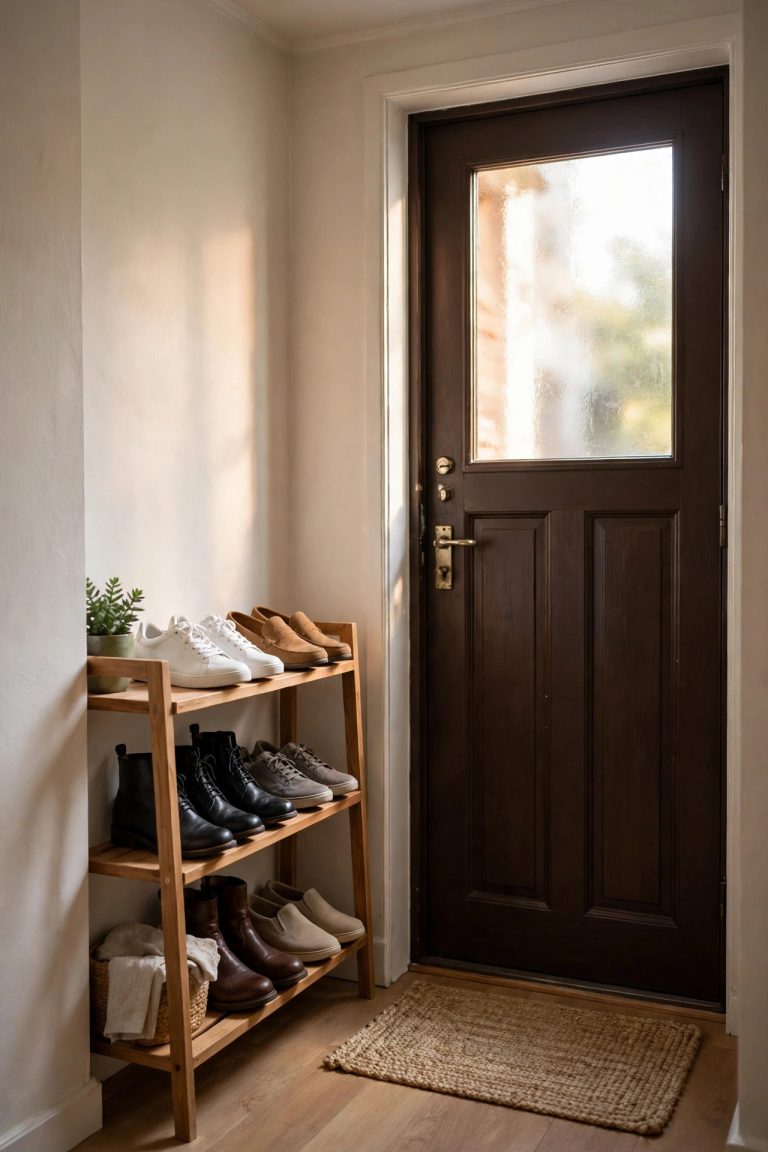
If you have room for a bench, this is the most complete setup, handling coats, shoes, and small items in one zone. The formula is hooks above, a bench or a slim shoe rack below, and one tray for keys and small items. The bench does not need to be big: a bench 12 inches deep and 30 to 36 inches wide is enough to sit and tie shoes, and a shoe tray under it keeps shoes from spreading across the doorway. Keep the system to daily items only. Shoes beyond a daily rotation of 4 to 6 pairs belong in a closet, not the entryway. For the shoe side of the system, see where to put shoes in a small entryway, and pair it with the best shoe rack for a small entryway. If you have no room for a bench, a slim stool or a narrow ladder shelf gives most of the benefit without the footprint.
5. The Guest Plan
Guests are where closet-free entryways fail, because the daily hooks are already full. Solve this before the party, not during it. Keep two hooks permanently empty, or keep a folding garment rack you can roll out when company comes and fold away behind the door afterward. For a bigger gathering, borrow an underused rack from a bedroom for the evening: it costs nothing and disappears in January. Count honestly: if six people are coming, you need six hooks or six feet of borrowed rod actually open when they walk in, not theoretically open under a coat already hanging there. Tell guests where to hang coats when they arrive, because a guest who cannot find a hook will put a coat on a chair, and that chair is then out of use for the evening. For a console-free entryway look, see this small entryway without a console table.
Off-Season Coats Go Elsewhere
The single biggest win is moving off-season coats out. A winter parka in July takes a hook from a jacket worn every day. Store off-season coats in a closet on wide wooden hangers, not hooks, so the shoulders keep their shape, or in a bin under the bed or on a high shelf. Rotate twice a year when the season changes, and check each coat before storage: empty the pockets, clean the stains, and repair loose buttons, because a coat stored dirty comes back stained. Once the daily zone holds only what you wear this season, the hook math starts working and the entryway stops looking like a coat sale.
How many hooks do I need in a small entryway without a closet?
Two per person who lives there, plus two for guests. One hook holds the daily coat and the second holds a bag or a second layer. More hooks invite more coats.
What is the best rental-friendly way to hang coats without drilling?
Over-the-door hooks or adhesive hooks. Check the weight rating against your heaviest coat, test adhesive on a low spot first, and keep heavy winter coats off adhesive hooks if the wall is textured.
How far apart should coat hooks be?
Space hooks 8 to 10 inches apart so coats do not bunch together, and hang them 60 to 66 inches high for adults, lower for children who need to reach them.
Where do heavy winter coats go in a small apartment?
On the wall rail or freestanding rack if you wear them daily, and in a closet on a wide wooden hanger otherwise, so the shoulders keep their shape. Off-season coats should not live in the entryway.
What do I do with guest coats if I have no closet?
Keep two hooks permanently empty, or roll out a folding garment rack when guests arrive and fold it away afterward. Count the guests and make sure that many hooks are actually open when they walk in.