How to Style a Small Entryway Without a Console Table
A small entryway without a console table can still feel welcoming and give everyday belongings a reliable home. You need a place for the things you carry in, room to open the door and a clear route farther into the home. A shallow shelf, a few suitable hooks or part of an existing cabinet may do the job.
Start by deciding what actually needs to stay near the entrance. Keys, one everyday bag and the shoes you are currently wearing have different needs from a week of post, spare coats and a whole shoe collection. Keep the useful items nearby, then build the styling around them.
Check What Fits When the Door Is Open
Open the entrance door as far as you normally need it. Note where the handle passes, where you stand to close the door and where bags or shopping land while you take off your shoes. Check nearby cupboard doors too. A wall that looks empty with everything closed may already serve an important purpose.
Measure the depth available outside that movement area. Include the contents of storage: a hook may project only a little, but a coat or full backpack hangs much farther out. A small bench also needs room in front for someone to sit and put on shoes.
Try carrying your usual bag or shopping through the proposed arrangement. Keep the exit route and access to switches, heating controls and other essential fixtures clear. If a piece only fits when you turn sideways around it, choose a shallower arrangement or move that storage elsewhere.
Three Ways to Arrange a Small Entryway Without a Console Table
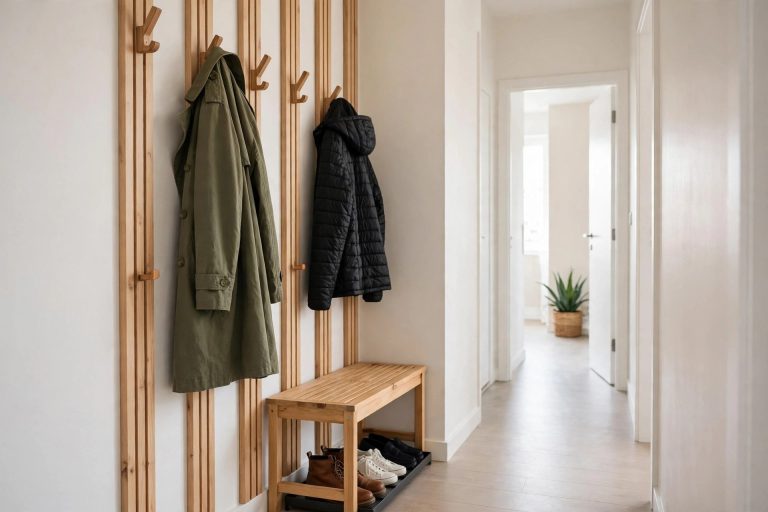
1. A shallow shelf and a short row of hooks
This suits an entrance with usable wall space but little room for furniture legs. Choose a shelf deep enough for a small key dish or wallet, then keep its contents limited to those everyday items. A narrow ledge is helpful only if you can set things down without balancing them on the edge.
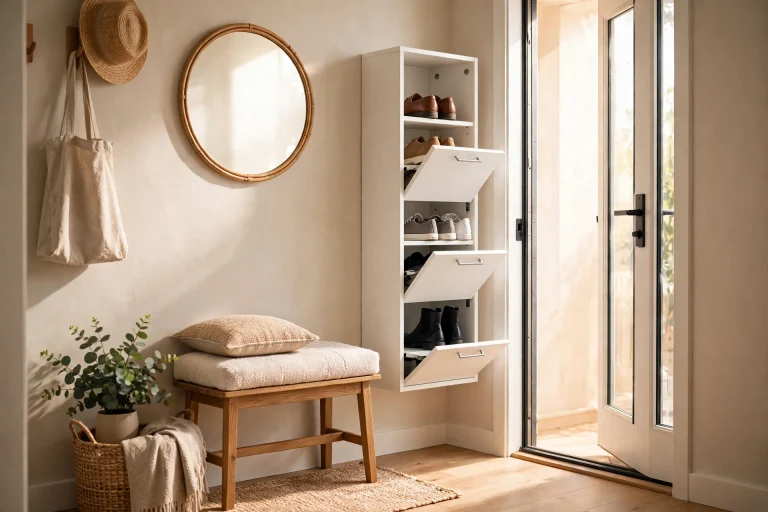
Place bag or coat hooks where the hanging items will not obscure the shelf or crowd the walkway. A mirror can sit above or beside the shelf if you use it for a final check before leaving. You do not need an extra shelf of ornaments to make the arrangement look complete.
Follow the shelf and hook manufacturers’ fixing instructions, using hardware suited to the wall and expected load. Check for concealed services before drilling. For removable adhesive products, verify the surface and weight limits; a hook suitable for light keys may not suit a loaded work bag. Command’s hook installation guidance illustrates why preparation and waiting times need to follow the specific product instructions.
2. A compact bench with a small shoe space
Choose this arrangement when sitting to put on shoes matters and the entrance has enough depth. Use a stable seat designed for sitting, with legs contained within its footprint. Measure the seating position as well as the bench itself so knees and feet do not fill the passage.
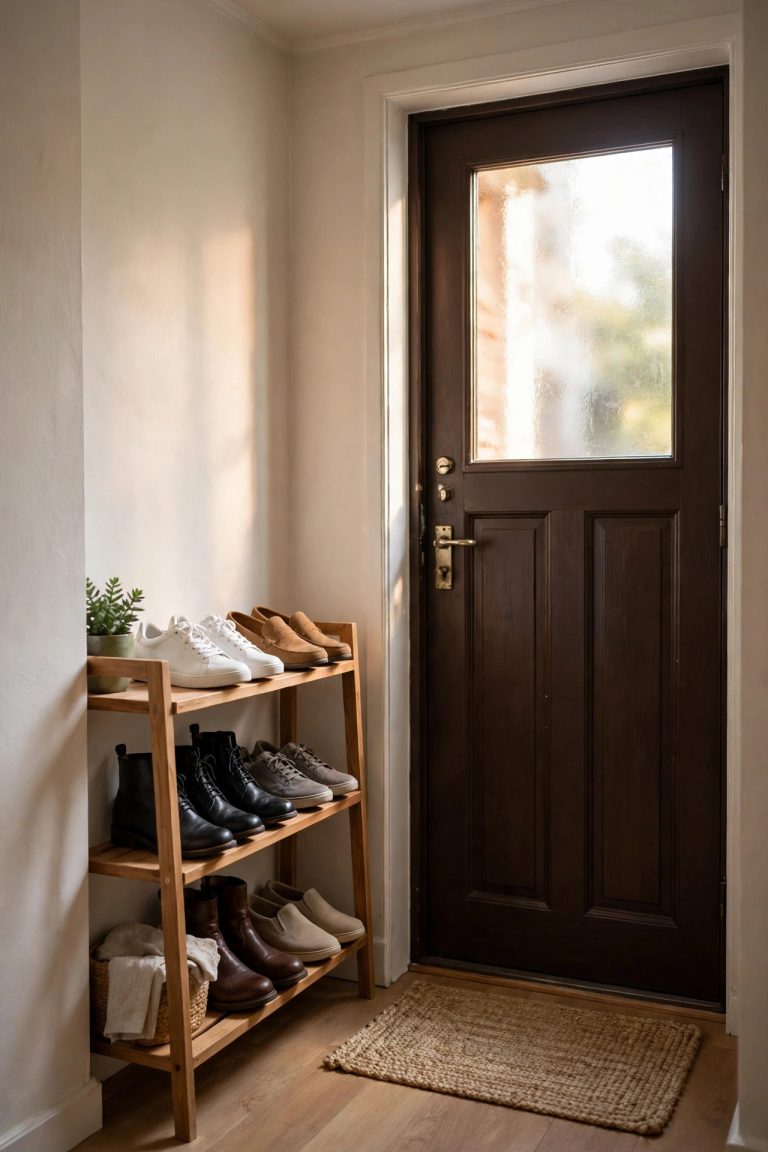
Keep a small number of current shoes beneath the bench, on a suitable shelf or removable tray. Check that your largest everyday pair fits without sticking into the walkway. Use a separate small wall hook or nearby dish for keys so the seat stays available.
A bench does not need a cushion, throw and basket beside it. If those additions must move each time you sit, leave them out. The bench’s material, a simple wall picture and a tidy pair of shoes can provide enough visual interest.

3. An entry area borrowed from existing furniture
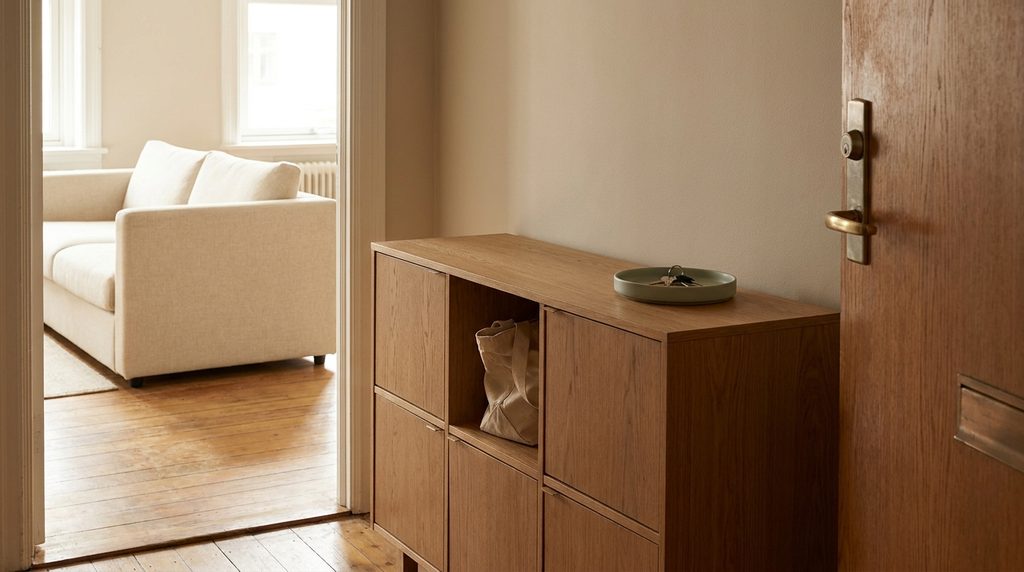
When the front door opens straight into the living room, you may not need new hallway furniture at all. Reserve a small part of a bookcase shelf or cabinet near the entrance for a key dish and an everyday bag compartment. Position it where you naturally pause after coming in.
Keep that small area visually connected to the room by repeating an existing wood finish or accent color. If the shelf is open, give the everyday items a clear space instead of hiding them behind decorative objects. Our guide to styling open shelves without clutter can help you combine practical use with a simple display.
A rental with limited fixing options may suit this approach particularly well. Use furniture you already own and follow its anchoring requirements. Do not move a tall cabinet into a new position without accounting for how it must be secured.
Give Keys, Shoes and Bags Separate Jobs
Keep keys in one consistent place that is convenient when leaving but not visible or reachable from outside through a nearby window or letterbox. A shallow dish on an existing surface may be enough; it does not need a whole table. Avoid mixing receipts and loose post into the same small container.
Treat the entrance shoe space as a place for pairs currently in use. Keep occasional and off-season shoes elsewhere. If footwear comes in wet, use a suitable removable tray and allow it to dry before moving it into enclosed storage. A deep basket full of mixed shoes can make the pair you need harder to retrieve.
For bags, choose a hook or compartment that works with the bag you actually carry. Check it when full, not empty. If several people use the entrance, a few clearly assigned places may work better than a larger shared pile.
Take post and parcels onward when possible. If you need a temporary place for them, give it a small limit and empty it regularly. The goal is to make arriving home easier without moving all household sorting to the front door.
Add a Finished Look Without Filling the Space
Choose one feature you want to notice when entering: a mirror, a favorite framed picture or a small area of color. A mirror is useful if its position suits your height and reflects a view you like. Mount it securely with the specified fixings rather than leaning it in a busy route.
Repeat one or two finishes across the practical pieces. For example, oak hooks and an oak shelf can work with a sage dish and a plain neutral mat. You can also reuse something from another room; our guide to refreshing your home with what you have offers ways to reassess existing pieces before shopping.
Keep a mat flat and stable, with a backing suitable for the floor, and make sure the door clears it. A narrow entrance does not automatically need a runner. Check the existing lighting after dark too: you should be able to find your keys and see the floor without a lamp cable crossing the passage.
Keep the Arrangement Easy to Use
Try the setup during ordinary arrivals: coming home with groceries, leaving with a bag and putting away shoes. If a coat covers the key dish or the bench becomes a parcel shelf, adjust the arrangement before adding another organizer.
Keep only the everyday supply at the entrance and move overflow to its proper home. A small entryway without a console table works when each useful item has an obvious place and the door remains easy to use. The styling can stay simple because the arrangement itself looks orderly.