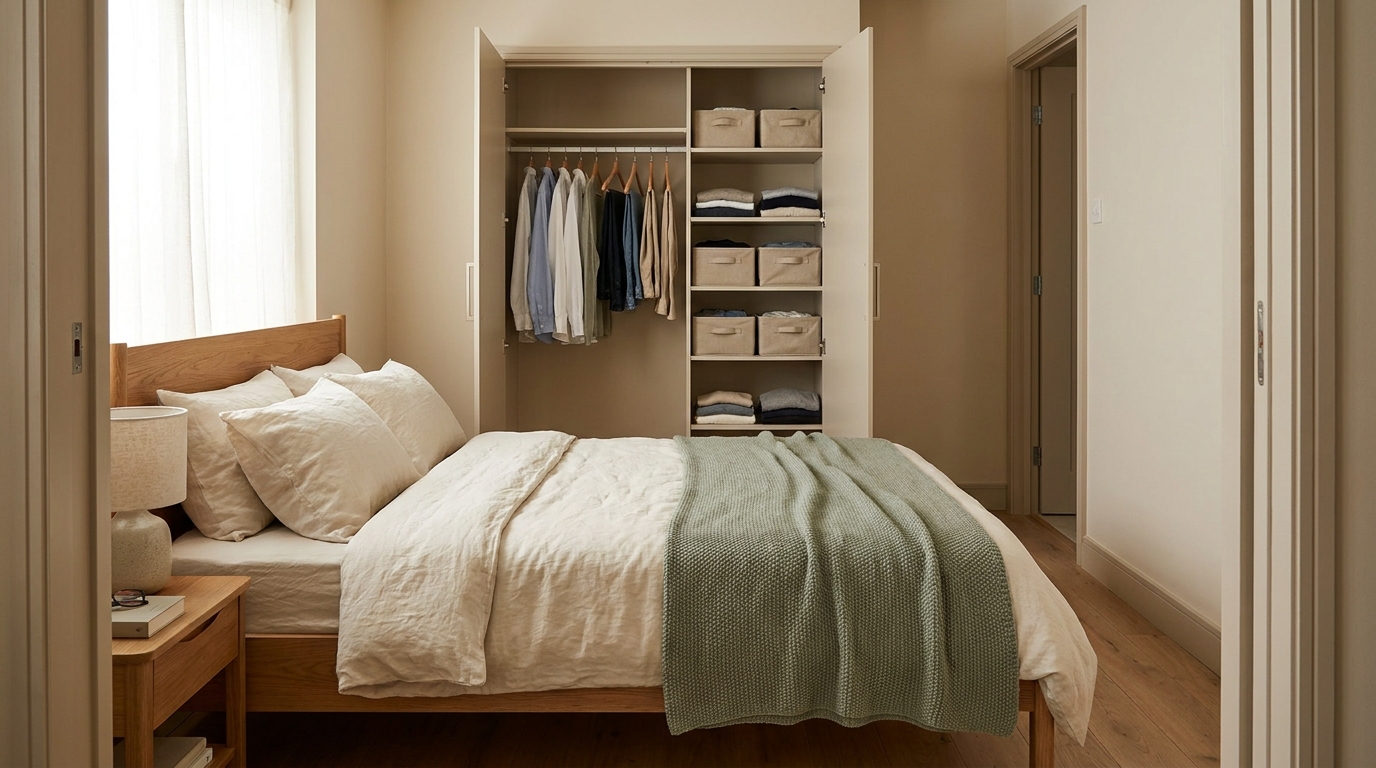
How to Organize a Small Bedroom Without a Dresser
A small bedroom without a dresser needs a reliable place for folded clothes and small essentials. If you already have hanging space, the missing drawers can often be replaced by divided closet shelves, removable bins or drawers in furniture you already use. Keep everyday clothes easy to reach and reserve awkward spaces for things you wear less often.
Begin with the contents of the dresser you are replacing, rather than shopping for another storage unit. This guide focuses on folded clothing. If hanging space is missing too, the short no-closet section below points you toward that separate decision.
On this page: Sort the drawer contents · Choose their new homes · Fit bins to the shelf · Use under-bed access · If there is no closet · Put laundry away · Common questions
Sort the Clothes That Need a Drawer Replacement
Include clean laundry waiting to be put away, then make separate groups for underwear and socks, folded tops, sleepwear and occasional clothing. You need to know how much storage each group uses when the laundry is back, not when half the wardrobe is in the wash.
Keep items on hangers where that suits their care instructions. Do not use the best shelf for occasional linens while shirts you wear every day are hard to reach. Choose one accessible shelf or existing drawer for the daily groups before assigning the rest.
Storage Options for a Small Bedroom Without a Dresser
| Clothing group | Possible home | Useful access check |
|---|---|---|
| Underwear and socks | A shallow divided bin or an available drawer | You can see the divisions without emptying the container. |
| T-shirts and sleepwear | Short shelf stacks or a removable bin per group | You can take one item without disturbing another group. |
| Light folded clothes with only a rail available | A compatible hanging shelf organizer | Its load limit and the rail capacity suit the clothes; enough hanging width remains. |
| Seasonal clothing | An accessible under-bed box or less convenient shelf | Items are clean and fully dry, and the container can be retrieved. |
Pick the arrangement that uses the furniture already in your room. An empty bedside drawer may handle small essentials, while a closet shelf holds tops. Several new baskets scattered around the bedroom can be harder to use than those two existing spaces.
Fit the Container to the Opening, Then Fit the Clothes Inside
Record the clear shelf width, depth and height, plus the narrowest opening the container must pass through. Include hinges, door frames, handles and rims. For a bin used daily, test a straight pull rather than relying on a twist that works only when it is empty.
Illustrative shelf example: suppose the shelf is 24 inches wide, 14 inches deep and has 10 inches of clear height. A door leaves a 10.5-inch-wide opening for pulling a bin straight out. Two bins that are each 11 inches wide would occupy only 22 inches of shelf width, yet neither would pass straight through that opening in that orientation.
Two containers with outside dimensions of 10 inches wide by 12 inches deep by 8 inches high would occupy 20 inches of shelf width, leaving 4 inches total. The opening would leave just 0.5 inch across each bin, so check the actual handles, your grip and the removal route before choosing them. These numbers demonstrate the checks; they are not a recommended bin size for every closet.
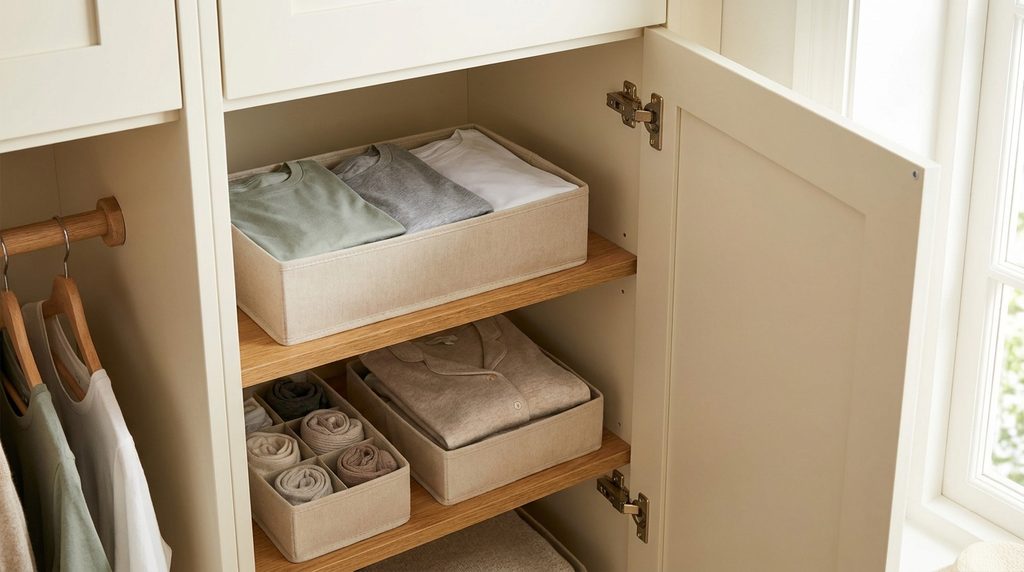
Now try the clothes inside. Folded rows need enough support to stay upright; short stacks may work better for pieces that collapse. Use temporary containers you already own to decide which groups need a divider and which can sit directly on the shelf. Buy for that result rather than filling every shelf with matching bins.
Choose Carefully What Goes Under the Bed
Check support legs, the low side rail, rugs and the space beside the bed. A box that fits underneath still needs a route out. Pull a suitable empty container through the proposed movement before filling it, then check that the loaded version will be manageable.
Use a difficult-to-reach position for occasional clothing or spare linens. A built-in drawer that opens comfortably may suit daily clothes, but a box trapped behind a bedside table will add work every morning. Store textiles clean and fully dry; investigate dampness rather than hiding it beneath the bed.
Keep the bed’s required ventilation clear and follow its storage instructions. You do not need a new storage bed simply because the room has no dresser. If the bed itself blocks the available storage route, review the furniture arrangement in our small bedroom ideas guide first.

If You Have No Closet Either
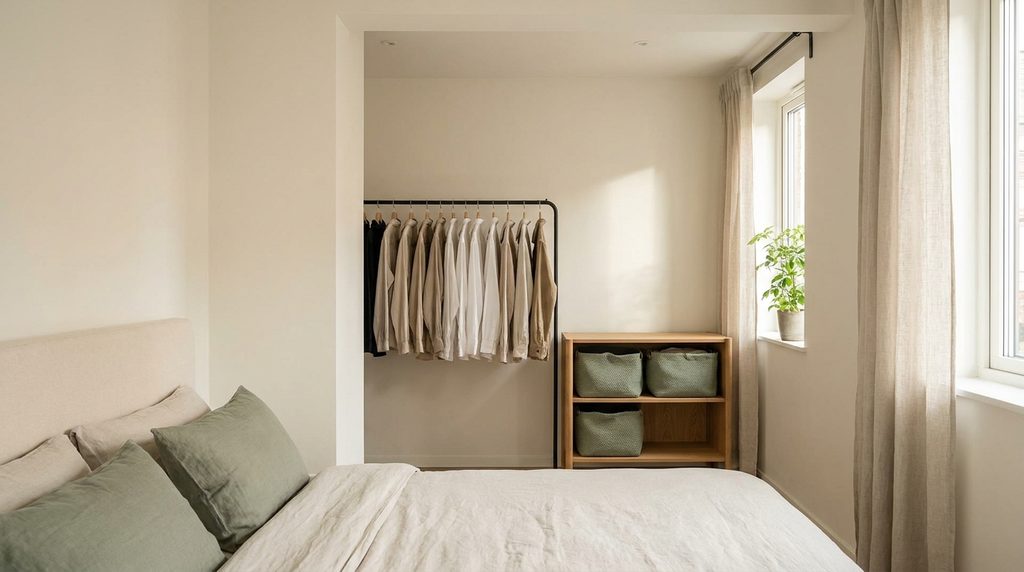
Choose the main hanging arrangement before buying more bins. Our guide to a small bedroom without a closet compares a rack, wardrobe and wall rail. Once that choice is settled, place the folded-clothing storage alongside it. Use existing furniture where possible, following its load and anchoring instructions.
Make Clean Laundry Easy to Put Away
Return one full load of clean clothes to the new arrangement. If a group fits only after you press it down, divide it or move less-used pieces. If returning socks requires lifting two baskets, move that container to an accessible shelf. Solve the specific awkward step before buying another organizer.
Keep dirty laundry separate from these clean-clothing groups. Give clothes you intend to wear again a limited place, such as an appropriate hook or part of the rail, so they do not gradually fill the newly organized shelf.
Common Questions
Can baskets completely replace a dresser? They can replace its storage function when each one has an accessible home. Choose containers you can remove while full and avoid stacking daily-use baskets on top of one another.
What should I try if there is no budget for organizers? Clear one shelf, use short folded stacks and divide smaller items with clean containers you already own. Keep the arrangement until you can name a problem a purchased organizer would solve.