Shower Curtain Length: Getting the Curtain and Liner to Fit
Choose shower curtain length by checking two different finishing points: the decorative curtain should clear the bathroom floor, while the liner must hang where water drains back into the tub or shower base. They do not have to finish at the same level. Measure with the actual hooks or rings fitted, because the hanging hardware changes where each hem lands.
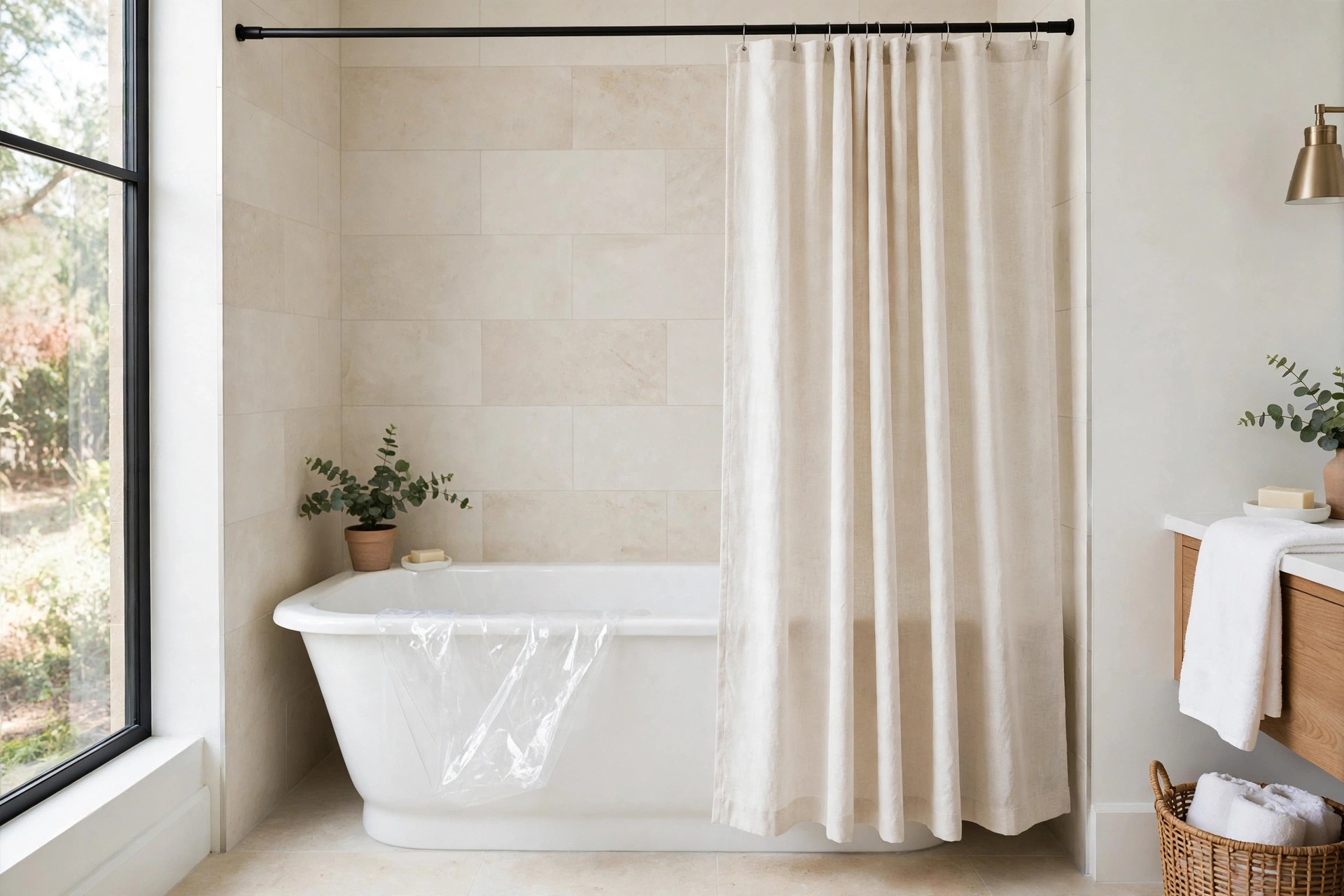
For a typical tub-and-shower combination, the outer fabric curtain hangs outside the tub and the water-containing liner hangs inside. If you use a single curtain designed to contain shower water, it takes the liner’s position during use. Check the product’s intended use; an ordinary decorative fabric panel is not automatically a waterproof barrier.
Standard Shower Curtain Sizes at a Glance
Most tub-and-shower combinations take a standard curtain. Start with the size that matches your setup, then measure to confirm it before ordering, because two curtains with the same label can hang differently once the hooks are fitted.
| Setup | Common size (inches) | Use it when |
|---|---|---|
| Standard tub | 72 x 72 (also sold as 70 x 70 or 70 x 72) | A regular 60-inch tub with a straight rod, the most common home setup |
| Shower stall | 54 x 78 (also sold as 50 x 78) | A narrow standalone stall, where the curtain needs extra length and less width |
| Extra long | 72 x 84 or 72 x 96 | A high-mounted rod or tall ceiling, where 72 inches leaves a bare gap below the rings |
| Extra wide | 84 x 72 or 108 x 72 | A curved rod, clawfoot tub or wraparound setup that needs more fabric to close fully |
How to measure before you buy: measure wall to wall along the rod, then add about 12 inches of width so the curtain can pleat and still close across the opening. For length, measure from the rod to the floor and subtract 1 to 2 inches for the outer curtain, so the hem stays clear of the floor. Measure the liner separately, from the rod to inside the tub, and allow about 6 inches of overlap down inside the tub so runoff drains back in. Always measure with the actual hooks or rings fitted, because the hanging hardware changes where each hem lands.
Find the problem you are trying to fix
- The curtain touches the floor
- The liner is too short
- The rod cannot move
- You have a shower stall instead of a tub
- The length looks right, but water still escapes
- The fit changes after washing
Your Shower Curtain Touches the Floor
First, separate the layers and see which one is dragging. If only the outer curtain is too long, changing its length is a different job from correcting a liner that gathers inside the tub. Lifting the entire rod moves both layers and could pull a previously well-positioned liner too high.
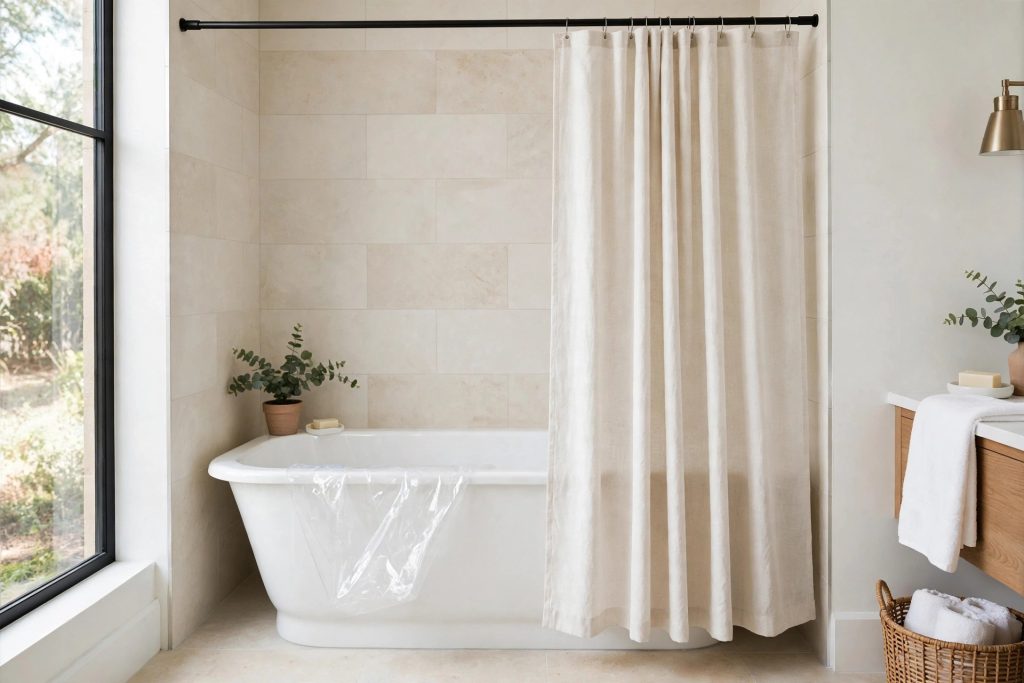
For the decorative curtain, choose a hem position that stays visibly clear of the floor across the whole opening. A bath mat beneath one corner or a floor that slopes slightly can make the clearance uneven. Look at both ends and the middle rather than judging from one side.
If the rod is adjustable, check its installation instructions before changing the height, then recheck the liner. If the rod needs to stay where it is, a shorter curtain may be the simplest solution. A fabric curtain might be altered if its construction and care instructions allow, but settle its washed dimensions before paying to have it hemmed.
Do not cut a liner simply because it looks like an easy shortcut. Its bottom may contain weights, magnets or a finished seam. Ask whether that exact product can be shortened; otherwise choose a suitable length. Keep the support hardware as designed rather than chaining hooks together to improvise a new drop.
The Curtain Looks Right, but the Liner Is Too Short
Judge the liner from inside the tub, not by comparing its hem with the outside curtain. It needs to extend below the rim into the basin so runoff stays inside, without excess material gathering underfoot. A liner that rests on top of the rim can direct water to the wrong side even when it looks long enough from the doorway.
As one retailer’s starting point, Pottery Barn’s hanging guide suggests about 6 inches of overlap down inside a tub. Treat that as guidance to check against the actual tub and liner instructions, not a universal rod height or a rule for shower stalls.
A tall decorative curtain does not solve a short inner layer. Choose the liner for its working position first, then select an outer curtain that hangs appropriately outside. They may need different labeled lengths, particularly with separate hanging positions on double hooks or a double rod.
Material matters too. Pottery Barn notes that many fabric shower curtains need a waterproof liner. If water passes through the fabric itself, buying a longer version of the same decorative panel will not address that problem.
Measure Shower Curtain Length When the Rod Cannot Move
Work from the installed hardware. Photograph the rod and hook arrangement, then write down separate measurements for the outer curtain and liner. Do not start with ceiling height: a high ceiling does not tell you where a curtain hung from an existing rod will end.
- Choose the lower endpoint. For the outer curtain, identify a position clear of the bathroom floor. For the liner, identify its intended position inside the tub or base using the product and enclosure guidance.
- Identify how the product measures length. Check whether the listed dimension runs from the fabric’s top edge or uses another reference. The hanging hole can sit below the top of the material.
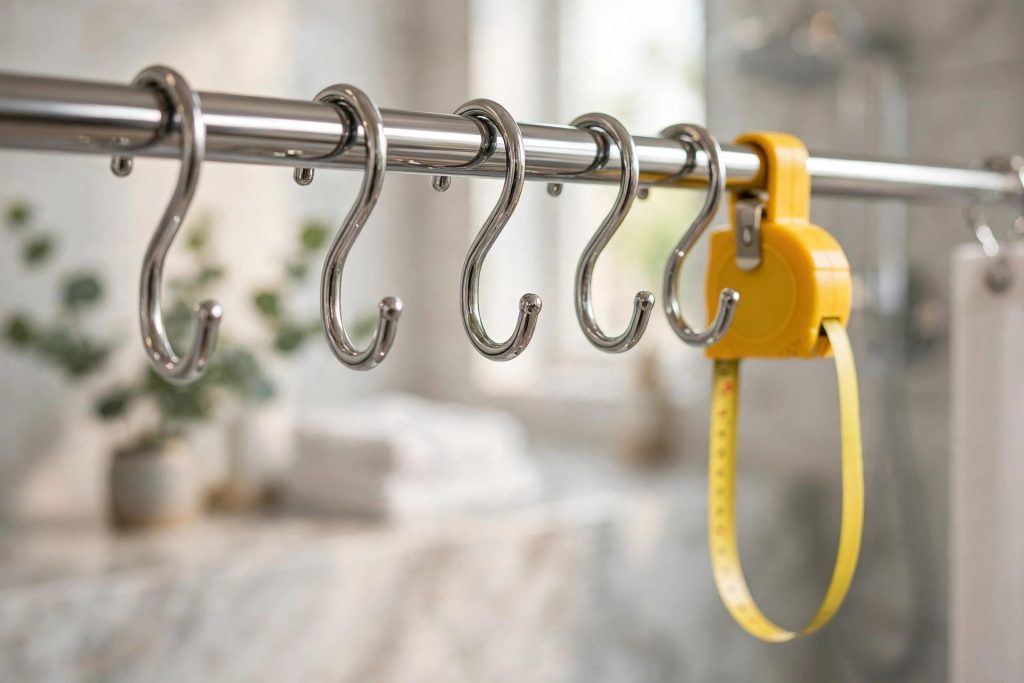
- Account for the actual attachment. Measure with the selected hook fitted. Include any fabric above the hanging hole when comparing your required drop with a top-to-bottom product measurement. Built-in-ring and snap-in systems need their own measuring instructions.
Hooks are not interchangeable in this calculation. For example, Quiet Town lists its Venice hooks as adding approximately 3 inches to total curtain length. That is a specification for those hooks, not an allowance to apply to every ring. Changing hardware after measuring can change the fit.
If you already own a panel, a dry trial hang is especially useful. With the actual hardware, measure how far its hem sits above or below your intended line. That shows the adjustment needed for that particular panel. Compare any replacement’s dimensions and top construction rather than assuming two products labeled the same size will hang identically.
For example, if the trial panel hangs 2 inches below your chosen endpoint, the setup needs about 2 inches less hanging drop. Longer hooks would move it farther downward. Raising an adjustable rod could help, but only after checking the other layer and the rod’s permitted installation positions. This is an illustrative fit check, not a recommended floor gap.
A Shower Stall Needs a Different Fit From a Bathtub
A stall may have a narrower entrance, a shallow curb and an interior floor at a different height from the bathroom floor. Measure the opening and the intended inside hem position separately. Do not transfer the tub-overlap guideline to a low curb.
Size labels can also be misleading. The iDesign stall liner in this example measures 54 inches wide by 78 inches high. That illustrates why you should read both dimensions: a product made for a narrower opening can still be relatively long. It is not a fit recommendation for every stall.
For a raised-curb enclosure, check that the liner hangs on the inside where runoff returns to the base, with the bottom positioned according to the enclosure and curtain guidance. It should not bunch into the area where you stand or step. Confirm the required width as well as height before ordering.
A curbless or accessible shower needs a curtain arrangement matched to its drainage and entry design. Ask the enclosure supplier or installer for the intended curtain and hem position; a generic gap above the bathroom floor is not enough to specify that setup.
The Length Looks Right, but Water Still Escapes
Check where the water is getting out before buying a longer liner. It may be escaping around an end, running off material caught outside the rim, or passing through a damaged panel. Extra length will not close a side gap caused by insufficient width.
Close the liner across its full intended span without stretching it tight. Check the end coverage and the movement around corners. For a curved rod, account for the path the curtain actually follows rather than measuring only the straight distance between the walls.
Look for anything pushing the liner out of position. A caddy, protruding bottle or item left on the rim can catch the material as you close it. Our guide to organizing a small shower without shelves can help you move storage away from that working space.
After adjusting the arrangement, observe it during normal use and check the outside floor. Keep the liner on the water-containing side, and spread it out afterward as its care instructions recommend. If water continues to appear despite correct coverage, investigate the source instead of treating a longer curtain or extra bath mat as the answer.
The Fit Changes After Washing
Keep the curtain and liner care labels separate. One may be machine washable while the other needs wiping; the correct method comes from the particular product, not simply whether it looks like fabric or plastic. Before washing, note the hanging position so you have a useful comparison afterward.
If a panel seems shorter, check that you rehung it on the same hooks and attachment points before assuming it shrank. If laundering has changed its dimensions, do not stretch it with added weights or apply unapproved heat to force it back into shape.
Keep a short note with the product details: width, length, hook type, which layer goes inside, and the care method. Once the outer curtain clears the floor, the liner contains runoff, and both move freely, you have a useful reference for the next replacement.
Frequently Asked Questions
What is the standard shower curtain length?
The standard shower curtain size is 72 x 72 inches for most tub-and-shower combinations, with 70 x 70 and 70 x 72 inches also sold as standard sizes. That 72-inch length suits a regular 60-inch tub with a rod mounted about 72 inches from the floor. Measure your own rod height before ordering, because a higher rod needs a longer curtain.
What size shower curtain do I need for a shower stall?
A narrow standalone stall usually takes a 54 x 78 inch curtain, also sold as 50 x 78 inches. Stall curtains are narrower than tub curtains but longer, because a stall has no raised tub rim and the liner needs extra drop to contain water. Read both dimensions on the label, and confirm the width covers the full opening before ordering.
How far should a shower curtain liner hang inside the tub?
Allow about 6 inches of liner overlap down inside the tub, so runoff drains back into the basin instead of onto the floor. Judge the liner from inside the tub, not by comparing its hem with the outside curtain. A decorative curtain that looks long enough does not fix a liner that rests on top of the rim.
When do I need an extra-long shower curtain?
When the rod is mounted higher than normal or the ceiling is tall, a standard 72-inch curtain leaves a bare gap below the rings. Extra-long curtains are usually 72 x 84 inches, with 72 x 96 inches for the tallest setups. Measure from the rod to the floor first, then choose the length that keeps the outer hem clear of the floor while the liner still reaches inside the tub.
How do I measure shower curtain length if the rod cannot move?
Work from the installed hardware. Measure from the rod to the floor with the actual hooks fitted, and write down separate measurements for the outer curtain and the liner. For the outer curtain, pick a hem position clear of the floor. For the liner, pick a position inside the tub or base. If the rod must stay where it is, a shorter curtain or a different labeled length is usually simpler than moving the rod.