Where to Put a Cat Litter Box in a Small Apartment (So Nobody Smells It)
A cat litter box in a small apartment is a placement problem, not a cat problem. In a house, the box goes in a spare room and everyone forgets about it. In a studio or a one bedroom apartment, there is no spare room, so the box lives where you live, and a bad spot means smell in the kitchen, litter tracked across the rug, or a cat that refuses the box entirely and picks your carpet instead.
The good news: cats are more adaptable to small-space living than dogs, and one well-chosen spot beats two badly chosen ones. This guide ranks the spots that actually work in a small apartment, by smell, privacy, and renter rules, and covers the furniture trick that makes the box disappear in plain sight.
The 4 Rules Before You Pick a Spot
Every spot below is judged against the same four rules. If a spot fails one of them, it fails, no matter how hidden it looks.
First, always accessible. The cat must reach the box 24 hours a day, every day, without you opening a door. A box behind a closed bathroom door is not a litter box, it is a decoration. One closed-door incident is enough for some cats to avoid the box afterward.
Second, quiet and safe feeling. Cats need privacy and a clear escape route. A corner with two open sides beats a dead-end closet, because a startled cat needs somewhere to run. Loud appliances, washing machines, and furnaces next to the box are deal breakers.
Third, away from food and water. Never put the box next to the feeding station. Cats avoid eating near their toilet, and a box beside the food bowl is the fastest route to a cat eating less or avoiding the box.
Fourth, ventilated. The spot needs airflow, a window, a fan, or at least open room air, because in a small apartment you will smell a still-air box from the sofa. A sealed closet with the door shut fails this rule even if it passes the others.
One more number before you start: the standard advice is one box per cat, plus one extra. In a small apartment with one cat, one large box scooped twice a day usually works, and it beats squeezing two small boxes into bad spots. If you have two cats, plan for two boxes in two different areas, not two boxes side by side, which cats treat as a single toilet.
The Bathroom: Best for Most Apartments
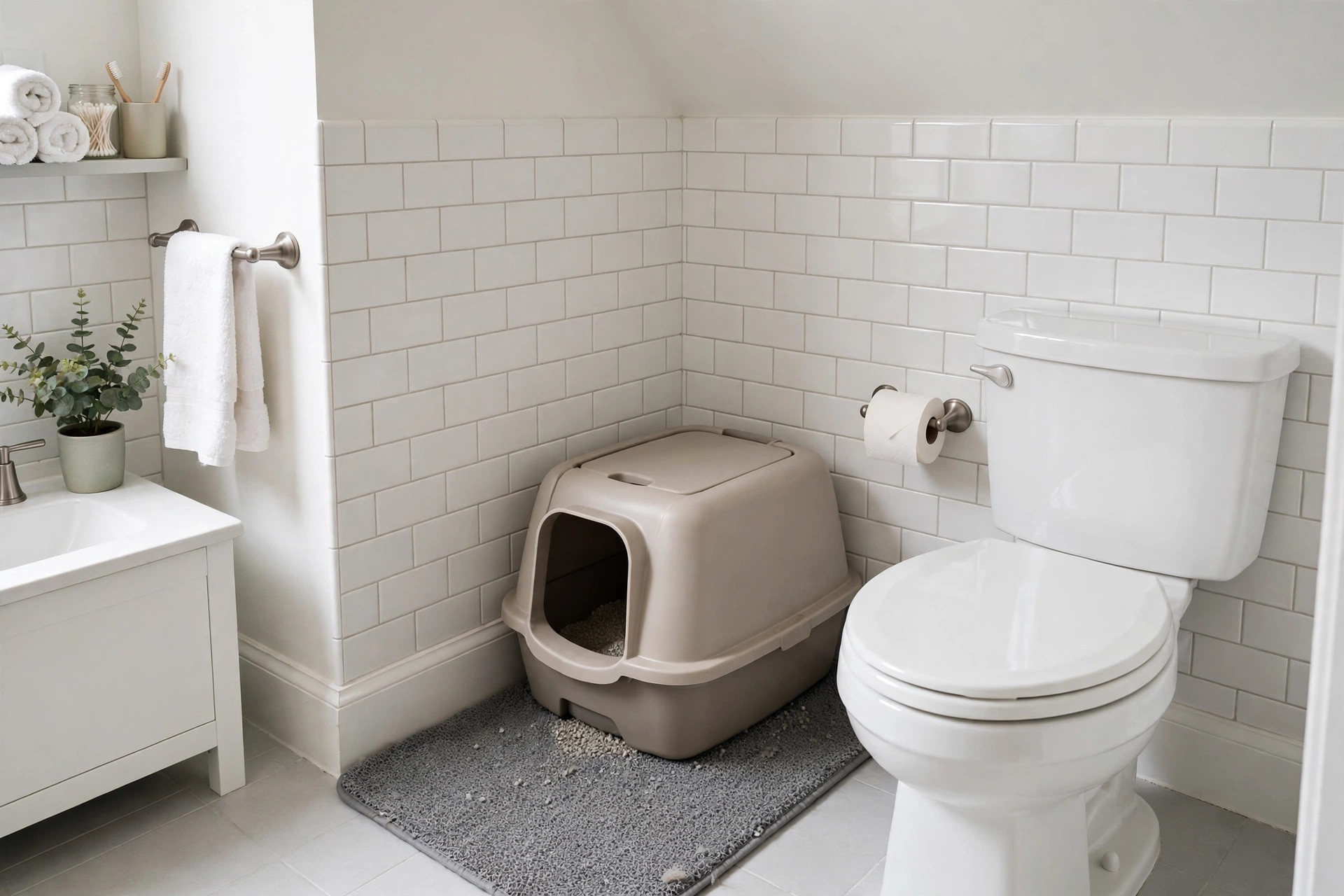
The bathroom wins for most small apartments because it already has what a litter box needs: a hard floor that is easy to clean, a ventilation fan, a door you can prop open, and a room guests rarely inspect closely. Tile handles tracked litter far better than carpet or a rug.
Place the box on the floor beside the toilet or in the corner opposite the door, with at least two feet of clearance on one side so the cat can enter and exit comfortably. Keep it away from the shower spray zone, because a wet box clumps and smells fast. A litter trapping mat under and in front of the box catches most tracked litter before it reaches the hallway.
The door is the whole trick. Prop it open with a door stop or a small wedge, permanently, so the cat never gets locked out. If privacy matters, a door strap that holds the door open a cat-sized gap works, and it costs less than a cat flap. Never rely on remembering to leave the door open, because you will forget once, and once is enough.
Small bathroom? Modify the vanity instead of fighting the floor. Removing the doors from an under-sink cabinet and tucking a shallow box inside turns dead cabinet space into a litter:station, as long as the opening stays open and the fan runs. Our small bathroom storage ideas pair with this, because the same tight bathroom needs both.
The one bathroom risk is humidity. Run the fan after showers and scoop daily, because a damp bathroom makes litter smell stronger, not weaker. If your bathroom has no fan and no window, the bathroom drops to second place, and the living room furniture option below takes first.
The Living Room: Hide It in Furniture
If the bathroom cannot work, the living room is the next best spot, but only if the box is hidden. An open box beside the sofa is the first thing guests see and smell, and it puts the box in the highest traffic zone in the apartment.
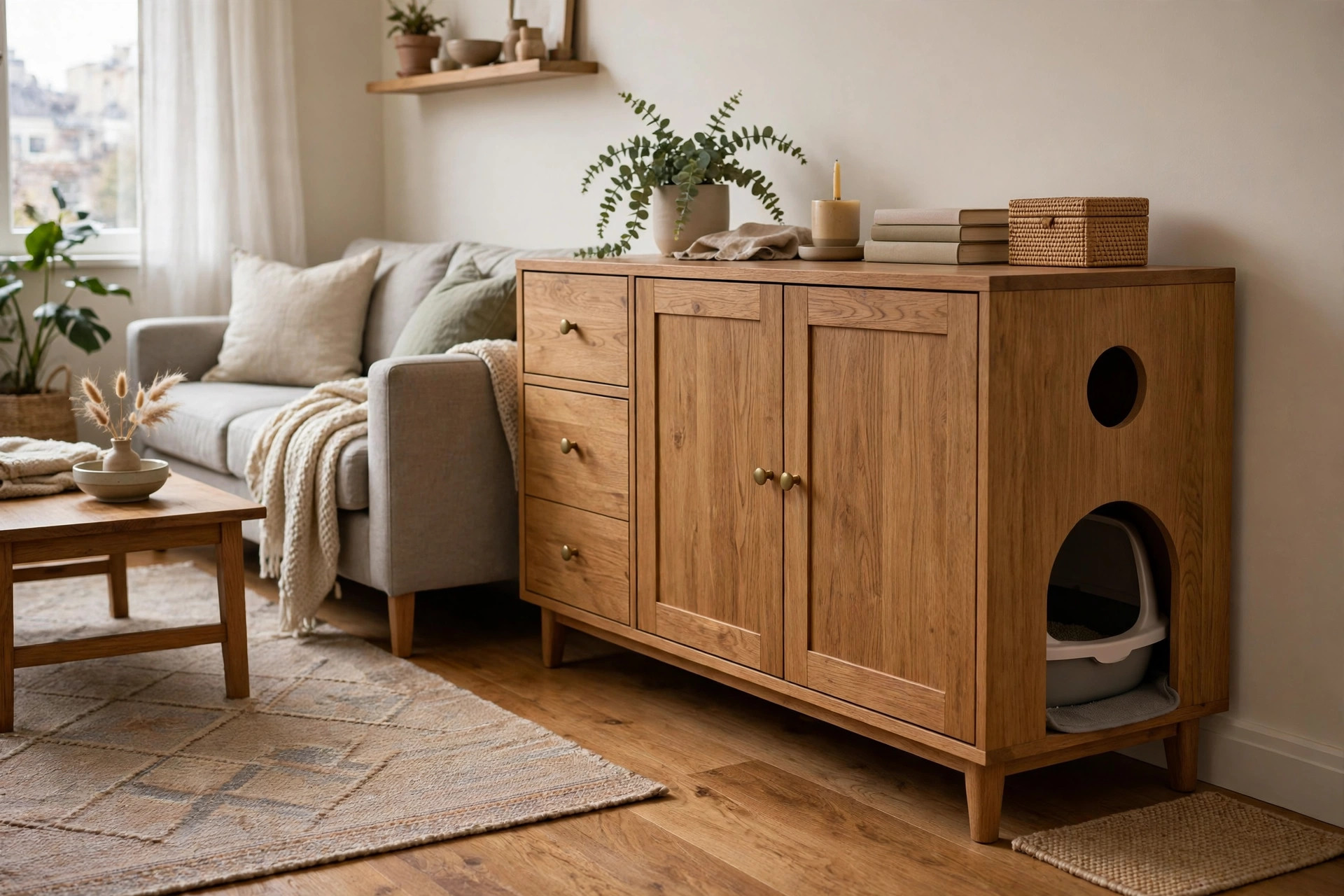
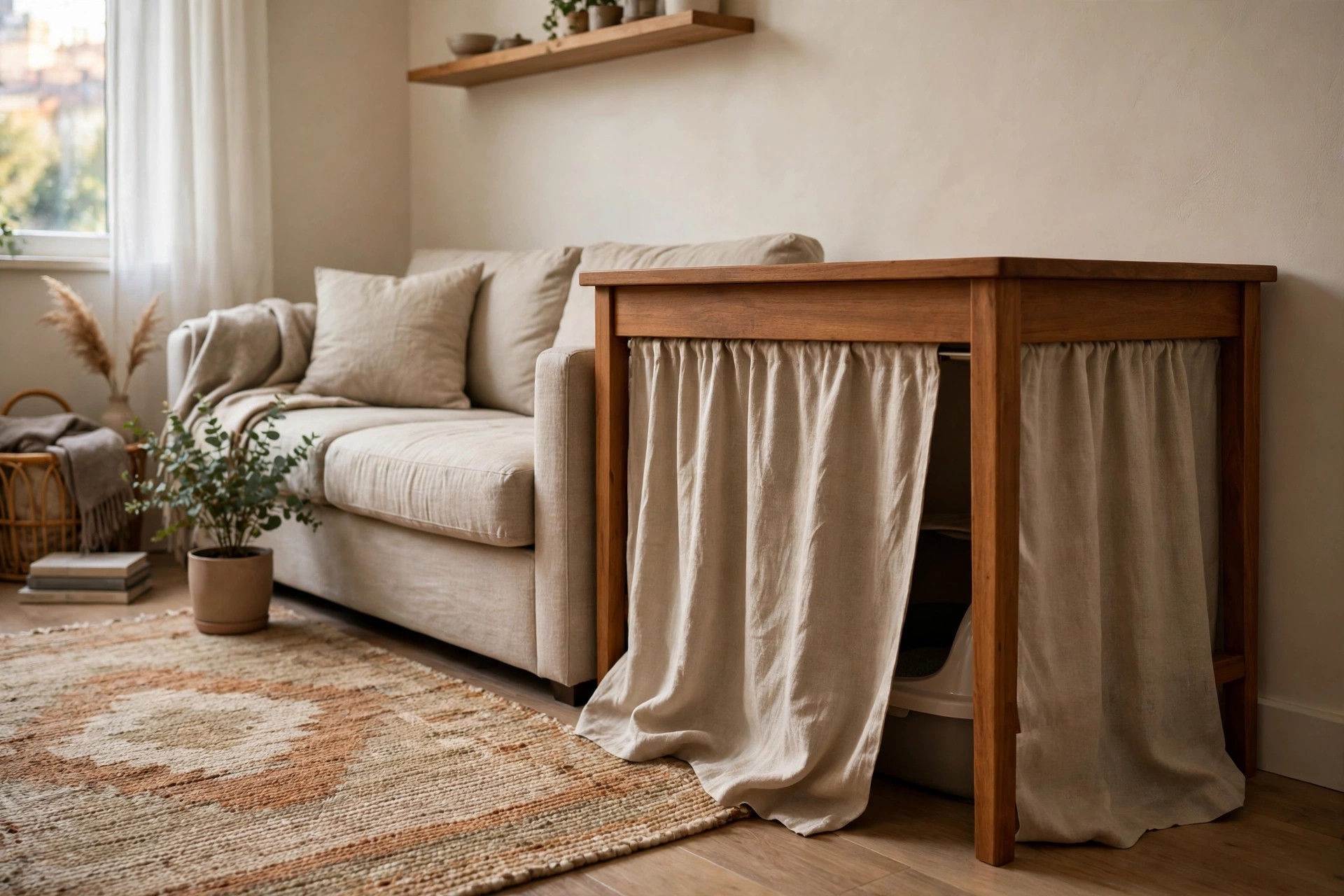
The furniture trick is simple: put the box inside a piece of furniture you already own, or buy one piece designed for it. A sideboard, a bench, or an end table with a cat-sized entry cut in the side hides the box completely from the front, and from the side it reads as ordinary furniture. Purpose-made litter box cabinets look like nightstands or credenzas and cost less than replacing a rug a cat rejected.
Measure before you buy. A standard large litter box is roughly 22 inches long, 16 inches wide, and 15 inches high, and the furniture interior must clear those dimensions plus room for the cat to turn around inside. Top-entry boxes need overhead clearance and cannot go under a table, while front-entry boxes need an opening the cat can walk through without crouching. Check the box you own, not the average, because sizes vary by several inches.
Placement inside the room matters as much as the furniture. A low-traffic corner, behind a reading chair, or a dead corner near a window works, as long as two feet of clearance stays open on at least one side and the spot is not on the main path to the front door. Behind the couch with two-way access hides the box from the front door view while still giving the cat an escape route.
Keep a sealed waste pail and a small carbon-filter air purifier a few feet from the enclosure, not inside it. The purifier needs room air to work, and a sealed waste pail stops the scooped waste from smelling up the room between trash days.
Bedroom and Closet Options
The bedroom is a workable third choice, especially in a one bedroom apartment where the living room is the showpiece and the bathroom is too small. The same furniture trick applies: a nightstand-style enclosure beside the bed hides the box, and the bedroom door stays open or strapped, same as the bathroom rule.
A closet works only if it stays open, always. A reach-in closet with the doors removed and a curtain hung in their place gives the cat privacy and you a tidy look, and the curtain is easier than a door for a cat to push past. A closed closet fails the accessibility rule and the ventilation rule at once, and a cat that feels trapped in a closet will find another spot, usually your bed.
Never put the box in a closet that also holds your clothes. Litter dust settles on fabric, and a cat tracking litter through hanging clothes ruins both. If the closet must do double duty, put the box on the floor at one end and keep clothes on the opposite side, with a mat between, and accept that this is a compromise, not a best practice.
If the bedroom shares a wall with the living room, the box belongs on the bedroom side of that wall, not against the shared wall itself, because scratching and digging sounds travel through thin apartment walls at night.
Spots to Never Use
Some spots look convenient and fail every rule. Skip all of these, even if a friend swears by one.
The kitchen. Food proximity breaks the food rule, and a box beside the stove or the food bowls is unsanitary and stressful for the cat. Kitchens are also high traffic, noisy, and full of smells that mask the box, so you notice problems late.
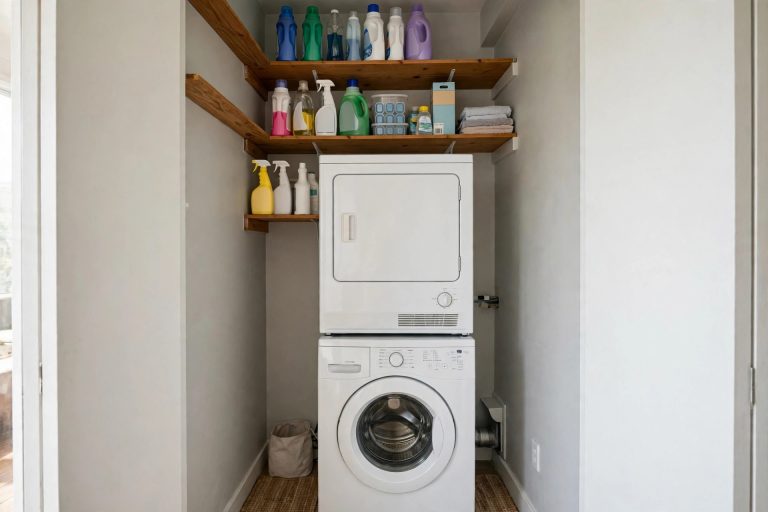
Next to the washing machine or any loud appliance. The vibration and sudden noise startle cats mid-use, and a startled cat avoids that spot. This rules out the laundry corner for most apartments, even though the floor is easy to clean.
Inside a closed closet, cabinet, or under a bed with no exit. A cat with one way in and no way out feels trapped, and a trapped cat stops using the box. Under-bed boxes also collect dust and are miserable to scoop.
On the balcony. Temperature swings, rain, and the risk of a cat slipping through railing gaps make balconies unsafe, and most leases ban pet toilet areas outside. A balcony box is also the first thing neighbors complain about.
Beside the front door. The highest traffic, noisiest, coldest-draught spot in the apartment, and the first thing every guest sees. If your only option is near the door, use a furniture enclosure and place it at least a few feet inside, around the corner from the entrance, not beside it.
Odor Control in a Studio
In a studio, there is no door between you and the box, so odor control is part of placement, not an afterthought. Three habits matter more than any product.
First, scoop twice a day, morning and evening. In a small space, you see and smell the box more often, which is actually an advantage, because the habit sticks. A twice-daily scoop with unscented clumping litter and a sealed waste pail keeps a studio smelling neutral.
Second, run air, not fragrance. A small carbon-filter air purifier a few feet from the box, plus the bathroom fan or a cracked window, removes odor instead of covering it. Plug-in air fresheners and scented litter irritate cats, and a cat that dislikes the smell of its box avoids the box, which creates a worse problem than the odor.
Third, clean the box itself weekly. Empty it fully, wash it with mild soap and water, and dry it before refilling. Plastic absorbs odor over time, so a box that smells even when empty needs replacing, usually once a year for a single-cat home.
If odor persists after all three habits, the spot is wrong, not the litter. Move the box to a ventilated spot before buying a stronger product, because no litter covers a still-air corner.
Renter Rules: Doors You Cannot Cut
Most litter box guides tell you to cut a cat flap into a door. As a renter, you usually cannot, and a cut door is a deposit deduction. Use no-cut options instead.
A door strap holds any interior door open a cat-sized gap and removes in seconds at move out. A door stop or wedge does the same job for free. For a closet, remove the doors, store them flat under the bed or on top of a wardrobe, and hang a curtain in their place, then reinstall the doors before you leave. Photograph the doors and hinges before removal, so reinstallation is exact.
Check your lease for pet clauses before you buy furniture for the box. Some leases restrict where pet items can go, require a pet deposit, or ban cats from carpeted rooms. A lease that bans cats from the bedroom moves the box out of the bedroom option entirely, so read it before you commit to a spot.
One last renter trick: if the box must sit on carpet, put a large waterproof tray under the mat. Litter and the occasional miss stay on the tray, not in the carpet fibers, and the tray lifts out at move out with no trace. Our guide to hiding a washing machine in a small apartment covers the same deposit-first thinking for another awkward appliance.
Where is the best place for a litter box in a small apartment?
The bathroom, with the door propped open, is best for most apartments: hard floors, a ventilation fan, and easy cleaning. If the bathroom is too small or has no fan, a litter box hidden inside furniture in a low-traffic living room corner is the next best spot.
Can I put a litter box in a closet?
Only if the closet stays open permanently. Remove the doors and hang a curtain instead, keep the opening clear, and never store clothes in the same closet. A closed closet traps the cat, blocks airflow, and usually leads the cat to pick another spot.
How do I keep a litter box from smelling in a studio?
Scoop twice a day, use unscented clumping litter, keep a sealed waste pail nearby, and run a small carbon-filter air purifier a few feet from the box. Wash the box weekly. If odor persists, the spot lacks ventilation and should move before you buy stronger products.
How many litter boxes does one cat need in a small apartment?
The standard advice is one box per cat, plus one extra. With one cat in a small apartment, one large box scooped twice a day usually works and beats squeezing two small boxes into bad spots. With two cats, use two boxes in two different areas.
Can I cut a cat flap in my rental door?
Usually no, and a cut door costs part of your deposit. Use a door strap that holds the door open a cat-sized gap, a door stop, or remove closet doors and store them flat for reinstallation. Photograph hinges and doors before removal.