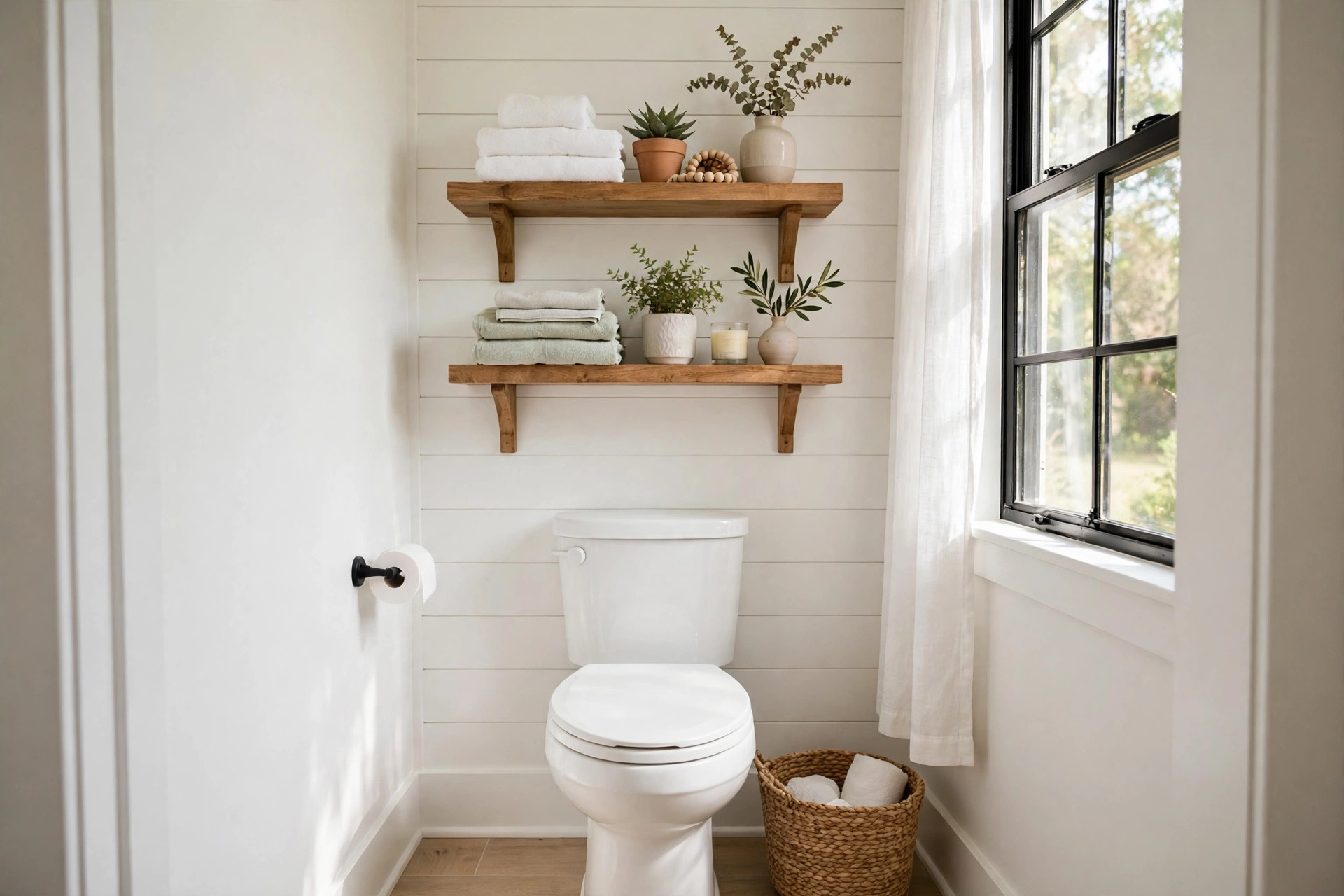
How High to Hang Shelves Above a Toilet: Exact Measurements
Search “how high to hang shelves above a toilet” and you get five different answers: 10 inches above the tank lid, 24 inches above the tank, 16 to 20 inches, two feet, or 36 inches from the floor. They cannot all be right, and none of them explains why.
They can all be right, actually, because they are answering different questions. This guide gives you the two clearances that decide everything, then turns every one of those conflicting numbers into a simple decision: minimum height, comfortable height, and when each applies in a small bathroom.
The two clearances that decide everything
Every shelf height above a toilet is governed by two clearances. Get these right and the exact number picks itself.
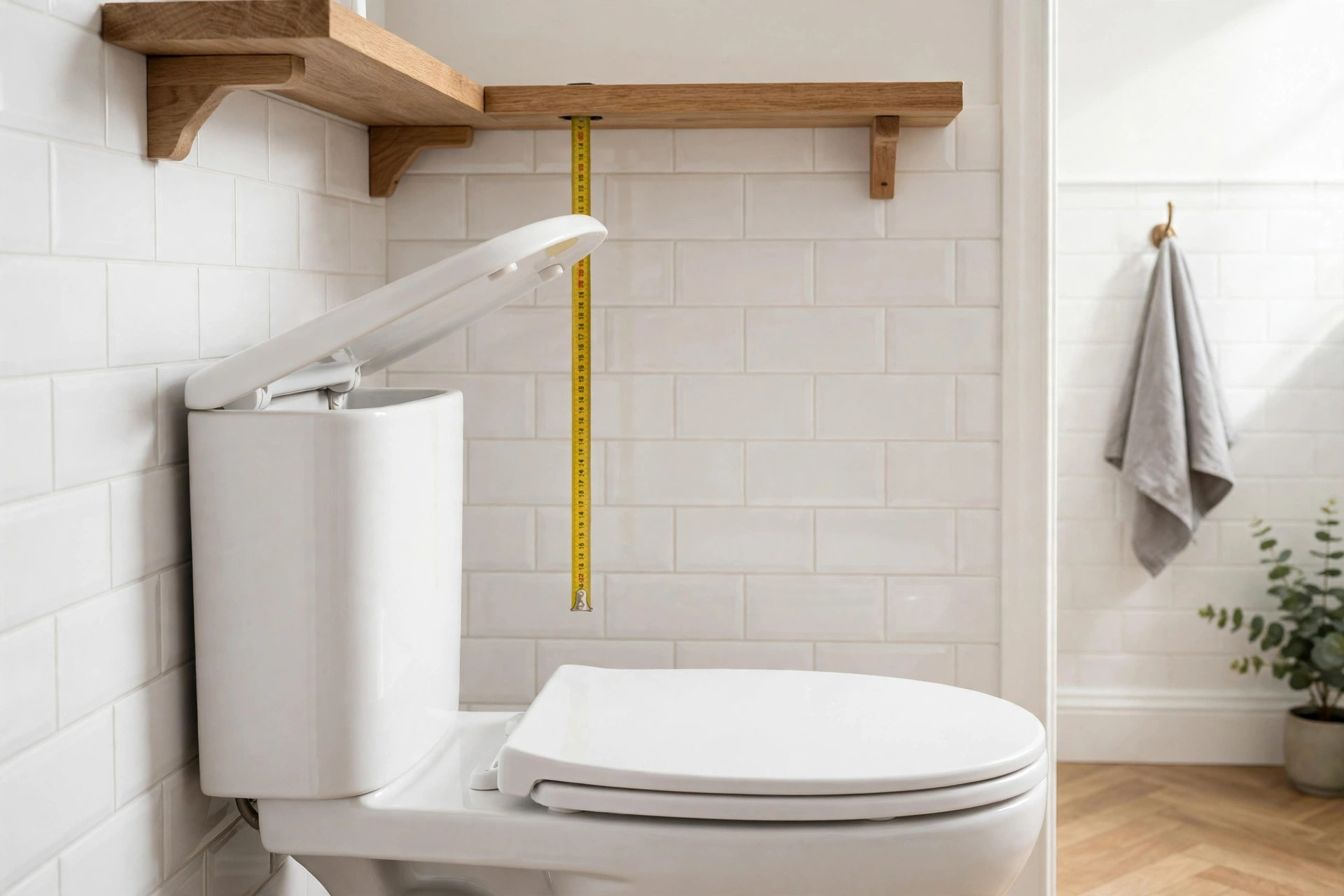
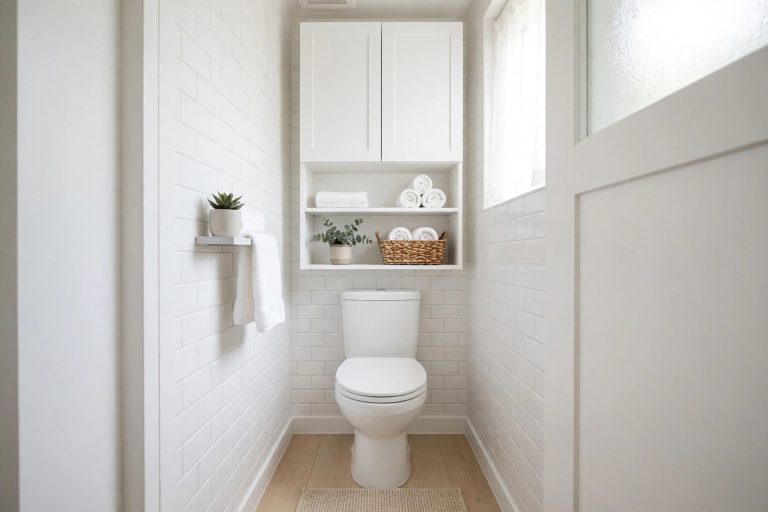
Clearance 1: tank-lid service access. The tank lid is not decorative. You lift it off to drop in a cleaning tablet, adjust the fill valve, or reach the shutoff. If the bottom shelf sits so low that the lid cannot lift straight up and clear the tank, you have built a maintenance problem into the wall. You need at least 2 to 3 inches (5 to 8 cm) of air above the tank lid, and enough room to tilt the lid out.
Clearance 2: head clearance when standing up. This is the one people forget until the first bump. When you stand up from the toilet, your head travels forward and up. A shelf that is technically reachable but sits in the head’s path will get hit, hard, usually at 6 a.m. In a small bathroom where the toilet is close to the wall, this clearance matters more than in a spacious one.
Measure your tank height first: from the floor to the top of the tank lid. Most standard toilets land between 27 and 31 inches (69 to 79 cm). Add your lid clearance to that number and you have your minimum shelf height. Everything below is decoration advice; this is the physics.
Minimum vs comfortable: reconciling the conflicting advice
Here is what each of those competing numbers actually means, translated into the two clearances:
“10 to 12 inches above the tank lid.” This is the tight minimum. It satisfies lid access and keeps everything within easy reach, which suits very small bathrooms where you want daily items close. The trade-off: the lid barely clears, so servicing the tank means removing shelf items first, and taller users should check head clearance carefully.
“16 to 20 inches above the tank.” The comfortable middle ground, and the best default for most small bathrooms. The lid lifts out freely, there is room for taller bottles on the shelf, and head clearance stops being a worry for most people. If you want one number without overthinking, start here.
“24 inches (two feet) above the tank.” Generous. Choose this when the tank is tall (30 to 31 inches), when you want the shelf to hold decor rather than daily supplies, or when the bathroom has high ceilings and a low shelf would look cramped. The trade-off is reach: items on a shelf 55 inches off the floor are not daily-use items for shorter household members.
“36 inches from the floor.” This one measures from the floor, not the tank. With a 27 to 31-inch tank, 36 inches from the floor means just 5 to 9 inches above the lid, which is the minimum zone. It works for low tanks in tight spaces but leaves almost no margin, so verify your actual tank height before trusting it.
The reconciled rule: minimum bottom-shelf height is your tank height plus 3 inches; comfortable is your tank height plus 12 to 16 inches. For the common 28-inch tank, that means a minimum of 31 inches from the floor and a comfortable range of 40 to 44 inches. For a fuller set of storage strategies around the toilet zone, see our guide to small bathroom storage ideas.
How wide and deep the shelf should be in a small bathroom
Height is only half the fit. A shelf at the perfect height but the wrong size still fails.
Width. Standard toilets run 20 to 28 inches wide (51 to 71 cm). A shelf that spans just the toilet width looks tidy; a shelf that runs wall to wall in a narrow alcove looks built in and holds far more. Either way, keep at least an inch of clearance from side walls or door trim so the shelf does not bind or look wedged in.
Depth. This is where small bathrooms punish mistakes. Six to 8 inches (15 to 20 cm) is the sweet spot above a toilet: deep enough for folded towels, a small basket, or a row of bottles, shallow enough that your head never meets it. Anything deeper than 10 inches in a tight bath invites head bumps and visually crowds the room. If you need more storage than a 6-inch shelf holds, add a second shelf rather than a deeper one.
Side clearance. Check what is beside the toilet before you commit to a wide shelf: a door swing, a towel bar, or a vanity edge can all collide with a shelf that looked fine on paper. If you are also sorting out the small things that live near the toilet, our guide on where to put toilet paper in a small bathroom covers the holders and nooks that pair well with shelving.
Stacking multiple shelves: spacing that actually works
Two or three stacked shelves turn the toilet wall into a proper storage column, but only if the spacing is honest about what fits between them.
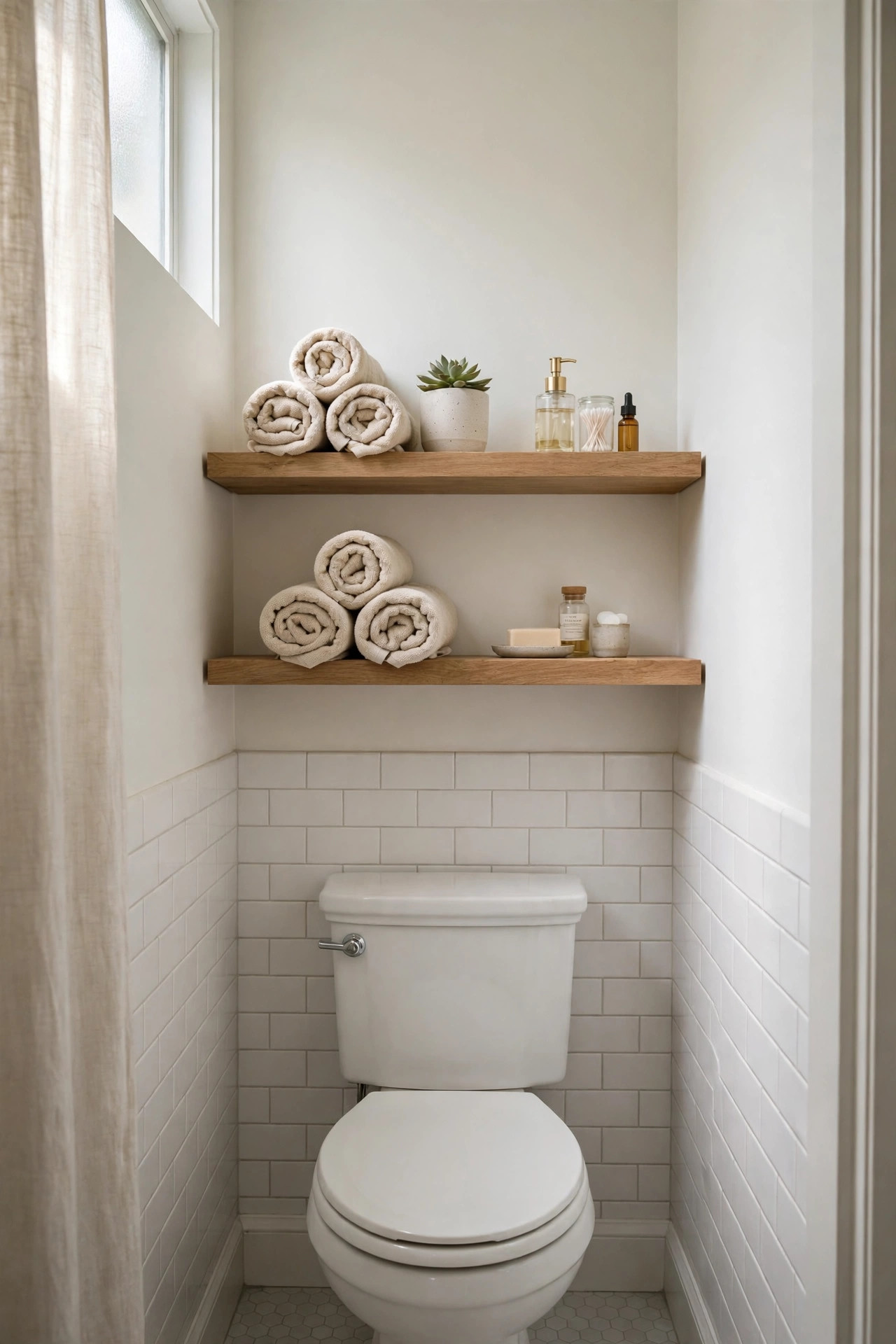
12 to 15 inches (30 to 38 cm) between shelves is the working range. Twelve inches fits folded towels and standard bottles; 15 inches fits taller pump bottles and small baskets. Go tighter than 12 and you cannot get your hand in to grab anything; go wider than 16 and you waste vertical space.
Respect the reach zones. The bottom shelf is your daily shelf: toilet paper, the hand towel, the things you grab half asleep. Keep everyday items below about 48 inches from the floor (122 cm). The middle shelf, roughly 48 to 60 inches, suits weekly items and spare supplies. Anything above 60 inches is decor and deep backup, the spare rolls and the plant you water on Sundays. Plan the spacing from the bottom up, not the top down.
Keep the column aligned. Stacked shelves look intentional when their edges line up. Uneven depths and staggered widths read as clutter even when the shelves themselves are tidy. If your walls are not perfectly straight, which is common in older small bathrooms, measure at several heights before you drill.
Floating shelves vs freestanding etageres
Floating shelves screw into the wall, usually into studs. They look the sleekest, hold the most weight per inch of visual bulk, and you choose the exact height using the clearances above. The cost is commitment: drilling into tile or plaster, finding studs in a wall that may have pipes behind it, and patch holes if you ever move them. Best for owners who know their wall structure.
Freestanding etageres (over-toilet storage units) stand on legs that straddle the toilet. No drilling, no studs, and you can pull the whole unit out to clean behind the tank. They are the renter’s answer and the fastest install by far. The trade-offs are fixed heights, which may not match your ideal clearance math, and stability: tall narrow frames need anti-tip hardware, and anything you put on them should respect the weight rating. If this route appeals, our buying guide to the best over-toilet storage for small bathrooms compares four units with the fit measurements that matter.
The honest rule: if you rent, or your walls are tile you are not allowed to drill, go freestanding. If you own and can hit studs, floating shelves give you the exact heights from this guide and the cleanest look.
Mistakes to avoid
Blocking the tank lid. The number one error. A shelf that clears the lid by half an inch today will block it the day the lid needs to come off for a running toilet repair. Keep 2 to 3 inches minimum, and test it: lift the lid fully before you load the shelf.
Shelves too deep. Anything past 10 inches deep above a toilet in a small bathroom is a head bump waiting to happen. Shallow and stacked beats deep and single every time.
Daily items out of reach. A beautiful shelf at 62 inches holding the toilet paper you need at midnight is a design failure. Daily items live on the lowest shelf, always.
Skipping the stud. A floating shelf loaded with bottles and towels is heavy. Drywall anchors alone will eventually sag or pull out in a humid bathroom. Hit at least one stud per shelf, or choose a freestanding unit instead. If drilling is simply not an option, see how to organize a small shower without shelves for no-drill storage ideas that apply the same thinking elsewhere in the bath.
Measuring once. Walls lean, floors slope, and tank heights vary by model. Measure the tank height, the width at two heights, and the door swing before you buy or drill. Ten minutes with a tape measure beats an afternoon of patching holes.
Frequently Asked Questions
How high should a shelf be above a toilet tank?
Measure your tank height from the floor to the top of the lid (usually 27 to 31 inches), then add clearance. Minimum is tank height plus 3 inches; comfortable is tank height plus 12 to 16 inches. For a 28-inch tank, that means 31 inches minimum and 40 to 44 inches for comfort.
Can I hang a shelf above the toilet if I rent?
You can, but skip drilling. A freestanding over-toilet etagere needs no holes and moves with you. Adhesive-mounted small shelves work for very light items. Floating shelves that need studs and wall anchors are a poor fit for most rentals.
How deep should shelves above the toilet be?
Six to 8 inches (15 to 20 cm) is the sweet spot in a small bathroom. That holds folded towels and bottles without entering head space. Anything deeper than 10 inches risks head bumps and visually crowds a tight bath.
How far apart should stacked bathroom shelves be?
Space them 12 to 15 inches (30 to 38 cm) apart. Twelve inches fits folded towels and standard bottles; 15 inches fits taller pump bottles and small baskets. Keep everyday items on the lowest shelf, below about 48 inches from the floor.
What is the biggest mistake when hanging shelves above a toilet?
Blocking the tank lid. If the shelf sits so low that the lid cannot lift straight up and out, routine maintenance becomes a shelf-unloading project. Always keep 2 to 3 inches of air above the lid and test the lift before loading the shelf.