Bath Mat vs Bath Rug: Which Does Your Bathroom Need?
For the spot where you step out of a shower, choose an absorbent floor mat intended for that use, with suitable backing or an approved underlay for your floor. For a drier spot by the vanity, you can give more weight to softness and appearance. You do not automatically need both.
The bath mat vs bath rug decision gets confusing because shops use the names loosely. A product called a rug may be absorbent and machine-washable; a product called a mat may still have care or placement requirements that do not suit your room. Start with the job, then read the exact product details.
On this page
- What the names tell you
- Choose for three different bathroom spots
- Check washing and drying before buying
Bath Mat vs Bath Rug: What the Names Tell You
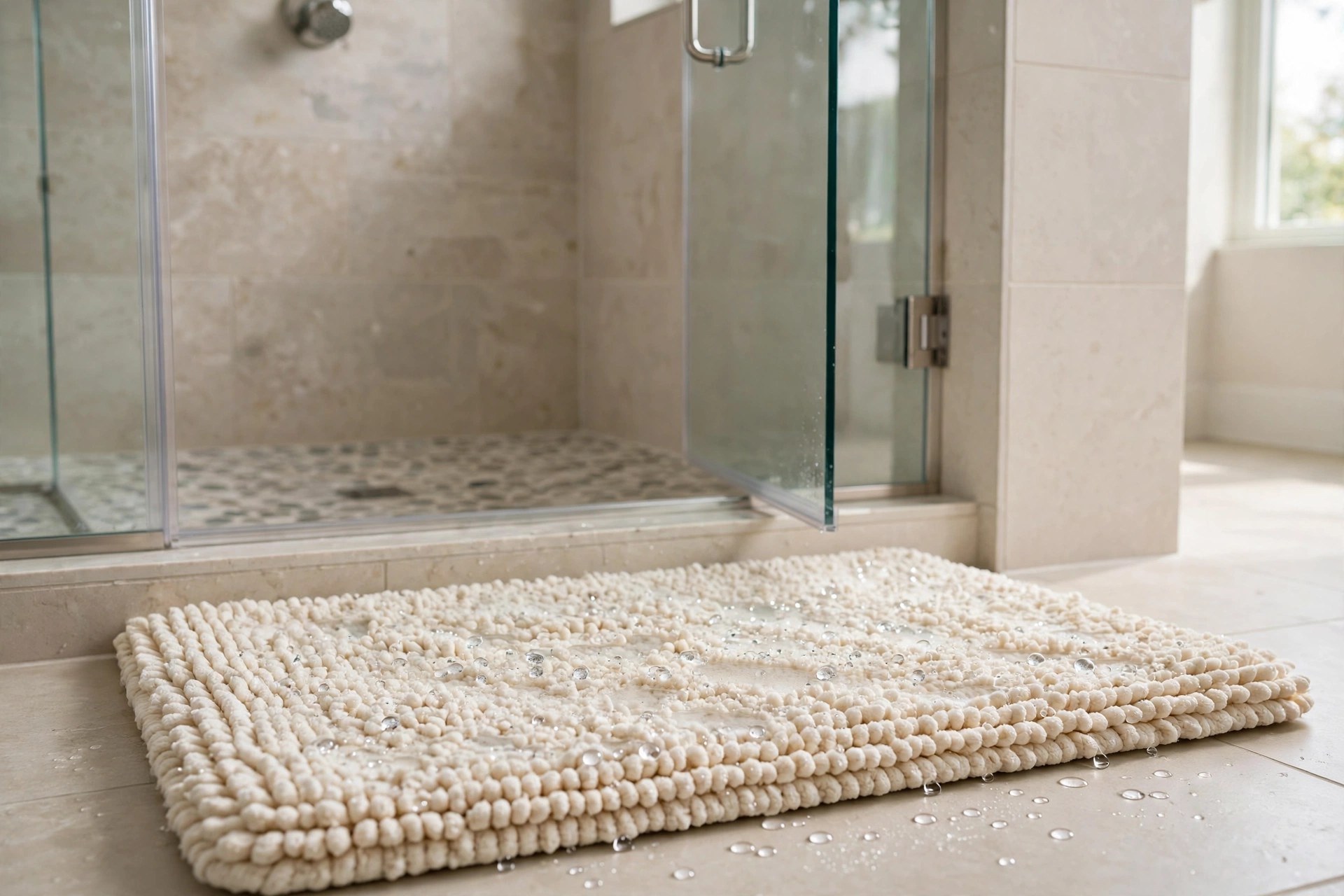
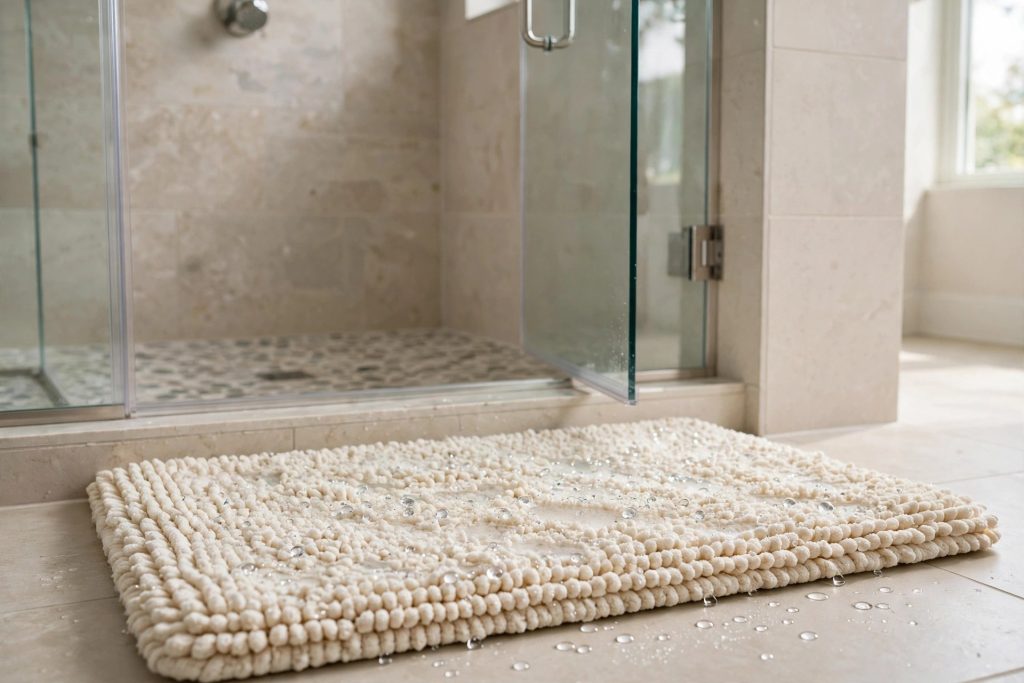
In everyday shopping, a bath mat usually means the smaller piece used to catch drips outside a tub or shower. A bath rug often emphasizes a soft surface, color or pattern. Those are useful descriptions of purpose, not reliable promises about the material, backing or washability.
For example, The Company Store’s reversible cotton bath rug is described as absorbent and has machine-washing instructions. The manufacturer also recommends a rug pad on slippery surfaces. Its name alone would not tell you those details.
Here, “bath mat” means a floor covering outside the bath or shower. A suction-cup mat made for the inside of a tub is a different product, and the two should not be substituted for each other.
Before comparing colors, look for three answers: where the product is intended to be used, how it stays in place on your floor, and how every part is cleaned. A decorative area rug with no guidance for damp bathroom use is a poor candidate for the spot receiving water from wet feet.
Choose for the Spot, Not the Whole Bathroom
Right outside the shower or tub
Think about your first step out. The mat should sit where your feet naturally land, without making you reach sideways for it. Measure that usable area with the shower door and bathroom door open. Include any pad in the thickness check so a swinging door does not catch the edge.
Choose the backing or separate underlay as part of the product, not as an afterthought. Confirm suitability for the floor finish and wet bathroom use. Follow the setup instructions, keep the surface beneath clean, and stop using an arrangement that slides, bunches or develops raised edges.
A mat can catch normal drips, but it should not be the solution to water escaping the enclosure. If it becomes soaked after every shower, check where the water comes from. On a tub-and-curtain setup, the curtain and liner position may need attention before you buy a larger mat.
Dry the floor beneath whenever it gets wet. Putting a second textile over a damp mat only adds another layer to manage. If the mat remains damp between showers, reassess its drying arrangement and whether you need a dry replacement ready to use.
In front of a vanity or in a powder room
Here the priority may be a comfortable place to stand rather than catching water after bathing. A washable bathroom rug can add softness and color if it fits the space and stays in place. Bare flooring is also a reasonable choice when a rug would crowd the room or obstruct a door.
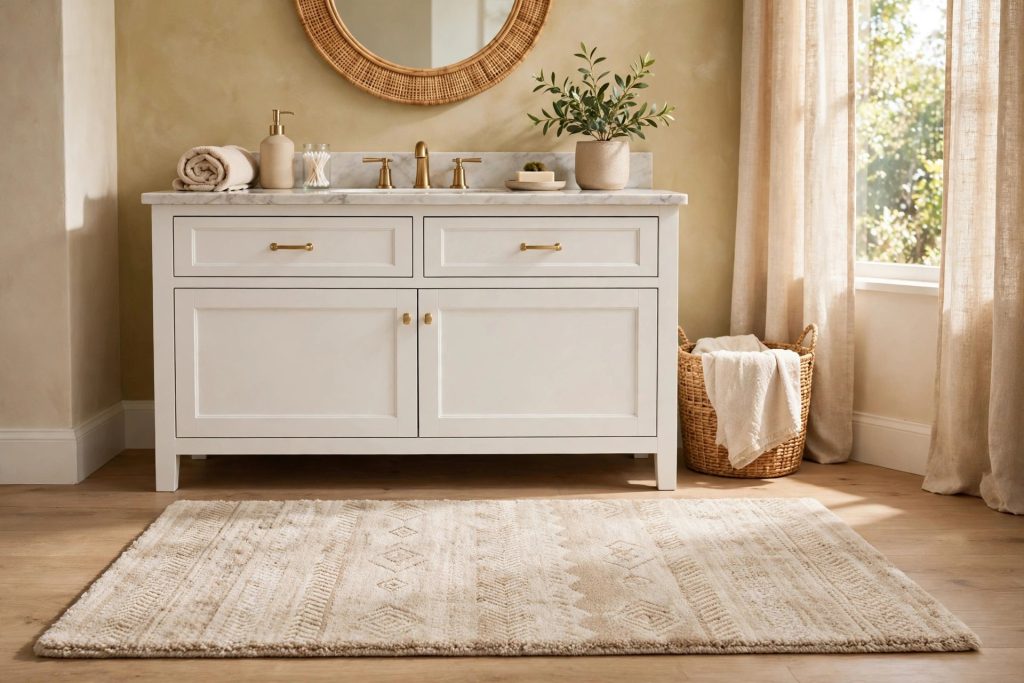
Size it around the place you stand, not just the width of the furniture. A long double vanity does not automatically need one equally long runner. Open low drawers and cabinet doors, and check the bathroom entrance before deciding how much floor to cover.
For color, repeat one existing element: a blue stripe from the towels, a warm neutral from the tile, or a muted shade from artwork. If the floor already has a strong pattern, a simpler textile may be easier to combine. Treat these as styling options rather than a requirement to buy a matching bathroom set.
A compact bathroom where the sink and shower share floor space
In a tight room, separate mats for the shower, sink and toilet can overlap or leave awkward strips of floor between them. Try planning one suitable mat for the wet-foot landing area first. Add another only if it solves a separate need and has its own clear space.
For example, imagine the shower exit is directly beside the vanity. One correctly positioned mat may serve both standing areas. If reaching the basin means standing on a saturated patch after someone showers, though, moving it around is not much of a solution. Choose something you can dry or swap conveniently, and keep the walking route clear.
Do not buy a larger size with the intention of folding an edge under a cabinet. Measure the usable footprint and choose a size that lies flat within it. Where space is awkward, a smaller suitable mat can be more useful than a decorative runner that reaches every fixture.
Read the Care Label Before Choosing the Texture
Find out what “washable” includes
Check whether the instructions apply to the complete mat, a removable cover or a separate backing. That distinction affects the amount of work between washes.
For one concrete example, Ruggable’s bath mat care guide permits machine-washing the cover but says not to machine-wash or tumble-dry the pad. The pad has its own cleaning and air-drying instructions. That is a product-specific routine, not a rule for every two-piece mat.
Another example, IKEA’s US TOFTBO mat, article 006.102.75, lists a warm machine wash and low tumble drying. These examples show why one general instruction such as “wash all bath mats cold” is not a substitute for the label. Check the version you actually buy, along with your washer’s load guidance.
If you use a shared laundry room or have little drying space, think through the whole task before choosing a bulky textile. Can you carry it, wash it as directed and dry it fully? A smaller item with a care routine you can maintain may suit you better than the plushest option on the shelf.
Plan where it dries between uses
Choose an appropriate drying place using the product instructions. It needs enough space for the mat or removable cover rather than a tight bundle over an already crowded towel holder. Keep the floor underneath accessible for cleaning, and return the parts only when they are dry as directed.
The time between showers matters. In a bathroom used by several people in quick succession, check the mat after that busy period rather than judging it only when freshly washed. A spare can help while the first is being cleaned or dried; it does not need its own permanent spot on the floor.
Check the underside and edges as part of the routine. If the backing sheds, the corners will not lie flat or the mat no longer stays in place, resolve that before putting it back into use. How it behaves in your room matters more than keeping it until a fixed replacement date.
Your buying brief: Write down the intended location, maximum usable dimensions, permitted backing or pad, and washing and drying method. Choose color and texture from the products that meet those needs. That gives you a useful mat or rug without filling the bathroom floor with pieces you do not need.