How to Choose a Rug for a Small Living Room
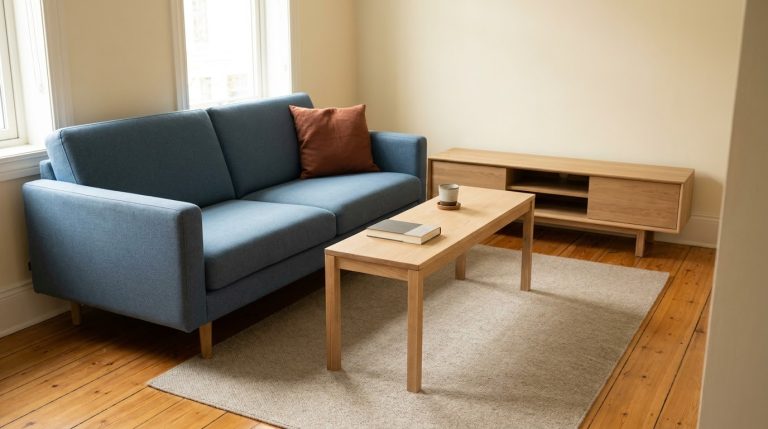
To choose a rug for a small living room, measure the seating arrangement before choosing a color. A useful starting point is a rug that extends beyond the sofa’s sides and reaches under its front legs, while leaving doors and everyday routes usable. The room being small does not automatically mean the rug should be small.
The right choice also depends on what happens in the room. A deep, soft pile may appeal if you sit on the floor, while a lower-profile rug may be more practical near a door or beneath furniture that moves. Work through fit, thickness and upkeep first; then compare the colors you will see across a large part of the floor.
Measure Before Choosing a Rug for a Small Living Room
Measure the sofa’s full width, including its arms, and note the positions of any chairs you want to include in the seating group. Then measure the available floor area, accounting for door swings, hearths, floor vents and the route through the room. These measurements serve different purposes: one tells you what the rug needs to connect, and the other tells you where it can fit.
Check the actual dimensions of each rug you consider. Size names and proportions vary, so a label such as “medium” is not enough. If the rug is rectangular, decide which dimension will run parallel to the sofa before comparing it with your measurements.
A simple size comparison
Suppose your sofa is 200 cm wide. A 160 × 230 cm rug, with its 230 cm edge parallel to the sofa, extends 15 cm beyond each side when centered. A 200 × 300 cm rug in the same orientation extends 50 cm beyond each side. The larger option also projects farther into the room, so it may connect an armchair better—or interfere with a nearby door.
Those figures illustrate the comparison, not a recommended clearance. Mark the two footprints using a method compatible with your flooring, such as suitable low-tack tape after checking the finish guidance and testing a hidden spot. Do not leave raised temporary markers across a walking route. Look at each footprint from the doorway and your usual seat.
If the furniture arrangement itself is still awkward, settle that first with our small living room ideas. A rug can bring the seating together visually, but it will not correct a blocked walkway.
Choose a Placement for Your Furniture
Front legs on the rug
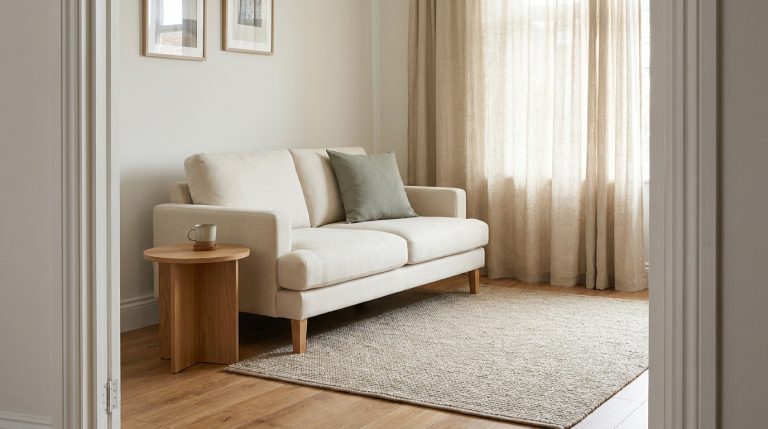
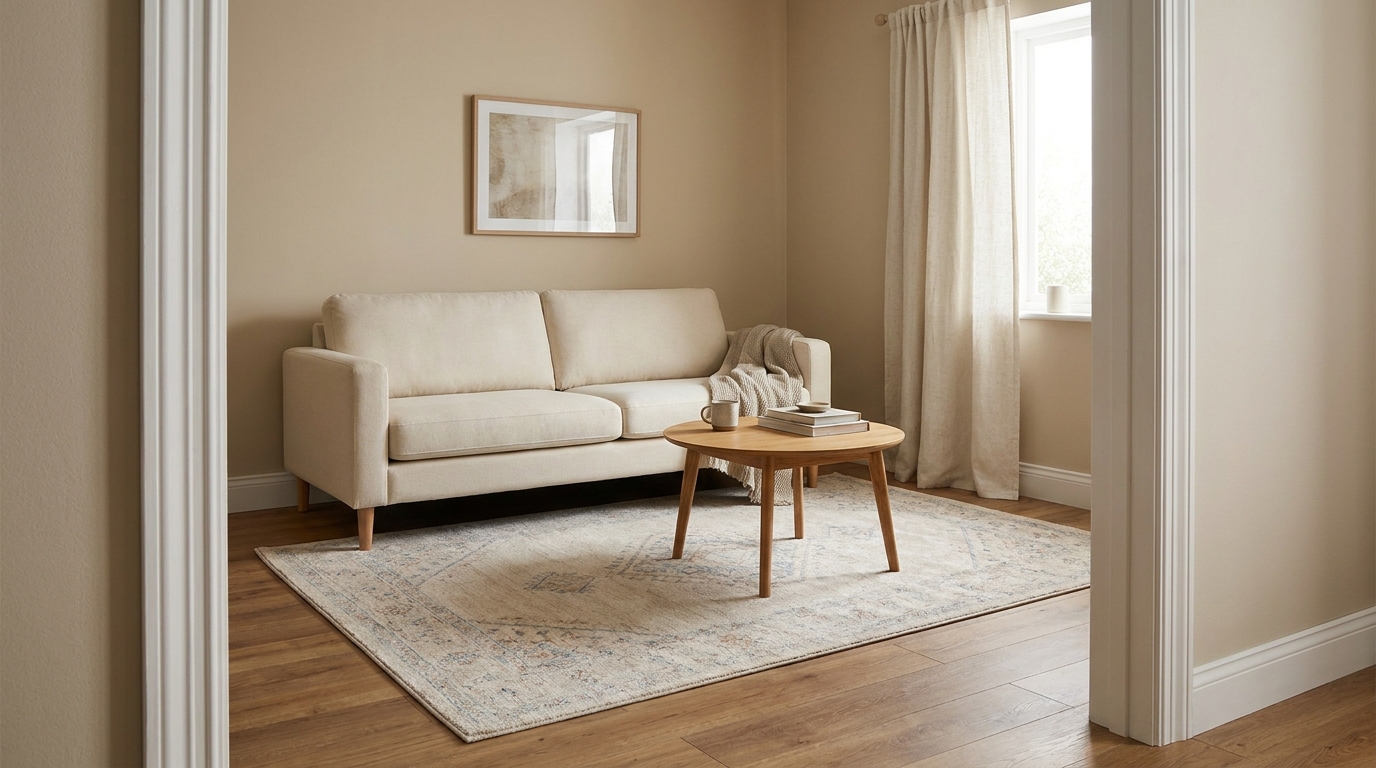
This is a useful starting arrangement when a sofa sits near a wall. Position the rug beneath both front sofa legs, with enough overlap that the feet rest securely on it. If an armchair belongs to the same seating group, see whether its front legs can also sit on the rug without pulling the chair into an inconvenient position.
Room & Board’s rug size guide also suggests placing front sofa or chair legs on the rug to visually connect the furniture. Treat this as a design starting point rather than an obligation to squeeze every piece into the same arrangement.
All legs on the rug
A rug large enough to hold the whole seating group can work in an open-plan room, including a compact lounge within a larger space. Check the surrounding routes and doors before increasing the size. You do not need to push the rug against every wall or extend it under an unrelated dining area.
A chaise sofa or a room without a coffee table
With a chaise, measure the whole seating footprint, including the projecting end. Check how the rug meets the chaise feet and whether the remaining exposed area looks balanced. Do not center the rug on the room automatically if the seating group occupies only one side.
A coffee table is not required to give a rug a purpose. In a small living room without a coffee table, it can connect the seats and provide a softer central surface. Keep its edges flat and secure where people step across it.
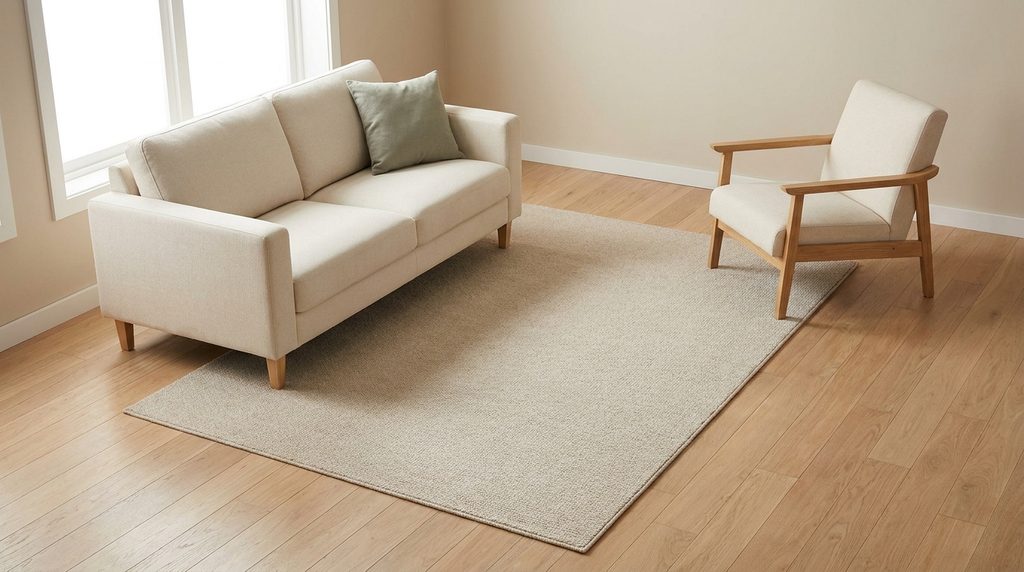
Check Doors, Rug Thickness and the Pad Together
A rug’s footprint can fit while its thickness causes trouble. Check the clearance beneath any door that crosses the proposed area, including cupboard doors. Compare that gap with the combined thickness of the rug, its bound edge and the pad. A floor outline cannot test this part of the fit.
Look at furniture that moves too: a reclining footrest, a swivel chair or a small table you pull toward the sofa. Make sure movement will not catch the rug edge or bunch the surface. For an uneven transition, consider a different rug profile or placement before committing.
Choose a pad or backing suitable for both the rug and your flooring. Follow the flooring and pad manufacturers’ compatibility guidance, particularly for coated floors or underfloor heating. Fit the pad as directed so it stays concealed and the edges lie flat. Adding extra layers without checking them can create a new height problem.
Choose Color and Pattern in the Room
Take your main cues from the sofa, floor and any large curtains or artwork. The rug does not have to match them exactly. Look for a color relationship you enjoy: an oatmeal ground with warm wood, a muted blue detail that repeats an artwork color, or a deeper rug beneath pale upholstery.
A light rug is an option, not a requirement for a small room. Think about contrast. A rug close in tone to the floor may create a quieter transition; a darker border or bold pattern draws more attention to its outline. Either effect can work when it suits the rest of the room.
If you can obtain a sample, place it flat beside the sofa instead of holding it upright. Compare it in daylight and under the lights you use at night. A small sample will not show the whole pattern repeat, so check a full-rug image as well. Wide borders can look quite different once a sofa covers one side.
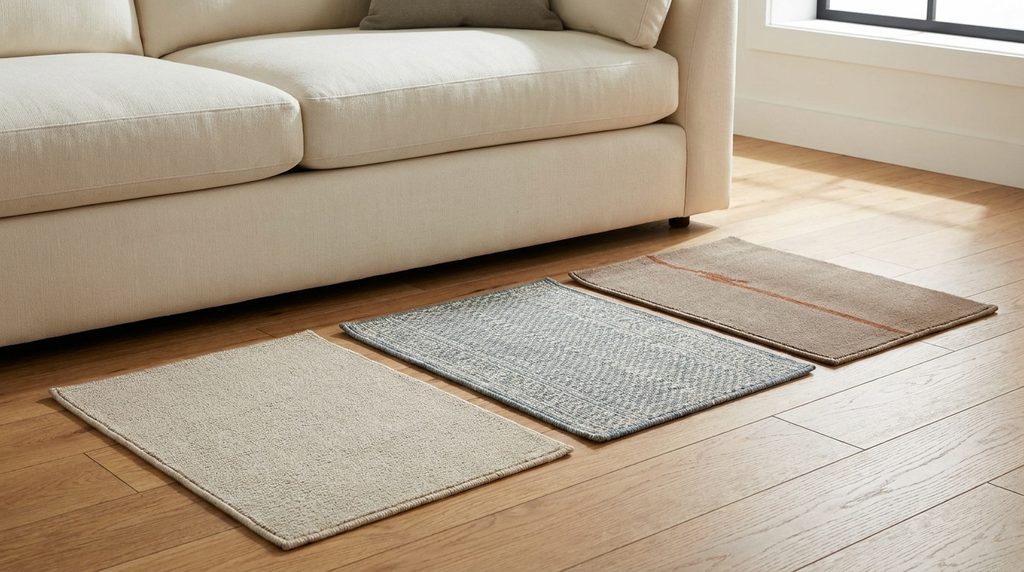
When the curtains or cushions already carry a strong pattern, try a quieter rug first. If the room is mostly plain, the rug can provide the main pattern. You can then use our guide to throw pillow colors for a neutral sofa to connect smaller textiles with the colors you have chosen.
Match the Rug to Cleaning and Daily Use
Choose construction as carefully as fiber. Flatwoven, low-pile and deeper-pile rugs feel different underfoot and can behave differently under moving furniture. Try a sample if softness matters, and read the specific care instructions instead of assuming every wool or synthetic rug needs the same treatment.
For a room where people eat, children play or pets spend time, check the cleaning method you can realistically manage. Find out whether the rug needs professional cleaning, spot cleaning or machine washing. A “washable” label is useful only if the exact rug size fits your machine’s stated capacity and you can follow the drying instructions.
Consider your vacuum and any robot cleaner too. Check guidance for fringes, pile height and brush settings. A slightly varied color may make small marks less noticeable, but no pattern replaces cleaning. Choose a surface you are willing to care for after the first week.
Make a Final Check Before Ordering
Write down the exact rug dimensions and orientation, the pad you plan to use, and any door-clearance limits. Recheck the marked footprint with everyone’s usual seats in position. If an option needs you to move furniture into a less comfortable layout, reconsider the size rather than forcing the room around it.
Check the seller’s current return terms before buying, including any charges or restrictions that apply to opened or custom-size rugs. Keep samples and measurements together so you compare like with like.
You are ready to choose when the rug connects the seating in a way you like, the doors and routes work, and the material suits everyday use. Size and placement do most of the practical work; color and texture make the result feel like your room.
For a bedroom, use our bedroom rug placement guide to calculate coverage beside and beyond the bed rather than applying the sofa arrangement.