Small Living Room Without a Coffee Table: What to Use Instead
A small living room without a coffee table still needs somewhere to put a drink. The useful change is moving that surface to a place where it serves the seating without occupying the middle of the room. For some households, one side table is enough. Others need a movable surface for a second seat or an occasional meal.
Start with what your coffee table actually does. Does it hold two mugs, collect chargers, support a laptop, or provide a place for board games? Those jobs need different replacements. Removing the table works best when its useful functions have somewhere else to go.
What Does Your Coffee Table Need to Do?
Look at the objects on the table at the end of an ordinary evening. Separate things you use while seated from things that simply landed there. A mug needs a stable, reachable surface; yesterday’s mail may belong near the entrance. Moving clutter elsewhere can reduce the size of the replacement you need.
Count the seats people regularly use. A table beside one sofa arm might work perfectly for one person but leave someone at the other end balancing a glass. Plan for your usual household first, then decide how you will add a surface when guests visit.
If you regularly eat full meals or spread out a puzzle here, a tiny drinks table will not replace that function. You may prefer a folding table brought out for the task, another existing table, or keeping a suitably sized coffee table. An open center is useful only if the room still supports your routine.
Compare the Options for a Living Room Without a Coffee Table
| Option | Useful for | Main trade-off |
|---|---|---|
| Side table | A permanent surface beside a regular seat | It takes space beside the sofa and may serve only one end. |
| C-table | Bringing a small surface closer to one person | Its base must fit underneath; the top must clear the sofa. |
| Folding table | Occasional meals, hobbies or a guest’s drink | It needs space when open and a convenient home when folded. |
| Nesting tables | Adding separate surfaces for visitors | Every pulled-out table still needs a usable position. |
| Ottoman with a tray | A footrest plus an occasional surface | It retains a central footprint and requires a stable tray setup. |
| Sofa-arm tray | A small surface on a compatible sofa arm | Fit and stability depend on the arm’s shape and movement. |
A Side Table Works When the Space Beside the Sofa Is Usable
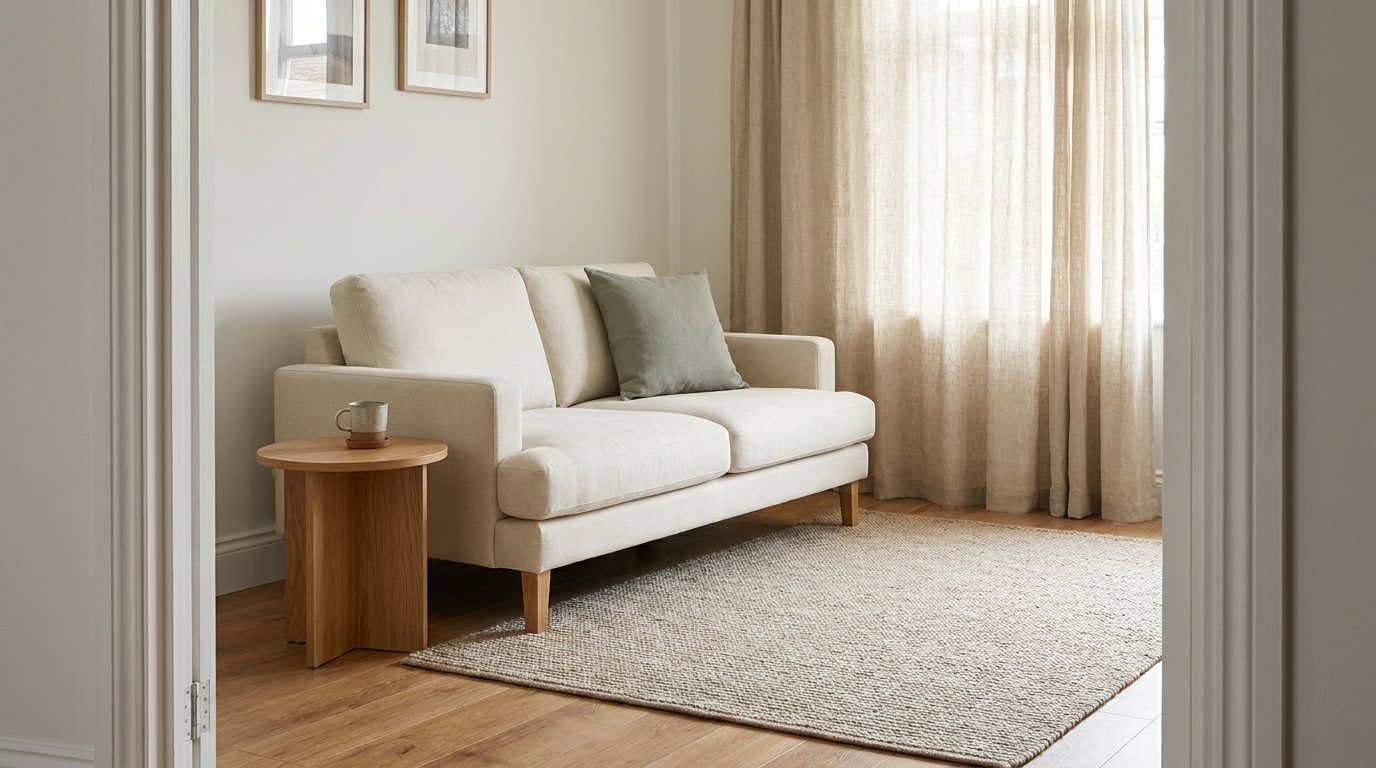
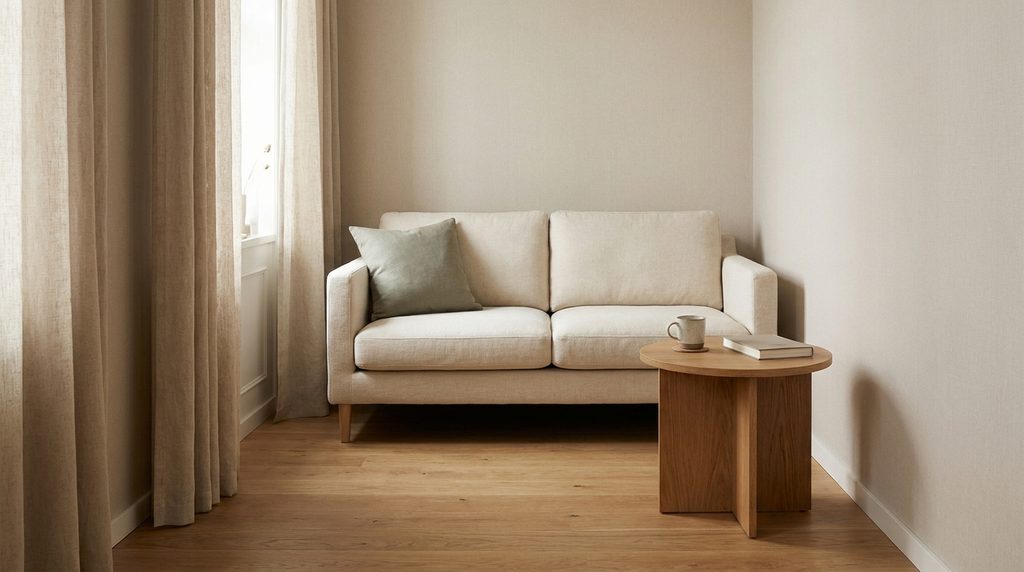
A side table is a straightforward choice when the middle of the room is the problem and there is genuinely spare space beside a seat. Check that this is not also the route to a window, door or storage cabinet. Moving the obstruction sideways does not improve the layout.
Sit in your usual position before choosing the height. You should be able to set down a cup without reaching far behind your shoulder or lifting your arm awkwardly. A tabletop near the sofa-arm height can be a starting point, but a broad or unusually high arm changes the reach. Test the movement against your own sofa.
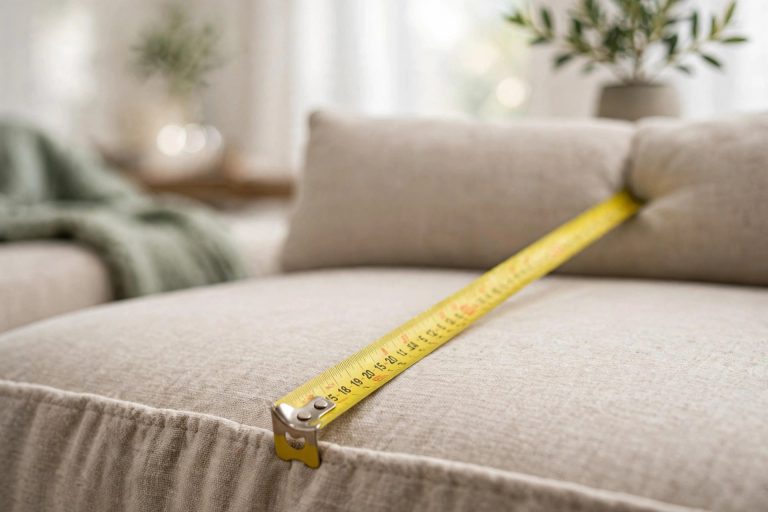
Measure the whole footprint, including the base. A narrow tabletop can sit on surprisingly wide legs. Also allow for curtains, a lamp cable and any drawer you want to open. If a lamp fills most of the top, there may be little usable space left for a drink.
You do not need matching tables at both ends. A small table beside the main seat and an occasional table elsewhere may suit the room better. For the wider arrangement, our small living room ideas cover walkways, seating and storage together.
A C-Table Needs Two Separate Clearance Checks
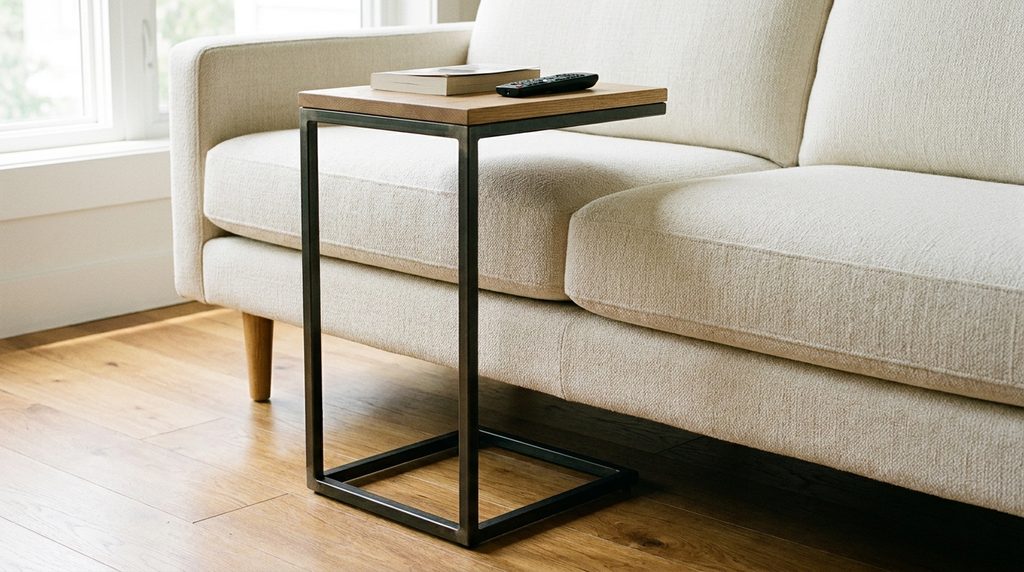
A C-table can bring a surface closer because its base slides beneath the seating while its top projects over the edge. For example, IKEA describes its UGGLERUM side table as having a foot that slides under a sofa or armchair. That design feature is useful, but it does not mean every table will fit every sofa.
First, check the space under the sofa. Measure from the floor or rug to the lowest frame component where the base would slide. A deep front rail, hidden support leg or thick rug can prevent the table moving into position even when the sofa appears to stand on tall legs.
Second, check above the seat or arm. The underside of the tabletop must clear whatever it passes over, with space for you to sit and move comfortably. Look at the base width as well: it should not occupy the place where your feet land when you stand up.
Check the table’s stated load limit and intended use. A compact drinks table is not automatically a suitable desk or support for getting up. With reclining seating, keep furniture clear of moving parts and follow the seating manufacturer’s instructions. Decide where the table goes when you want to stretch out.
Folding and Nesting Tables Suit Occasional Use
A folding table makes sense when you want the floor clear most of the day but need a larger surface occasionally. Choose its storage location at the same time as its open position. If taking it out requires emptying a cupboard, you may leave it standing in the room permanently.
Check the open leg span, not just the tabletop size. Position it so someone can get up from the sofa without stepping over a leg. Follow the instructions for fully opening and securing the mechanism, and remove objects before folding or moving it.
Nesting tables solve a different problem: they keep extra surfaces together until more people need them. Think through where each smaller table will stand during a visit. Pulling all of them into the central walkway can recreate the obstruction you wanted to remove.
For either option, try the room in both states: everyday use and guests visiting. If the extra surface interrupts access to the main seat or screen, revisit the seating arrangement using our guide to a small living room layout with a TV.
An Ottoman or Sofa-Arm Tray Has Different Trade-Offs
An ottoman is worth considering when putting your feet up matters more than clearing the center. It replaces the type of furniture rather than necessarily reducing its footprint. A large upholstered piece can occupy as much space as the coffee table it replaces.
A tray needs a level, stable resting surface; it does not make a soft, sloping cushion reliable for drinks. If the tray rocks or shifts when someone uses the ottoman, put drinks on a separate table. Decide where the tray and its contents will go when the ottoman is used as a footrest or, if designed for it, a seat.
A sofa-arm tray leaves the floor clear but depends on a compatible arm shape and width. Check the tray’s fit requirements and test whether normal movement on the sofa disturbs it. A narrow rounded arm or loose cushion may not provide a dependable base. Start with an empty cup when checking the arrangement.
Make the Open Center Feel Intentional
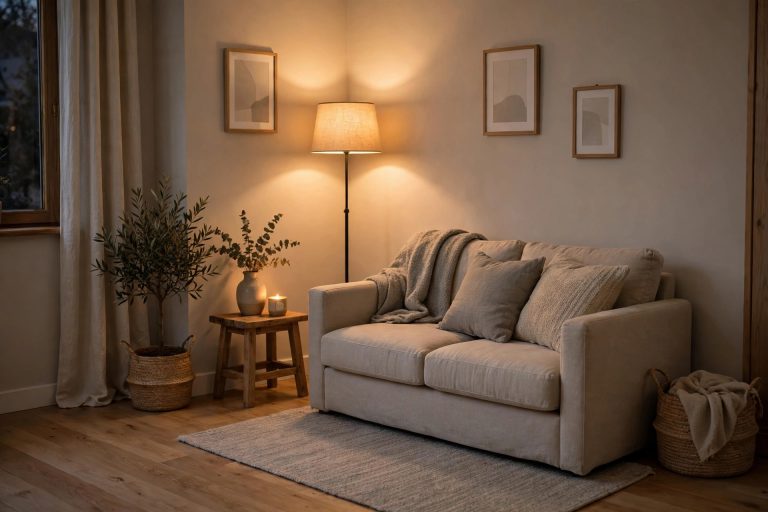
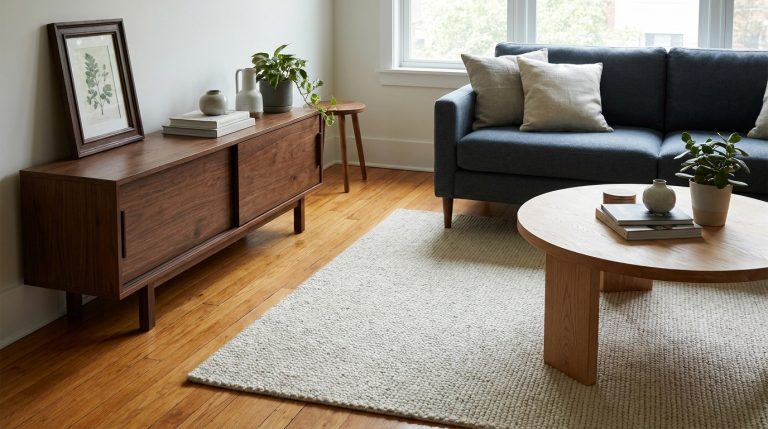
Without a coffee table, the seating can still look connected. An appropriately sized rug, with the front legs of the main seating on it where the layout allows, can define the group. Artwork, cushions and lighting can provide interest without putting another object back in the middle.
Keep the replacement surface useful. A tiny table covered with a lamp, vase and decorative books may leave nowhere for the mug it was meant to hold. Put the everyday item down first, then decide how much decoration the remaining area can accommodate.
Give displaced objects specific homes: remotes in an existing drawer, a current book on a nearby shelf, charging accessories together near an appropriate outlet. Keep cables out of the walking route. The open floor does not need a basket or pouf added simply because it looks unfamiliar.
Try One Evening Without the Coffee Table
Move the coffee table temporarily to a suitable place where it will not block another route. Use an existing stable side table if you have one, then spend an ordinary evening in the room. Notice where each person reaches for a drink and whether getting up feels easier.
Try your usual tasks, including opening nearby storage and reaching curtains. If visitors are common, place the occasional tables where they would actually be used. A table that is easy to reach while seated can still make passing through the room awkward.
Write down the remaining problem before shopping. “The second sofa seat needs a place for a cup” points to a specific change. A small living room without a coffee table works when each regular seat has the support it needs and the cleared floor remains useful.
Frequently Asked Questions
Is it okay to have no coffee table in a small living room?
Yes, as long as each regular seat still has a place for a drink and the cleared floor stays useful for your routine. Start by listing what your coffee table actually does: holding two mugs, collecting chargers, supporting a laptop, or hosting board games each point to a different replacement. Removing the table works best when its useful functions have somewhere else to go.
What is the best coffee table alternative for a small living room?
It depends on the job the surface needs to do. A side table suits a permanent spot beside a regular seat, a C-table brings a surface closer to one person, a folding table covers occasional meals or hobbies, nesting tables add surfaces for visitors, an ottoman with a tray doubles as a footrest, and a sofa-arm tray works on a compatible arm. Choose by the function, not by which option looks neatest empty.
How do I choose a side table that actually works next to my sofa?
Sit in your usual position and check the reach: you should be able to set down a cup without reaching behind your shoulder or lifting your arm awkwardly. A tabletop near the sofa-arm height is a starting point, but a broad or unusually high arm changes the reach, so test it against your own sofa. Measure the whole footprint including the base, and allow for curtains, a lamp cable, and any drawer you want to open.
What should I check before buying a C-table?
Do two clearance checks. First, measure from the floor or rug to the lowest frame component where the base would slide, since a deep front rail, a hidden support leg, or a thick rug can stop it even when the sofa looks tall enough. Second, the underside of the tabletop must clear whatever it passes over, with room for you to sit and move comfortably, and the base should not sit where your feet land when you stand up. Also check the stated load limit: a compact drinks table is not automatically a desk.
How do I keep drinks stable on an ottoman or a sofa-arm tray?
A tray needs a level, stable resting surface, and it does not make a soft or sloping cushion reliable for drinks. If the tray rocks or shifts when someone uses the ottoman, put drinks on a separate table. For a sofa-arm tray, check the fit against your arm shape and width, since a narrow rounded arm or loose cushion may not give a dependable base. Start with an empty cup when testing the arrangement.