How to Organize a Small Bathroom Without a Vanity
A small bathroom without a vanity needs two things: somewhere to store everyday supplies and a stable place to set them while you use the basin. A basket can solve the first problem without solving the second. Before buying organizers, decide where you will put a toiletry bag, reach for soap, and return the products you use each morning.
With a pedestal sink or wall-hung basin, that useful spot might be a narrow cabinet beside the sink, an existing shelf, or a portable caddy brought to a suitable surface. You can keep the basin you have. The aim is to replace the missing vanity’s useful functions without surrounding the sink with furniture.
Start With What Happens at the Basin
Walk through an ordinary morning without moving anything first. Notice where products end up when you open them, whether your toiletry bag sits in the basin, and which items you fetch from another room. Those small interruptions tell you what the missing vanity needs to provide.
Separate a temporary set-down space from long-term storage. You may need room for a comb and two products while getting ready, even if those items return to a bag afterward. A surface packed permanently with spare bottles cannot serve that purpose.
Check the sink ledge honestly. If there is a flat, stable spot for hand soap without crowding the tap, use it. If the rim is narrow or curved, do not balance a tray on it. Choose a nearby surface you can reach while standing normally, leaving room to lean over the basin and wash your hands.
Give Everyday Supplies a Home in a Small Bathroom Without a Vanity
Gather the items that currently occupy the sink area and assign them by use. The most convenient spot should serve the current routine, while unopened replacements can live somewhere less central. This keeps the small amount of available surface useful.
| What you need to store | A practical starting place |
|---|---|
| Shared hand soap | A stable sink ledge or nearby reachable surface. |
| Personal grooming products in daily use | A small caddy or accessible shelf compartment. |
| Hair accessories and other loose small items | A divided container in the caddy or a nearby cabinet. |
| Unopened toiletries and spare supplies | A defined dry storage area outside the immediate basin space. |
| Hand towel in use | A separate reachable holder, clear of the storage surface. |
Keep cleaning products separate from personal toiletries and follow their storage labels. A decorative open basket should not become a mixed home for everything previously hidden in a cupboard.
If the whole bathroom needs reorganizing, our small bathroom storage ideas cover the wider room. Here, begin with the items used at the basin so this one area becomes easier to use.
Use a Portable Caddy When Storage Is Outside the Room
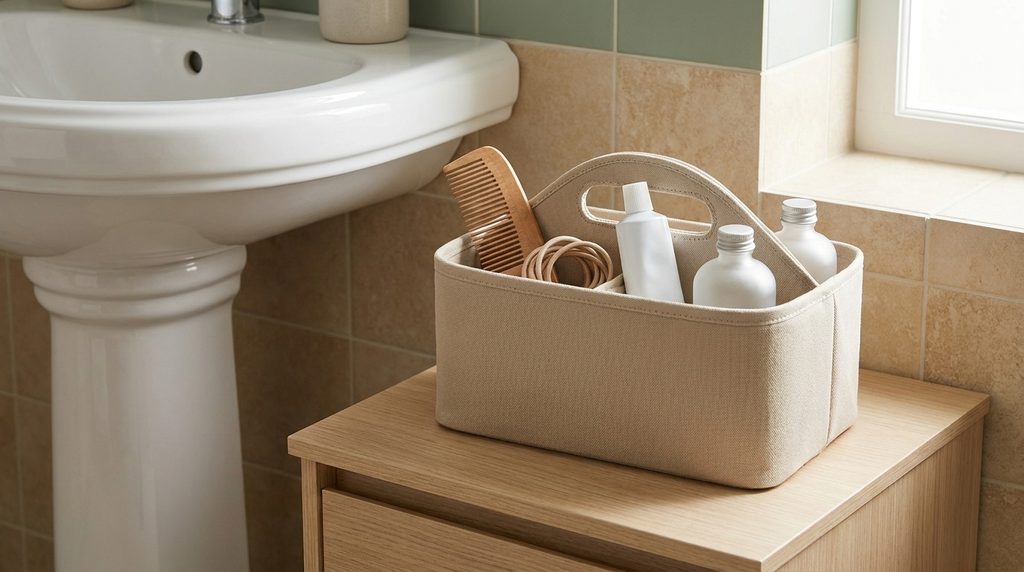
A portable caddy works well when personal products can stay on a bedroom or hallway shelf between uses. Choose a container with a comfortable handle, a stable base and compartments that keep taller bottles upright. It should remain easy to carry when full.
Pack it around one routine rather than every toiletry you own. A comb, hair accessories and the products you regularly use may be enough. Put the small items where they will not disappear under larger containers. Keep replacements at the caddy’s storage location rather than carrying them into the bathroom every day.
The caddy still needs a place to land. An existing shelf or cabinet top can work if it supports the whole base and leaves the contents within reach. If there is no suitable surface, a caddy alone does not solve the problem. You will need to create an appropriate set-down spot or keep the relevant grooming step elsewhere.
In a shared bathroom, individual caddies let each person bring only what they need. Keep shared hand soap in a consistent place. After use, wipe up splashes and let wet containers dry before returning them to enclosed storage.
Turn One Nearby Surface Into a Useful Basin Companion
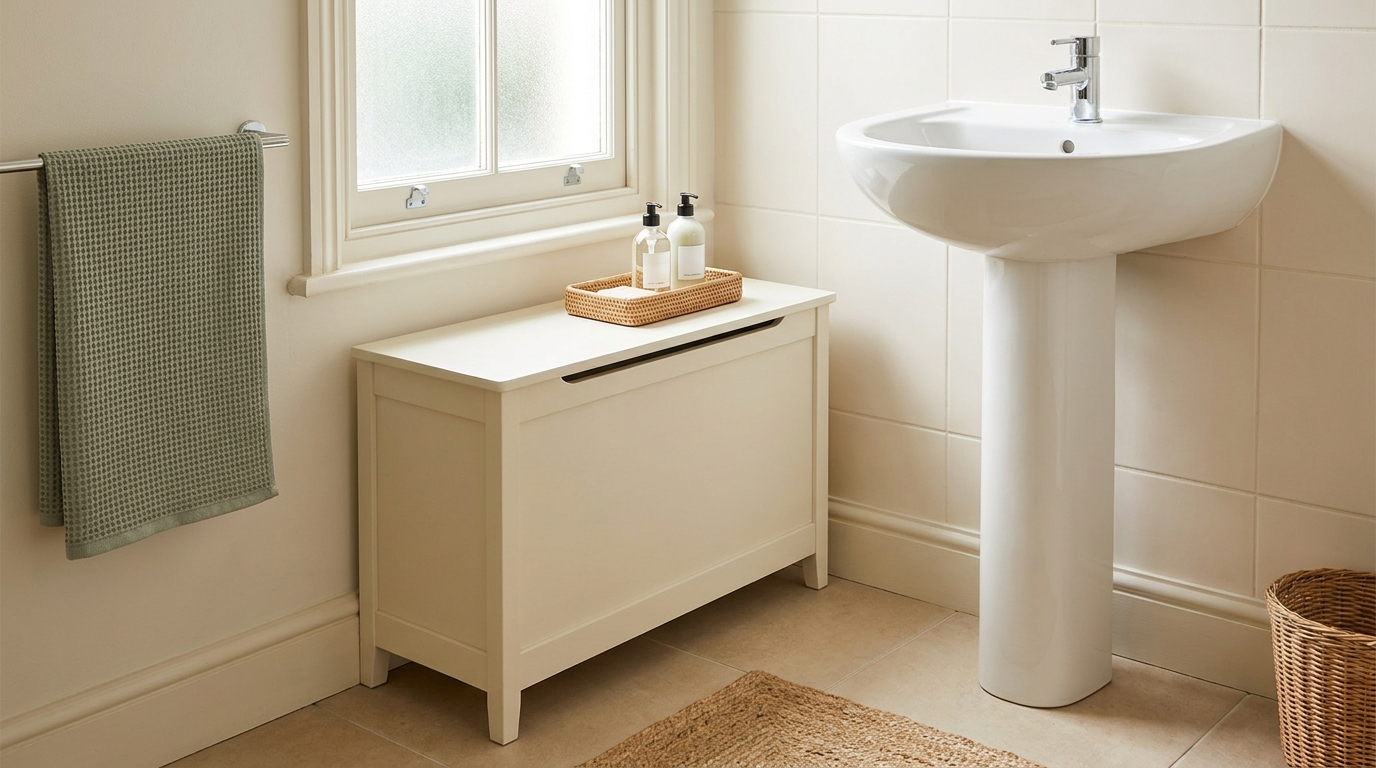
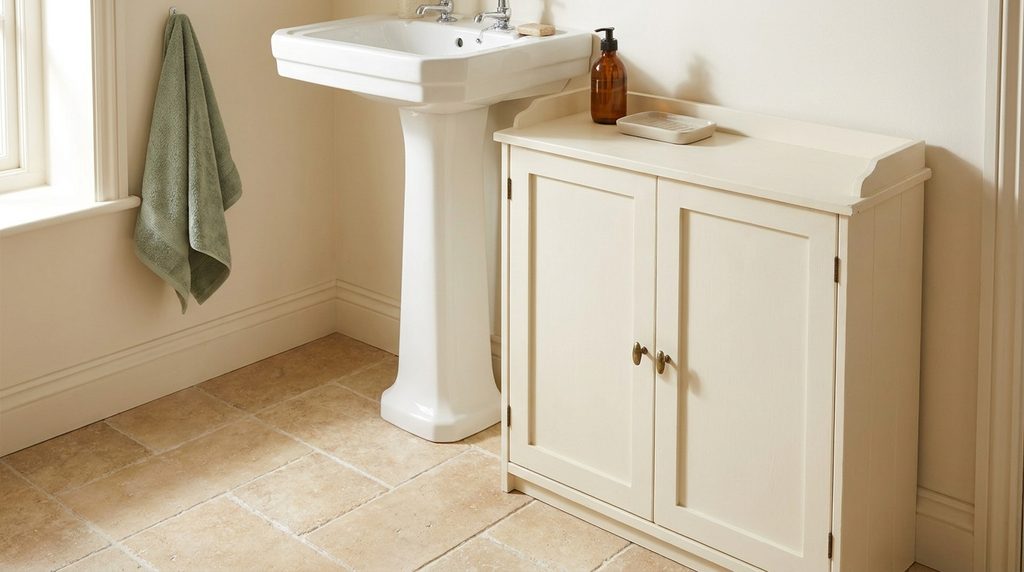
When there is floor space beside the basin, a narrow bathroom-suitable cabinet can provide both enclosed storage and a place to set things down. Look at the top first: can you reach it comfortably, and is it large enough for the items used together?
A cabinet that is too low may mean bending repeatedly, while a tall unit may give you storage but no convenient working surface. There is no need to match the sink height exactly. Choose around the people using the room and the task the surface will serve.
Check depth as well as width. Mark the footprint on the floor with a suitable removable marker, then stand at the basin and open the bathroom door. Allow for handles and cabinet doors. The furniture should not occupy the space where your feet naturally go or force you to approach the sink sideways.
Keep a small part of the top clear for use rather than styling the entire surface. Inside, place current supplies where they are easiest to retrieve. Follow the cabinet’s assembly and anchoring instructions; the U.S. Consumer Product Safety Commission’s Anchor It! guidance explains the importance of securing furniture against tip-overs.
Check the Shape Beneath a Pedestal Sink Before Buying Storage
Some storage units are designed to fit around a pedestal or below an existing basin. Compatibility depends on the sink’s actual shape. The pedestal may widen at the floor, the bowl may project down into the available space, and plumbing can occupy the area where a shelf would sit.
Measure those obstructions and compare them with the unit’s installation drawing. Outside dimensions alone will not tell you whether its opening clears the pedestal. Also check whether the unit can be assembled or moved into position around the existing sink without altering it.
Keep valves and plumbing connections accessible. Storage must not rest on pipes or interfere with the sink’s supports. If an organizer requires cutting, moving plumbing or improvising its structure, it is no longer a simple storage addition. A separate cabinet or caddy may be a better match.
Check access with the storage loaded, too. Deep compartments tucked behind a pedestal can be difficult to reach. Reserve any awkward area for suitable occasional supplies rather than the products you need several times a day.
Use Wall Storage Where Your Hands Can Reach It
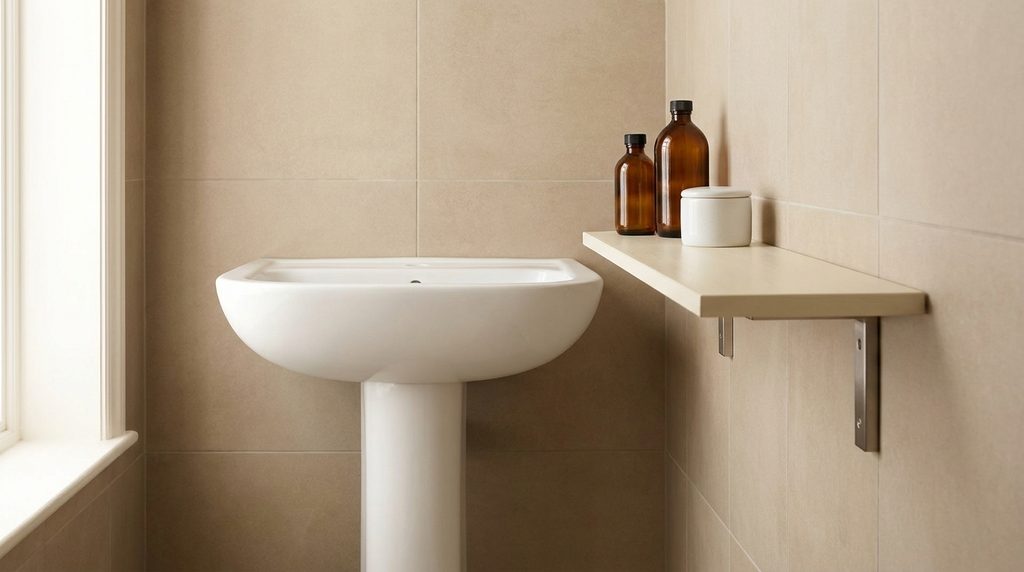
An existing shallow shelf can serve as the missing counter if it is in the right place. Test the reach while standing at the basin. You should be able to set something down without stretching across the room, leaning over the toilet or reaching behind an open door.
A mirror cabinet offers enclosed space for smaller products, but compare its usable shelf depth with your bottles. Check how the door opens and whether it conflicts with the tap or nearby fittings. Leave the space where you lean forward over the basin unobstructed.
For new shelves or cabinets, confirm that installation is permitted and use the specified fixings for the wall and load. Get appropriate help where tile, hidden pipes or wiring make the work uncertain. An adhesive accessory is suitable only when its instructions allow the surface, bathroom conditions and intended contents.
Test the Setup During a Normal Morning
Use the arrangement before adding more containers. Can you open a product, put its cap down, use the basin and return everything without juggling? If not, change the position or reduce what occupies the surface. A useful storage setup needs to work while you are getting ready, not only afterward.
For a shared bathroom, test the handover between people. Personal items should leave enough room for the next person, and shared supplies should remain easy to find. A consistent place for each caddy can prevent the basin area becoming a collection of abandoned bags.
Then try cleaning. You should be able to lift the tray, wipe the surface and reach around the pedestal without dismantling the entire arrangement. If a floor unit creates an inaccessible strip where water collects, reconsider its position.
Keep towel storage separate from the new set-down space. Our guide to where to store towels in a small bathroom covers clean replacements and towels in use, so neither needs to occupy the surface you have just cleared.
Common Questions
What should I try first if I cannot drill?
Use an existing suitable surface with a small caddy and keep spare supplies elsewhere. If furniture is needed, choose a unit whose installation requirements you can meet. Do not skip required anchoring just because the unit is described as freestanding.
Is a rolling cart better than a cabinet?
A cart can be useful when you genuinely need to move it and have somewhere clear to park it. A cabinet may be preferable for enclosed storage and a more settled surface. Check stability, access and the loaded footprint rather than choosing a cart simply because it looks compact.
Do I need to replace the pedestal sink?
Not necessarily. If a nearby surface and a defined storage spot support your routine, the existing sink can remain. Replacing it is a larger project; first establish whether the problem is missing storage, missing set-down space or both.
A small bathroom without a vanity can still be comfortable to use. Give daily products a clear home, leave a practical place to set them down, and judge the arrangement by how easily you can get ready and clean up afterward.