Where to Put an Air Fryer in a Small Kitchen
An air fryer is the appliance most likely to end up homeless in a small kitchen. It is too big for a drawer, too hot for a tight shelf, and too useful to banish to a high cabinet you never open. So it lands on the counter, where it eats the one prep space you have, or it lands in a cupboard, where it stays until you forget you own it.
The fix is a placement rule, not a bigger kitchen. An air fryer needs three things at once: air around it, a heat-safe surface under it, and an outlet it does not have to share with another heat appliance. Find the spot that gives you all three, and the air fryer stops being clutter and starts being the appliance you actually use.
The Clearance Rule Comes First
Every air fryer vents hot air, usually from the back or the top, and that vent needs room. Most manufacturers and safety guides ask for at least 5 inches of clear space around the sides and the back, and more above the vent if it blows upward. A fryer pushed against a wall, under a low cabinet or wedged between a toaster and a kettle will run hotter, cook less evenly and wear out faster, because the hot air has nowhere to go.
Check your own model before you trust a generic number. Basket fryers vent differently from oven style fryers, and a model with a rear vent needs back clearance most, while a top vent model needs headroom most. Open the manual, find the vent, then protect that side first. If the manual gives a larger number than 5 inches, use the manual number.
Heat matters under the fryer too. A heat resistant mat protects laminate and wood counters from long term heat marks, and it gives a basket fryer a stable, non-slip base when you pull the drawer out. Do not put a hot fryer directly on a plastic cutting board, a tea towel or a surface that warps with heat.
The Counter Corner That Works
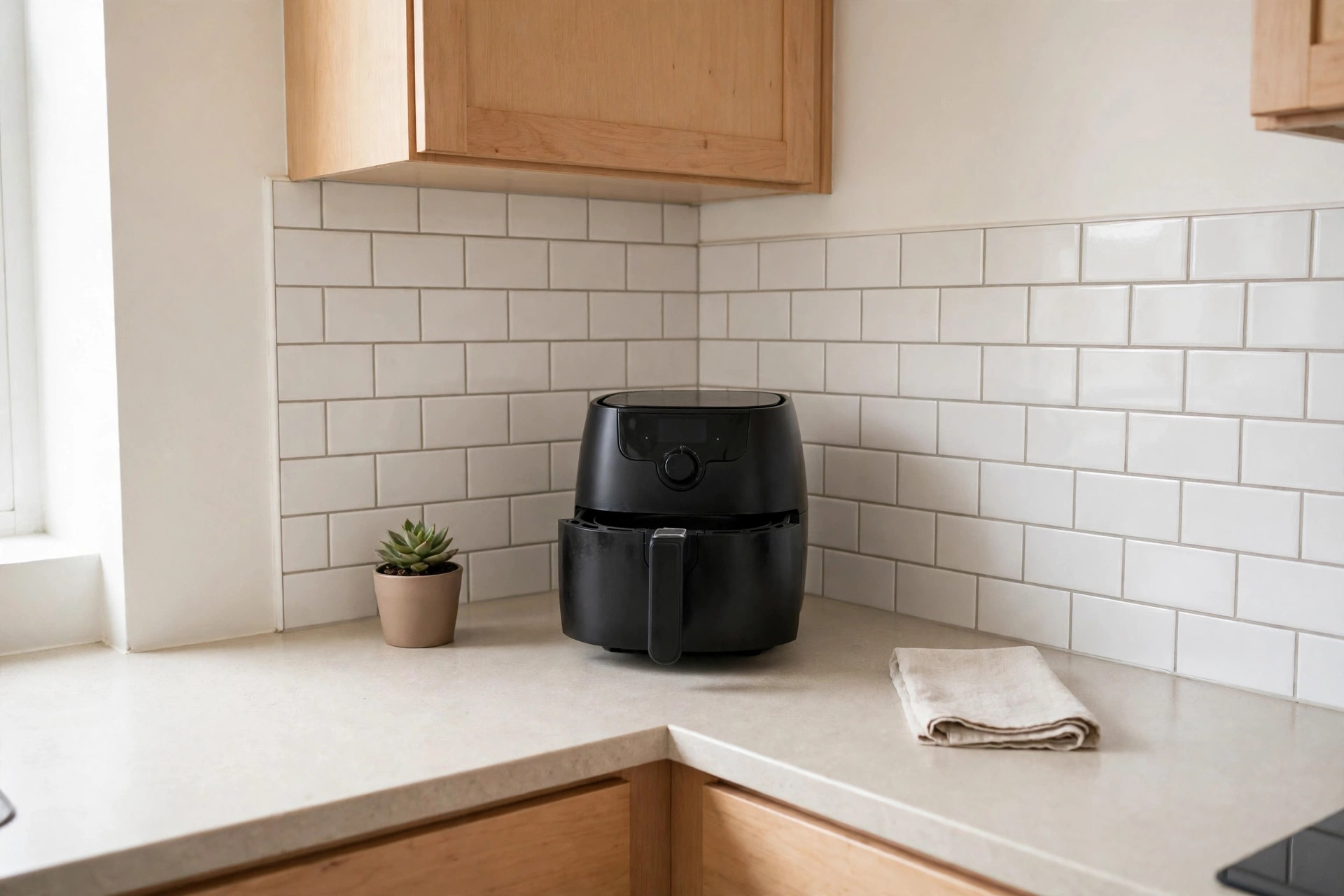
If you cook with the air fryer three or more times a week, it earns a permanent counter spot, and the corner is the best place to give it one. A corner uses dead space that is awkward for chopping anyway, and it leaves the main run of counter free for prep.
Place it at least 5 inches out from both walls, with the vent facing into the room, not into the corner. Keep the drawer side clear, so you can pull the basket fully out without hitting a wall or a kettle, and keep the handle path free of anything that could tip. Put it near an outlet, but not so close to the sink that splashes can reach it, and not on a counter section that doubles as your only drying area.
If the corner is under a wall cabinet, measure the height from the counter to the cabinet bottom. You need room to open the lid or lift the basket, plus vent clearance above. A fryer that fits with only an inch to spare will feel cramped every time you use it, and the cabinet above will collect heat and grease over time.
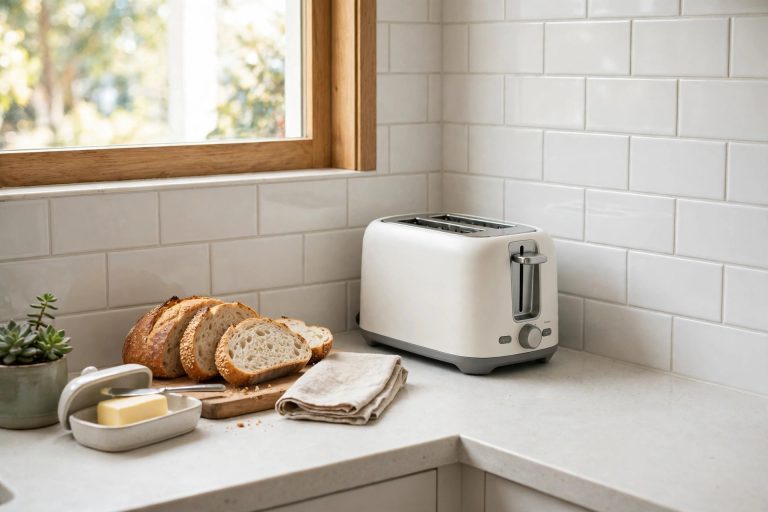
The same corner logic helps when a toaster and an air fryer have to share one small counter. If the microwave already took the corner, the cart option below is the next best home for the fryer.
The Rolling Cart Fix for No Counter Space
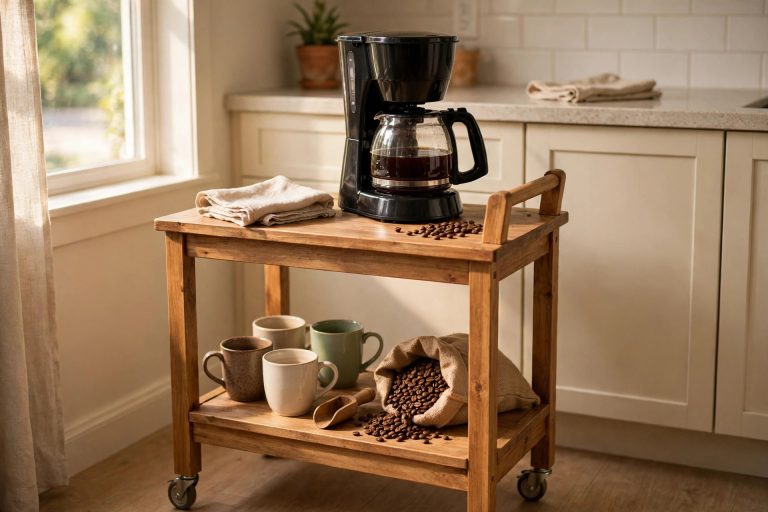
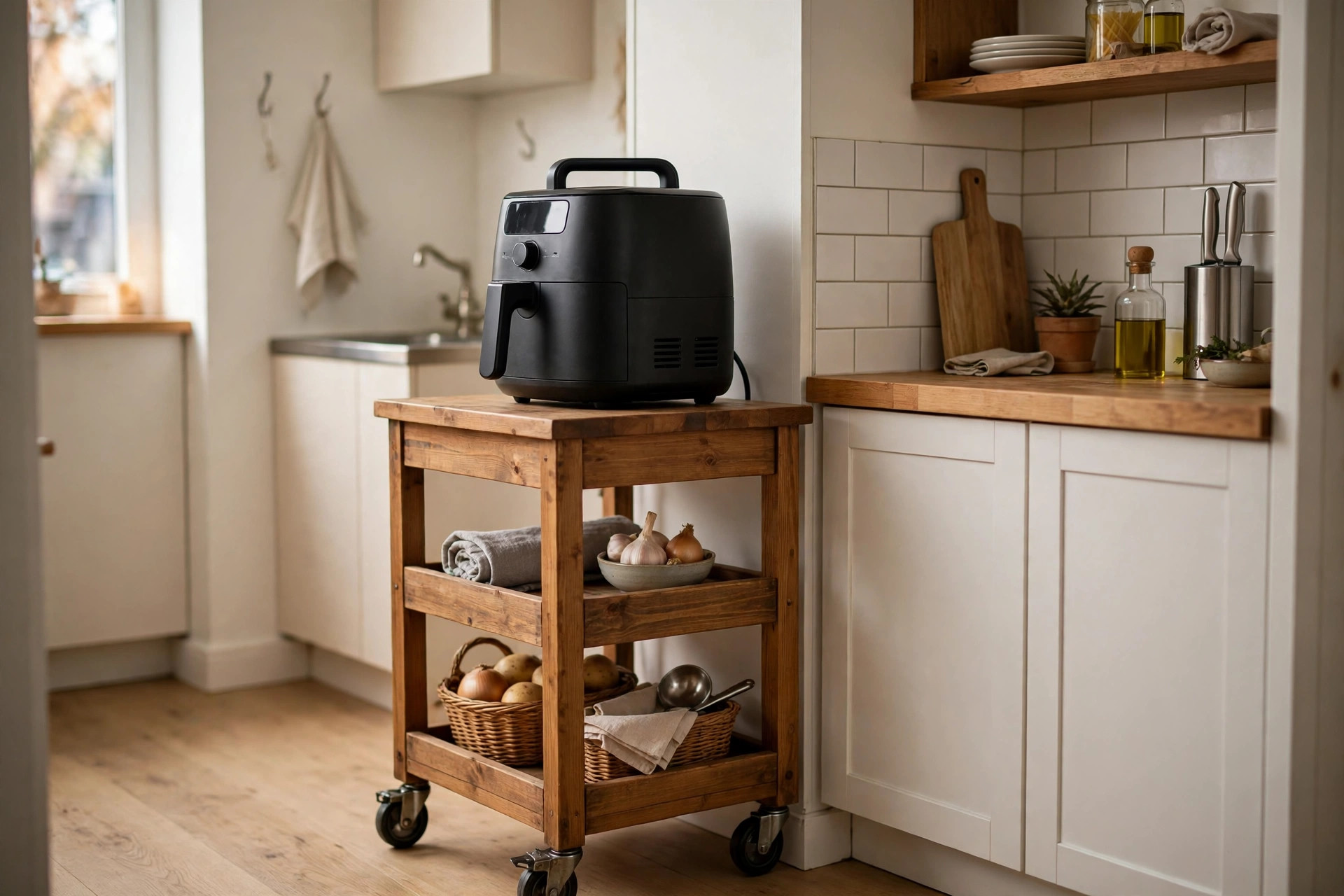
If you have no counter to spare, a rolling cart is the best small kitchen answer, because it turns storage into a cooking station only when you need it. Roll the cart out, plug it in, cook, let it cool, and roll it back against a wall or into a gap beside the fridge.
Choose a cart with a heat resistant top, a sturdy frame and a weight rating above your fryer’s weight, plus a lower shelf for the mat, tongs and liners. Locking wheels matter in a small kitchen, because a cart that rolls when you pull a hot basket is a burn risk. Park the cart where the vent faces the room and the cord reaches an outlet without crossing a walkway, and never run the fryer while the cart is pushed tight against a wall or a curtain.
A cart also solves the shared circuit problem, because you can choose which outlet to use each time. Air fryers draw high power, so avoid plugging one into the same outlet strip as a kettle, a toaster or a microwave. If the breaker trips when two heat appliances run together, that outlet pair is not a safe permanent home for the fryer.
Storing It in a Cabinet Without Killing It
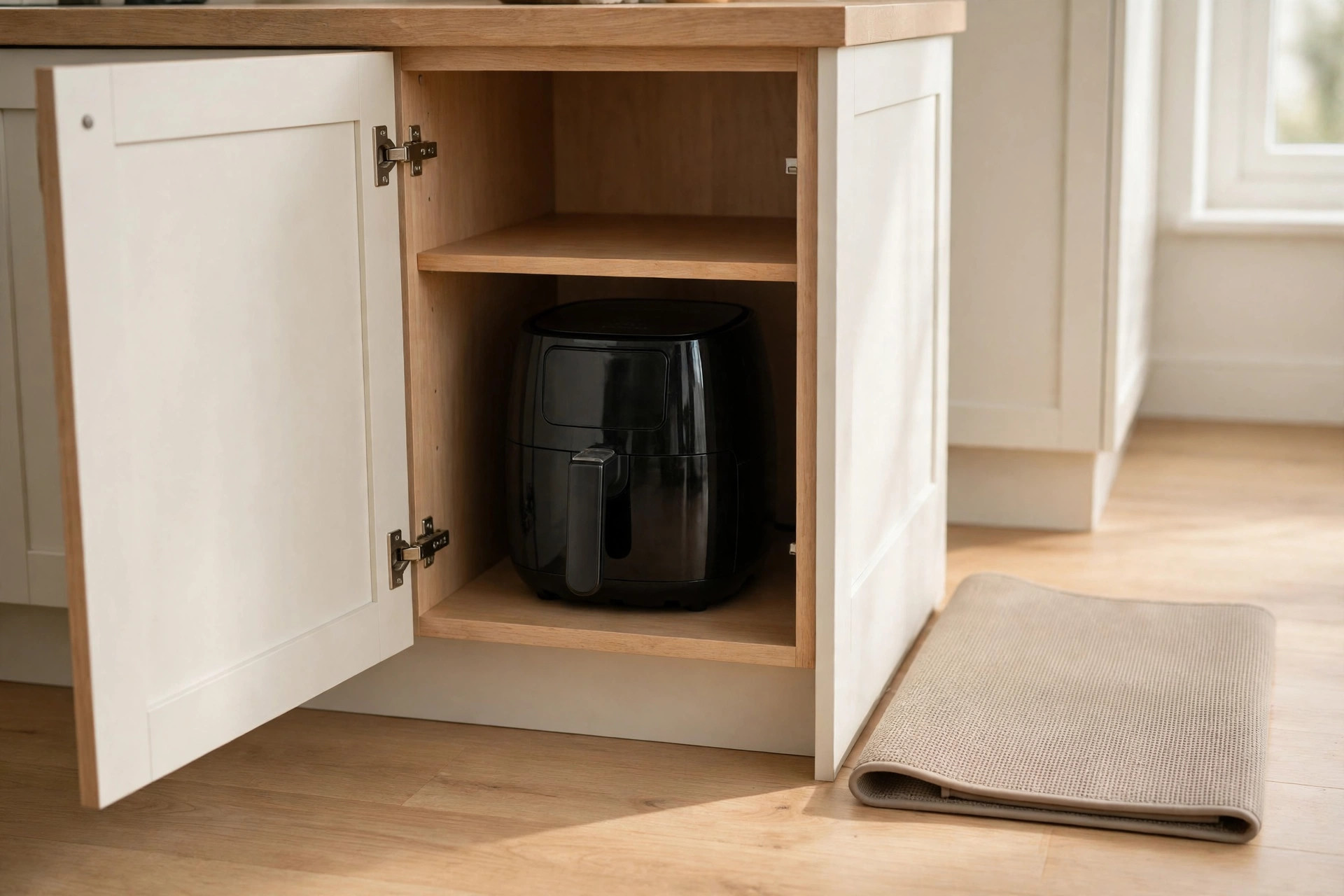
If you use the air fryer once a week or less, cabinet storage is the honest choice, and it works if you follow two rules. First, store it only when it is fully cool, dry and clean, because a warm fryer sealed in a cabinet traps steam and grease. Second, store it in a lower cabinet near the cooking zone, not a high cabinet you need a step stool to reach, because a heavy fryer lifted down from height is how cabinets and toes get hurt.
Measure the cabinet opening, not just the inside. An air fryer that fits inside but cannot pass through the door is not stored, it is stuck. Keep the basket and the drawer together if the model allows it, so you are not hunting for parts when you do cook, and keep the cord wrapped loosely, not wound tight around a hot housing.
Never run an air fryer inside a cabinet, a drawer or a closed pantry, even with the door open a crack. The vent needs open room air, and an enclosed space traps heat fast. The storage spot and the cooking spot can be different places, but the cooking spot must always be open, vented and heat safe.
Spots to Never Use
Under a short wall cabinet with no vent headroom. The heat rises straight into the cabinet bottom, and grease builds up where you cannot clean it easily.
Jammed between two heat appliances. A toaster, a kettle and an air fryer sharing one tight stretch of counter share heat and share a circuit, which is a fire risk and a tripped breaker waiting to happen.
Next to the sink or under a dripping tap. Water and a high power heating appliance do not mix, and steam from the sink can warp the housing over time.
On top of the fridge. It looks like free space, but it is high, unstable for a heavy basket pull, and the fridge top collects heat and dust. It also puts the fryer far from a safe, reachable outlet in most kitchens.
Inside a pantry with the door closed, or on a glass shelf that cannot take the weight. Glass shelves flex under a loaded fryer, and a closed pantry traps the vent heat. Use a pantry only as cool storage, never as a cooking spot.
On a wobbly bar cart, a folding table or a surface that tips when you pull the basket. If the surface moves when you tug the handle, it is not a cooking surface, however convenient it looks.
Choose by How Often You Cook With It
Daily or almost daily: keep it on the counter, in the corner, with its mat, its tools and its outlet all in one place. The time you save not lifting it in and out is the reason you bought it.
Two to three times a week: use the rolling cart, or a dedicated appliance shelf with open sides and a nearby outlet. You keep the counter clear on off days, and cooking day takes one roll, not a full kitchen rearrangement.
Once a week or less: store it in a lower cabinet near the stove, and bring it out to the counter or the cart to cook. The extra minute of lifting is a fair price for a clear counter the other six days, and you will still use it more than a fryer buried in a high cabinet.
This frequency test also tells you when to stop. If the fryer has lived in a cabinet untouched for a month, the placement is not the problem, the habit is. Move it to the cart for two weeks and see if easier access changes how often you reach for it.
The same low cabinet and vertical space logic that frees a counter also works for the rest of a small kitchen. A kettle and an air fryer both need an outlet plan, so place them on different circuits where you can.
Measure Before You Move It
Measure the fryer itself: width, depth and height, plus the extra space the basket needs when it pulls out toward you. Then measure the spot: clear width, depth, height to the cabinet above, distance to the outlet, and the vent clearance on the side that matters. Write the numbers on a sticky note and take it shopping if you are buying a cart or a shelf, because a cart that is an inch too narrow is a return trip, not a solution.
Check the weight too. A basket fryer with food in it can weigh far more than the empty unit, so a shelf or a cart rated for the empty weight alone is not enough. Choose a surface rated above the loaded weight, with a little margin, and test it with a firm tug on the basket handle before you call the spot done.
If no spot passes all three tests, air, heat-safe surface and outlet, the answer is not to force the fryer into the least bad corner. It is to change one variable: move a less used appliance to storage, add a cart, or use the fryer a little less often and store it properly between uses. A small kitchen rewards that trade, because one appliance in the right spot beats three appliances fighting for the same counter.
Frequently Asked Questions
How much clearance does an air fryer need around it?
At least 5 inches around the sides and the back, and more above a top vent, as a general rule. Always check your model’s manual, because the vent position changes which side needs the most room.
Can I run an air fryer inside a cabinet or pantry?
No. Never run it in a closed cabinet, drawer or pantry, even with the door open a crack, because the vent heat gets trapped. Use a cabinet only for cool, clean storage, and cook in an open, vented spot.
Can I put an air fryer on a rolling cart?
Yes, if the cart has a heat resistant top, a weight rating above the loaded fryer, and locking wheels. Roll it out to cook with the vent facing the room, let it cool, then roll it back to storage.
Why does my breaker trip when I use the air fryer?
Air fryers draw high power, so running one on the same circuit as a kettle, toaster or microwave can overload it. Move the fryer to a different outlet, and avoid outlet strips shared with other heat appliances.
Where is the best place for an air fryer if I have almost no counter space?
A rolling cart parked beside the counter, or a lower cabinet for storage with cooking done on the counter or cart. Both keep the main prep counter clear while keeping the fryer reachable enough to actually use.