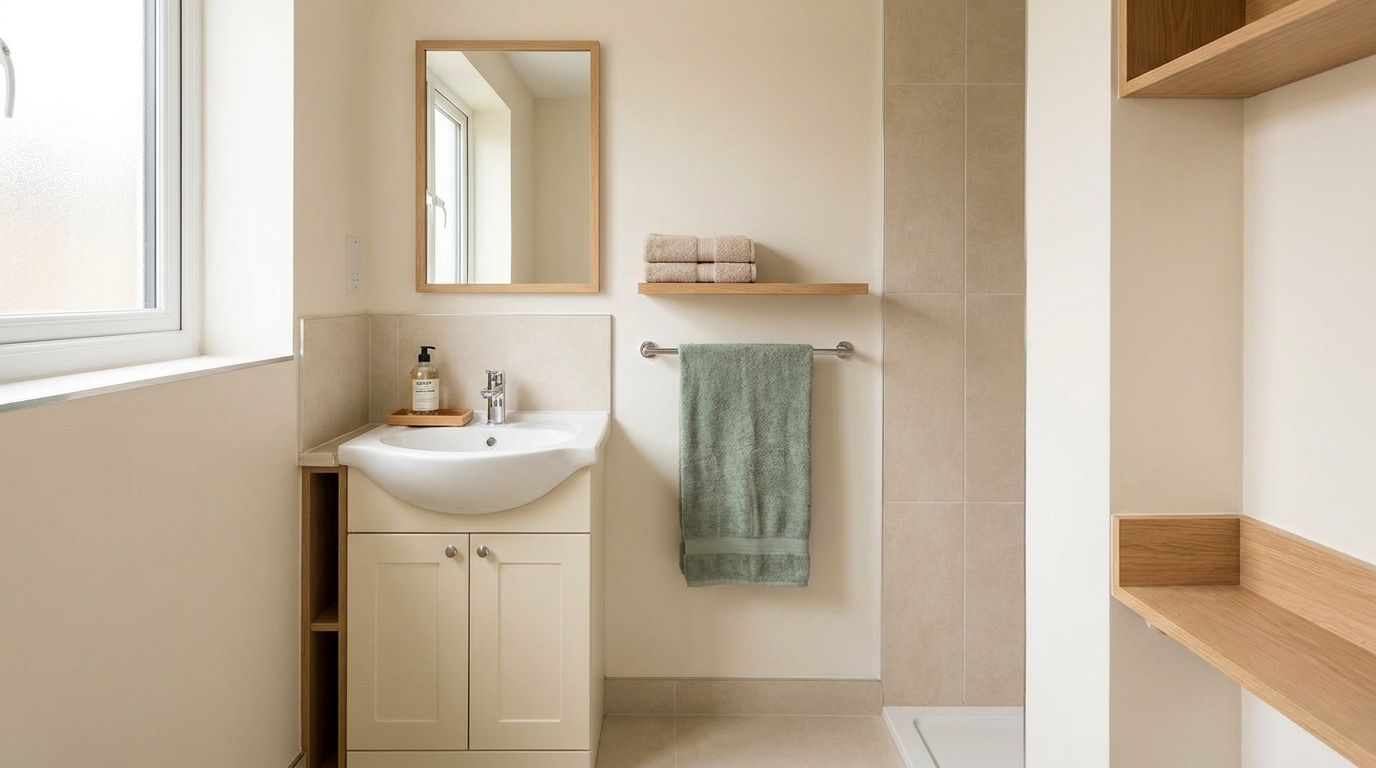
11 Small Bathroom Storage Ideas Without a Remodel
A bathroom can feel crowded long before its cupboards are full. Bottles gather around the basin, clean towels compete with the laundry basket, and the item you need disappears behind something taller. Adding another basket may hide the clutter without making the room easier to use.
These small bathroom storage ideas focus on giving everyday essentials a convenient home without replacing the vanity or moving the plumbing. Some need no installation at all; others involve a suitable hook or shallow shelf. Choose the changes that fit your room, surfaces, and permission to make alterations.
Before You Start: Measure the Space You Can Actually Use
Open the bathroom door, vanity doors, and drawers fully. Notice which gaps remain available and which are needed for movement. Measure around pipes, hinges, and the basin bowl rather than treating the inside of a cabinet as an empty box.
Choose one problem to solve first: a crowded basin, inaccessible toiletries, or nowhere for used towels. You do not need all 11 ideas in one room. A bathroom with one well-organized drawer may work better than the same room filled with storage accessories.
1. Put Daily Essentials in One Small Tray
Keep the products you use at the basin together on a shallow, washable tray. Soap and a few daily items may deserve that space; spare bottles, occasional treatments, and unopened packets usually do not.
Choose a tray small enough to leave comfortable room around the tap. Lift it out when cleaning, and dry any water underneath before putting it back. Avoid placing so many bottles on it that you have to remove three to reach one.
For a pedestal basin with almost no ledge, use a small caddy stored nearby instead. Bring it out when needed and put it away afterward, leaving the basin clear.
If your basin has no cabinet or usable counter, our guide to organizing a small bathroom without a vanity explains how to create storage and a convenient place to set down everyday products.
2. Divide Vanity Drawers Into Useful Groups
A deep drawer can hold plenty yet still be frustrating if everything rolls together. Separate items by routine: dental care, hair accessories, shaving supplies, or the products used by each person.
Measure the drawer’s usable depth and height before choosing inserts. Check for any cutout around the basin or plumbing. Several small washable trays may fit better than one large organizer, especially in an irregular drawer.
Keep the most frequently used items at the front, with enough space to pick them up easily. Stand a tall bottle in a cabinet if it cannot lie securely without leaking or preventing the drawer from closing. Do not force every item into the same storage format.

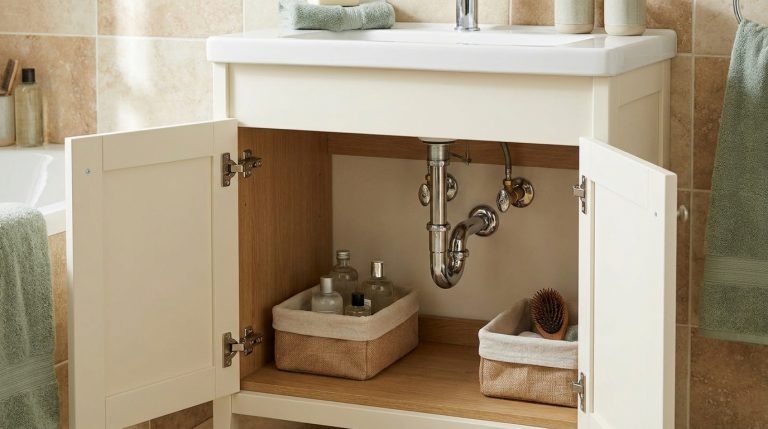
3. Work Around Under-Sink Pipes With Separate Bins
Treat each side of the plumbing as a separate usable space. A trap or shutoff valve may leave one side deeper than the other, so two matching bins are not automatically the best fit.
For example, a hypothetical cupboard might have a clear left-hand area 18 cm wide and 28 cm deep, and a right-hand area 24 cm wide and 20 cm deep. Two bins each measuring 22 × 24 cm outside would not fit those spaces in that orientation: one is too wide on the left and the other too deep on the right. Rotating either bin still leaves a dimension that exceeds the space. Measure height, the opening and the route for lifting the bins out as well.
Use a smaller removable container where it fits, or leave the tighter side open. Store spare toiletries together and small grooming supplies together, but leave valves, pipe joints and inspection areas accessible. Check for dampness before filling the cupboard; storage should not hide a leak.
For a step-by-step measurement and access check, see how to organize under a small bathroom sink. The same opening-versus-interior distinction also matters for kitchen cabinet organizers.
4. Give Each Person a Portable Toiletry Caddy
In a shared bathroom, personal caddies can reduce the jumble of nearly identical products. Give each person a compact container that fits on an existing shelf or inside the vanity.
Store the caddy according to the items it contains. A basket for dry grooming accessories is different from a shower caddy that needs to drain. Let wet items dry before returning them to enclosed storage, and choose containers that are easy to clean.
This arrangement can also work when a small bathroom has no cabinet: personal supplies can live on a suitable shelf outside the room and come in only when needed. Keep everyday shared items, such as hand soap, in their normal place.
5. Separate Clean Towel Storage From Towel Drying
Clean towels need storage; used towels need somewhere to hang and dry. Treating those as separate jobs helps prevent a decorative basket from becoming a pile of damp fabric.
Keep a manageable number of clean towels in the bathroom and store the rest in a linen cupboard or another suitable dry place. Fold them to match the shelf depth. Rolling is optional: use whichever method makes them easier to retrieve without disturbing the stack.
For used towels, choose a rail or appropriately spaced hooks that suit the room and allow the fabric to hang without bunching. Check the weight rating and mounting requirements. A hook hidden behind the door is useful only if the door still opens properly and the towel does not drag on the floor.
For help choosing a spot for both clean and used towels, see our guide to where to store towels in a small bathroom.

6. Use the Back of the Door Carefully
An over-door rack can provide a place for a robe or light accessories without occupying floor space. Check the gap above the door and the thickness of the rack’s brackets before buying.
The door should close normally, and hanging items should not hit the wall, basin, or towel rail when it opens. Start with a small number of items rather than filling every hook. An overloaded rack can turn the doorway into another awkward storage area.
If you prefer adhesive hooks, use products suitable for the surface and bathroom conditions, and follow the preparation and load instructions. Removable does not automatically mean suitable for every painted finish or rental agreement.
7. Make a Narrow Gap Useful Without Blocking Access
A slim floor-standing unit may fit beside a vanity, but the empty gap should be measured with doors and drawers open. Include skirting boards, handles, and anything that projects from the wall.
Choose bathroom-suitable materials and an arrangement you can clean around. A unit that fits tightly but cannot be moved may make routine cleaning more difficult. Keep frequently used supplies within reach and heavier items low, following the manufacturer’s instructions for stability and any required anchoring.
Do not squeeze storage into the route between the door, toilet, and shower. If the room works better with the gap left empty, store occasional supplies outside it instead.
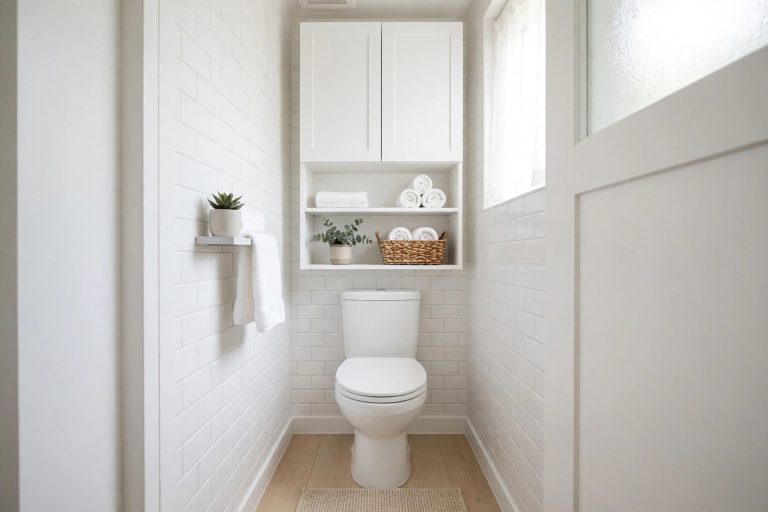
8. Add One Shallow Shelf Where You Can Reach It
A shallow shelf can hold a few everyday items without the bulk of another cabinet. Before choosing its position, check whether you can reach it comfortably and whether it projects into a place where someone bends or stands.
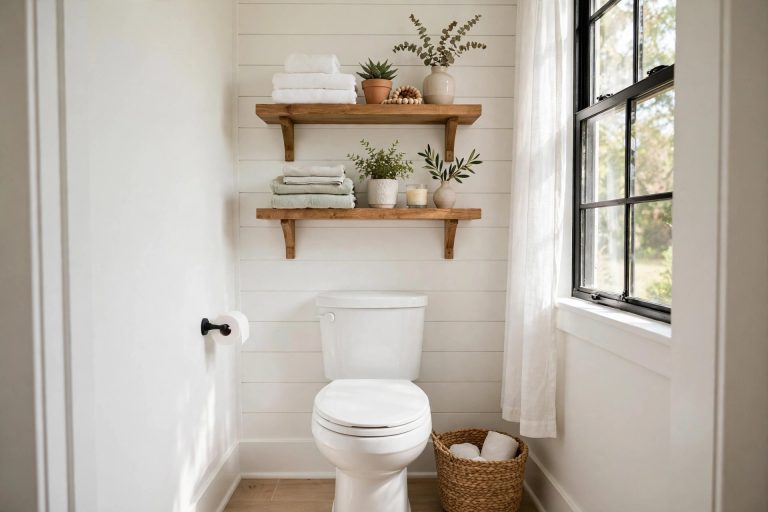
Above-toilet storage needs particular care: leave access to the cistern lid and flushing mechanism, and avoid low shelves that interfere with using the toilet. Keep shelf contents light and secure rather than balancing heavy jars near an edge.
Use fixings suitable for the wall and load. If installation would involve unfamiliar tile, concealed pipes, or wiring, get appropriate help rather than drilling speculatively. A shelf is optional; freestanding or existing storage may be the better choice.
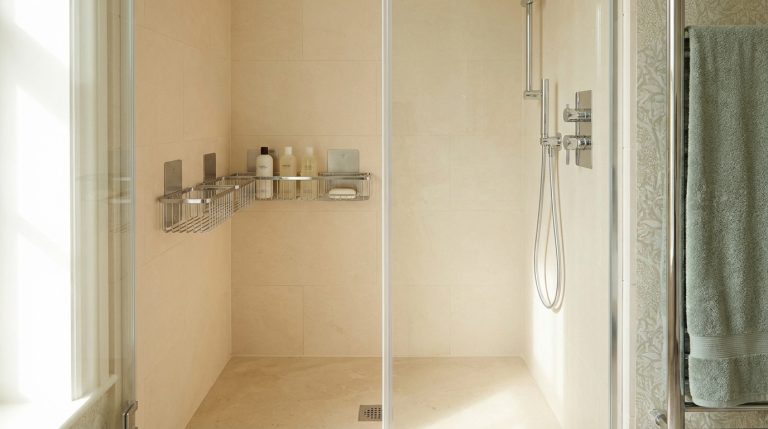
9. Limit Shower Storage to Products in Use
A shower ledge quickly fills when replacement bottles arrive before the current ones are finished. Keep active products in the shower and store unopened replacements elsewhere.
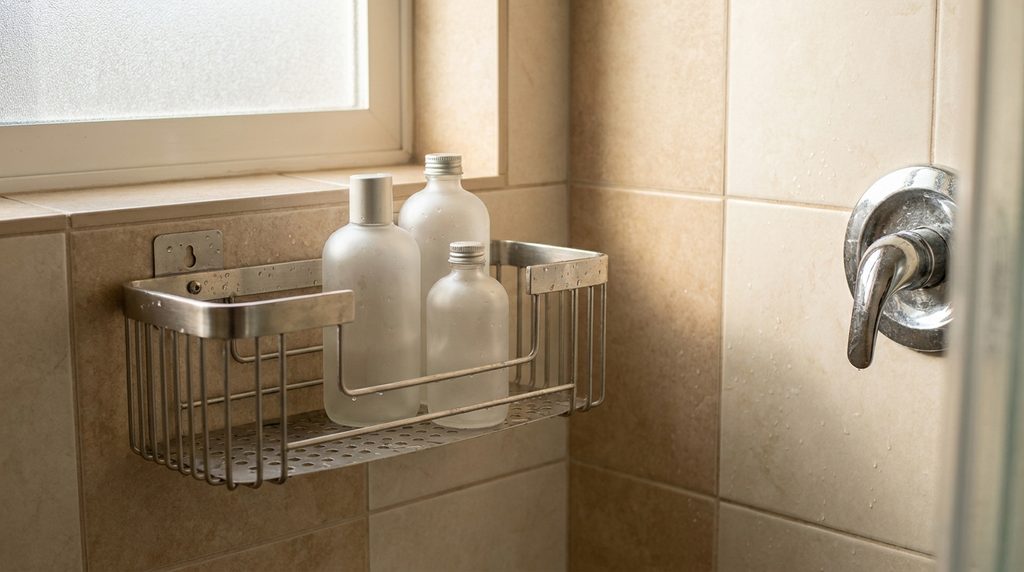
For a small shower without shelves, choose a caddy that drains and fits the actual enclosure. Check its intended mounting method, surface compatibility, and capacity with full bottles, not empty ones. Keep it clear of controls, doors, and the space needed to stand and move.
Take the caddy out periodically to clean both it and the surface behind it. Avoid adding multiple racks simply to hold rarely used products. A smaller selection that everyone can reach is easier to manage than a wall of bottles.
10. Keep Spare Toilet Paper in a Defined Dry Spot
Choose a dry, accessible location for a few replacement rolls. A closed container or cabinet can keep the supply tidy, but make sure people can reach it without moving several other things first.
Check the container’s internal dimensions against the rolls you normally buy. A narrow decorative basket may look right yet fit only smaller rolls. Keep the bulk pack elsewhere if it crowds the bathroom or forces everyday essentials onto the counter.
For help positioning both the active roll and the spare supply, see where to put toilet paper in a small bathroom, including wall-mounted, vanity-side and no-drill options.
A simple rule helps: refill the small bathroom supply from one main storage location. Scattering unopened packs across several cupboards makes it harder to know what you already have.
11. Move Occasional Supplies Out of the Room
Not everything used in a bathroom needs to stay there. Guest towels, unopened toiletries, and occasional grooming accessories may fit comfortably in a nearby linen cupboard or bedroom storage area.
Keep them in clearly defined groups rather than transferring the clutter to another room. If you are making space in an adjoining bedroom, our small bedroom ideas include ways to organize existing furniture before adding another unit.
Leave a little room in each bathroom container so items are easy to return. If something repeatedly ends up on the basin, reconsider its storage location. Small bathroom storage ideas should support your routine, not require a careful rearrangement after every use.
A Simple Reset You Can Start Today
Clear the basin, choose the items you use every day, and give those items the easiest storage. Then move spare supplies into one defined place and make sure used towels have somewhere to hang.
Use the bathroom normally before buying anything else. Notice what still feels awkward: perhaps one drawer needs dividers, or a caddy would replace several loose bottles. Make that specific change and stop when the room works comfortably. You do not need to fill every wall or corner to create useful storage.
Frequently Asked Questions
How can I add storage to a small bathroom without drilling any holes?
Several ideas need no installation at all. Keep daily essentials on a small washable tray at the basin, give each person a portable toiletry caddy that lives in the vanity or on a shelf, hang an over-door rack for robes and light accessories, or slide a slim freestanding unit into a narrow gap. Moving occasional supplies, guest towels and unopened toiletries out of the room creates storage without adding anything. Where the post does suggest installation, a suitable hook or shallow shelf, check the wall surface, the product’s load rating and bathroom-humidity suitability first; adhesive hooks are only as good as their stated surface and moisture rating.
What is the best way to organize under a bathroom sink with pipes in the way?
Treat each side of the plumbing as a separate usable space, since a trap or shutoff valve can leave one side deeper than the other. Measure each gap’s width, depth and height, including pipes, hinges and the basin bowl, before buying anything. Use small removable containers sized to each side rather than assuming two matching bins will fit. Keep spare toiletries and small grooming supplies grouped by type, leave valves, pipe joints and inspection areas accessible, and check for dampness before filling the cupboard.
Where should I store towels in a small bathroom?
Separate the two jobs: clean towels need storage, used towels need somewhere to hang and dry. Keep a manageable number of clean towels in the bathroom, folded to match the shelf depth, and store the rest in a linen cupboard or another dry place. For used towels, use a rail or hooks spaced so the fabric hangs without bunching, check the weight rating and mounting requirements, and make sure a hook behind the door still lets the door open properly with the towel clear of the floor.
What should I keep in the bathroom, and what should I move out?
Keep only daily essentials where they are easiest to reach, and give spare toilet paper one defined dry spot that you refill from a single main storage location. Move guest towels, unopened toiletries and occasional grooming accessories to a nearby linen cupboard or bedroom storage area, keeping them in clearly defined groups. A useful rule: if something keeps ending up on the basin, its storage location needs rethinking.
How do I stop a small bathroom looking cluttered after adding storage?
Start by clearing the basin completely and choosing only the items you use every day for the easiest storage. Add ideas one at a time rather than all eleven at once; one well-organized drawer works better than a room filled with storage accessories. Limit shower storage to products currently in use, and do not fill every wall or corner. After a few days of normal use, fix whatever still feels awkward and stop when the room works comfortably.