13 Small Kitchen Storage Ideas for Everyday Essentials
A small kitchen can have enough cupboards and still feel difficult to use. The saucepan you need sits beneath three others, container lids slide behind the shelf, and groceries land on the counter because their usual cupboard is full.
The most useful small kitchen storage ideas make everyday items easier to find, reach, and put back. Start with what you cook and use regularly, then arrange storage around those habits. You can often improve a kitchen by changing where things live before adding another organizer.
These 13 ideas focus on cabinets, drawers, and work surfaces, with practical checks to help you avoid buying storage that does not fit.
1. Give Your Everyday Items the Easiest Spaces
Empty one cupboard or drawer at a time and separate its contents into daily, occasional, and rarely used items. Everyday bowls should not be behind a serving platter that comes out twice a year.
Put frequently used pieces in places you can comfortably reach. Reserve less convenient spaces for lightweight, occasional items, and keep heavy cookware somewhere accessible without lifting it overhead. Remove duplicate tools you never choose and containers that no longer have matching lids.
Try the new arrangement for several meals before buying organizers. You may discover that the problem was placement rather than a lack of storage.
If cookware is the main source of frustration, follow our guide to organizing pots and pans in a small kitchen, with practical fixes for awkward stacks, loose lids and heavy pots.
To decide what deserves the front of a shelf, trace one repeated task. For a usual breakfast, that might mean reaching a bowl, a mug and one cereal container. Put those within easy reach; an occasional serving platter can move to a less convenient spot. The arrangement should reflect what you actually use rather than treating every item in a matching set as equally important.
2. Keep Supplies Near the Task They Support
Think about the small journeys you make while preparing a meal. Store chopping boards and mixing bowls near the preparation area, and position everyday plates where they are easy to put away after washing.
Group tea, coffee, and mugs near your usual drinks-making spot. Keep cooking tools within convenient reach of the cooking area, while keeping stored items clear of heat and appliance ventilation.
In a very small kitchen, these areas will overlap. That is fine: the aim is to reduce searching and unnecessary movement, not to create a separate station for everything. A single drawer can hold two clearly divided groups of tools.
3. Adjust Shelf Heights Before Adding Shelf Risers
Check the route into the cupboard before buying an insert. In a hypothetical cabinet, the inside may be 46 cm wide while the clear door opening is only 41 cm. A rigid 44 cm-wide organizer fits the interior width on paper but cannot pass straight through that opening. It might tilt into place, but that does not make it convenient to remove for cleaning.
A 38 cm-wide organizer leaves 3 cm total across that opening, not 3 cm on each side. That checks width only. Measure its outside depth and height, account for hinges and shelf supports, and make sure your hand can reach or lift it as intended. Handles and rims count as part of the organizer’s outside size.

Look at the unused space above your dishes. A cupboard with adjustable shelves may work better with one shelf lowered over a short stack of plates and another raised to fit taller pieces.
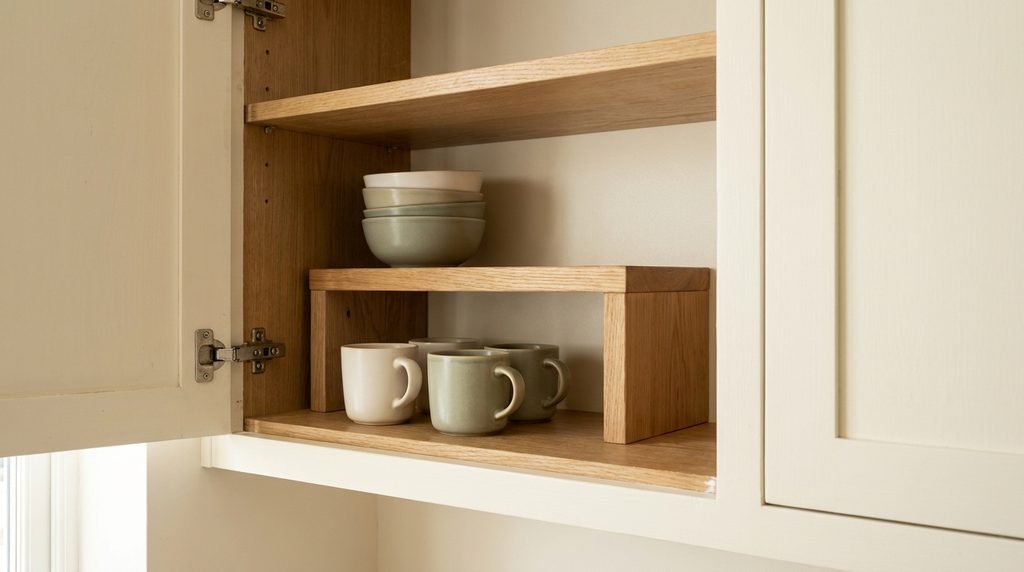
If shelf positions are fixed, a sturdy shelf riser can create a second level for cups or small bowls. Check its width, depth, stability, and load rating. Make sure you can remove items from the lower level without tipping the riser or scraping your hands.
Avoid building a tower of organizers. Two accessible levels are more useful than several cramped layers that must be dismantled whenever you want a mug.
4. Store Baking Trays and Boards Upright
A pile of baking trays is awkward because you usually want the one at the bottom. A suitable vertical divider lets you slide out one tray or chopping board at a time.
Measure the cabinet opening as well as its interior. Hinges and the cabinet frame can make the usable opening narrower than the shelf. Check the height with your largest board standing upright, and choose dividers strong enough to keep the contents stable.
Give thick roasting pans a separate space if they crowd the slots. Adjustable dividers are helpful when your trays vary in thickness, but a simple rack that fits properly is enough.
5. Make Container Lids Easy to Match
Take out every food container and match each one with its lid. Set aside damaged pieces and decide whether you need all the remaining sizes. A collection that fits your actual leftovers is easier to manage than a cupboard full of mismatched tubs.
Nest compatible container bases together without forcing them, and stand lids in a shallow divided bin beside them. If you prefer storing containers with their lids attached, allow enough space to retrieve one without disturbing the whole stack.
Put this storage near the area where you pack meals or clear away dinner. Avoid filling it so tightly that putting a clean container back becomes a puzzle.
6. Divide Drawers Around Your Actual Tools
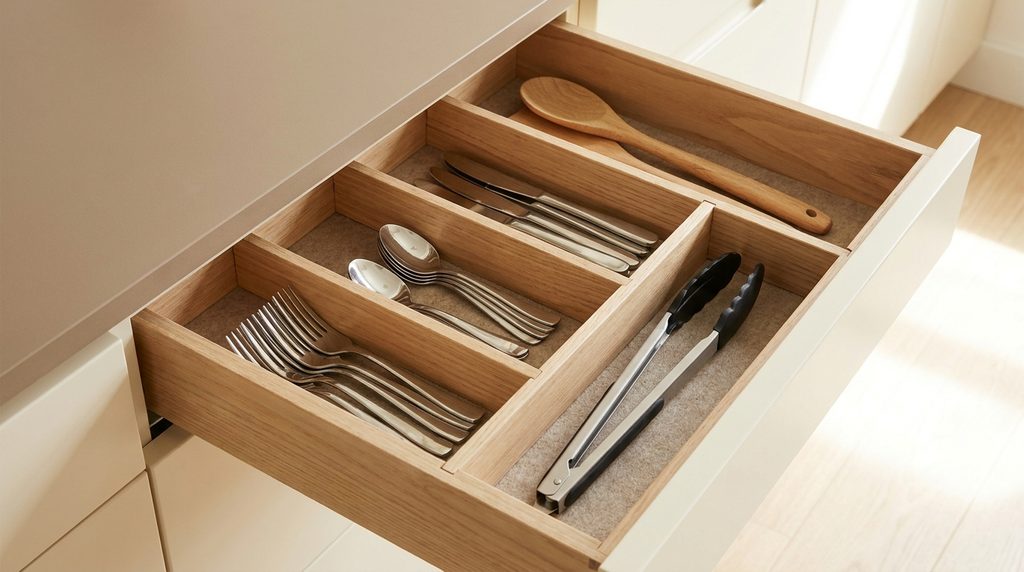
Before buying a cutlery tray, measure the inside of the drawer and lay out the utensils you intend to keep there. Long tongs, a rolling pin, and a wide serving spoon may not fit standard compartments.
Use adjustable dividers or a few separate trays to give differently sized tools their own spaces. Keep a little room around the contents so you can see and lift them easily. Check that taller items do not catch when the drawer closes.
Give everyday cutlery the most convenient position. Less-used baking tools can live elsewhere rather than forcing you to search through them every time you need a teaspoon.
7. Use Pull-Out Bins for Deep Pantry Shelves
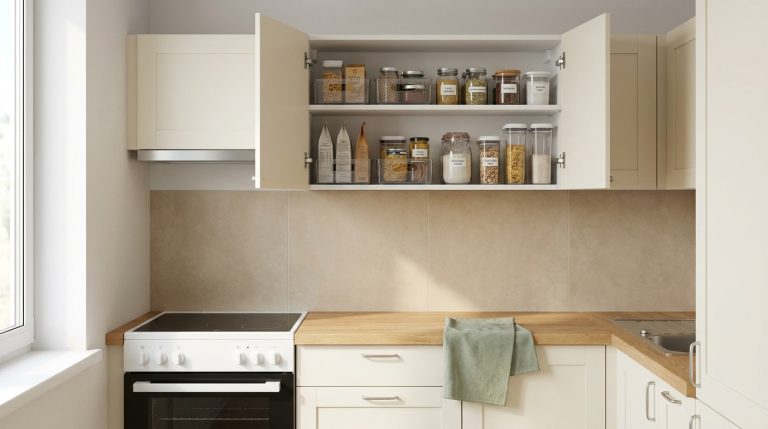
Deep shelves often hide packets behind larger boxes. A handled bin lets you bring a small group of items forward instead of reaching through everything in front.
Group items in a way that suits your routine: breakfast supplies, baking ingredients, or unopened snacks, for example. Choose bins that are manageable when full, and leave room to grasp their handles. Several smaller bins may be easier to lift than one large, heavy basket.
You do not need to decant everything into matching jars. Original packaging can work well inside a bin and keeps labels and preparation instructions with the food. If you do decant, retain the important packaging information and dates.
If groceries need a clearer home, follow this guide to organizing a small kitchen without a pantry.
8. Use a Turntable Only Where It Improves Access
A turntable can help with small jars or bottles in an awkward cupboard corner. It is less useful when its circular footprint wastes space that rectangular containers could use more efficiently.
Measure the shelf depth and the door opening, then check whether the loaded turntable can rotate without hitting the hinges or neighboring items. A raised edge can help keep bottles contained, but avoid loading it with tall, unstable pieces.
Try grouping the same items on a small tray before buying one. If pulling the tray forward already solves the problem, you may not need a rotating organizer at all.
9. Check Door Clearance Before Adding Door Storage
The inside of a cupboard door can hold a shallow organizer, but it shares space with whatever is on the shelves behind it. Close the door slowly while checking the proposed organizer’s depth against the shelf contents and hinges.
Use this area for a small number of lightweight items, such as spare cloths or packet clips. Follow the organizer’s mounting instructions and weight limits. Over-door hooks can stop some doors from closing neatly, so check the fit first.
In a rental, choose a method permitted for the surface and tenancy. An organizer that damages the finish or prevents the door from closing creates a new problem rather than solving one.
10. Arrange Under-Sink Storage Around the Plumbing
The cupboard beneath the sink rarely behaves like a simple rectangular shelf. Pipes, valves, and waste fittings interrupt the space, so measure each usable section separately.
A removable caddy can keep cleaning supplies together while leaving the plumbing accessible. A shallow tray may help contain small drips, but it should not conceal a leak that needs attention. Avoid stacking items against connections or filling every gap around the pipes.
Keep cleaning products in their original containers and separate from food. Where children can reach this cupboard, use appropriate secured storage for hazardous products rather than relying on an organizer to keep them out of reach.
11. Protect One Useful Area of Countertop
It is tempting to solve full cupboards by moving everything onto the counter. Before doing that, choose the part of the worktop you need for chopping, mixing, or setting down groceries, and keep it available.
Leave out appliances you genuinely use often. Find accessible storage for occasional equipment, considering its weight and how comfortably you can lift it. Do not tuck an appliance into a cramped enclosure and operate it there unless its instructions allow that arrangement.
If equipment is taking over your preparation space, our guide to where to put small appliances in a small kitchen helps you choose what stays on the counter and what can be stored within easy reach
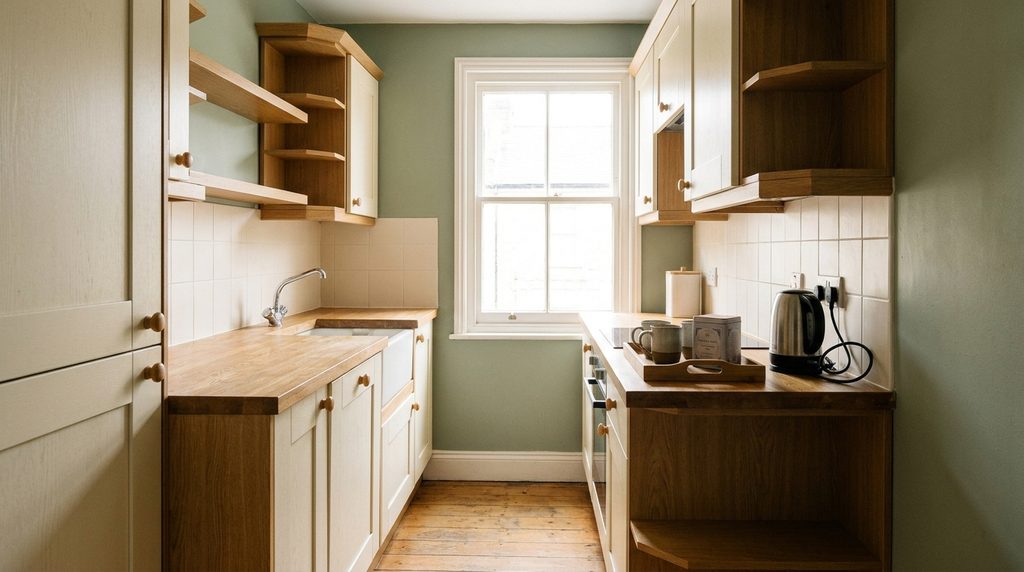
A small tray can contain everyday tea supplies, but it should make cleaning easier, not become another permanent obstacle. Clear counter space is part of a functional storage plan.
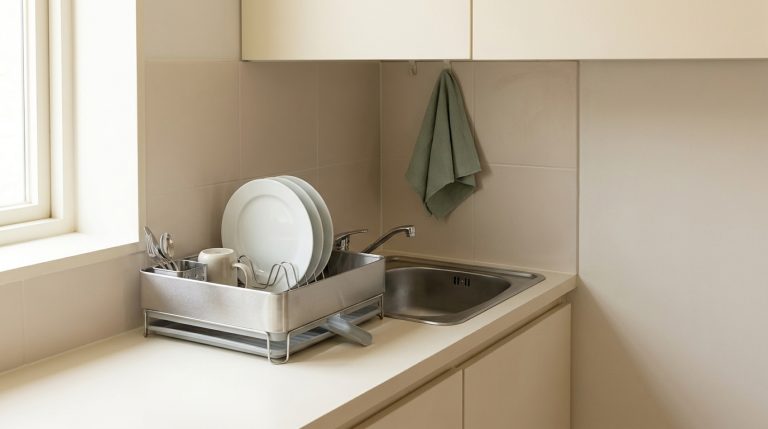
If wet dishes keep taking over that space, our guide to where to put a dish drying rack in a small kitchen compares sink-side and over-sink options, with drainage and access checks before you choose.
12. Give Kitchen Overflow a Deliberate Home
If your cabinets cannot comfortably hold occasional serving pieces, consider an existing dining-room cupboard before adding another unit to the kitchen. Keep related items together so they are easy to bring back when needed.
A slim cart can work if it has a genuine parking place and does not block drawers, appliance doors, or walking routes. Measure the cart including its handles, then test the footprint with a cardboard box before buying. Keep heavier items low and follow its load limits.
In an open-plan home, check how extra storage affects the adjoining seating area. Our small living room ideas can help you think through the furniture layout beyond the kitchen.
13. Leave Space for Putting Things Back
A storage arrangement that fits only when everything is perfectly aligned will be difficult to maintain. Leave enough room to replace a plate, slide in a tray, or put away groceries without rearranging the entire shelf.
Give unopened extras a defined area and check it before shopping. When that space is full, work through what is already there instead of spreading supplies into unrelated cupboards.
At the end of the day, return loose items to their places and notice what repeatedly gets left out. That item may need a more convenient home. Small kitchen storage ideas are most useful when they make tidying easier as well as making the cupboards look organized.
Choose Your First Small Kitchen Storage Project
Start with the cupboard or drawer that interrupts you most often. Empty it, remove what does not belong, measure the usable space, and put the daily essentials back first.
Live with the arrangement before adding accessories. If a simple shelf adjustment or a smaller collection of containers solves the problem, stop there. The goal is a kitchen where you can prepare food and put things away comfortably, using storage that earns its place.
Frequently Asked Questions
What is the easiest small kitchen storage idea to start with?
Empty one cupboard or drawer at a time and separate its contents into daily, occasional, and rarely used items, since everyday bowls should not sit behind a serving platter that comes out twice a year. Put frequently used pieces where you can comfortably reach them, reserve less convenient spaces for lightweight occasional items, and remove duplicate tools and containers with no matching lids. Try the new arrangement for several meals before buying organizers: the problem is often placement rather than a lack of storage.
How should I organize a deep cupboard so nothing gets lost at the back?
Check the route into the cupboard before buying any insert: measure the clear door opening as well as the interior, since a rigid organizer that fits the inside on paper may not pass through the opening, and handles and rims count as part of its outside size. For deep pantry shelves, use handled bins so you can bring a small group of items forward instead of reaching through everything in front, and leave room to grasp the handles. A shelf riser can create a second level for cups or small bowls, but avoid building a tower of organizers: two accessible levels beat several cramped layers.
How do I keep food containers and their lids from turning into a mess?
Take out every container and match each one with its lid, setting aside damaged pieces and deciding whether you need all the remaining sizes. Nest compatible bases together without forcing them, and stand lids in a shallow divided bin beside them. Put this storage near where you pack meals or clear away dinner, and avoid filling it so tightly that putting a clean container back becomes a puzzle.
How can I keep my countertop clear in a small kitchen?
Protect one useful area of the worktop for chopping, mixing, and setting down groceries, and keep it available before solving cupboard space by moving things out. Leave out only appliances you genuinely use often, and find accessible storage for occasional equipment, considering its weight and how comfortably you can lift it. A small tray can contain everyday tea supplies, but it should make cleaning easier, not become another permanent obstacle. Clear counter space is part of a functional storage plan.
How do I organize under the kitchen sink when pipes get in the way?
The cupboard beneath the sink rarely behaves like a simple rectangular shelf, so measure each usable section separately rather than assuming two matching bins will fit. A removable caddy can keep cleaning supplies together while leaving the plumbing accessible, and a shallow tray may contain small drips, but it should not conceal a leak that needs attention. Keep cleaning products in their original containers and separate from food, and where children can reach this cupboard, use appropriate secured storage for hazardous products rather than relying on an organizer to keep them out of reach.