Best Shoe Rack for a Small Entryway: 6 Picks That Fit
The wrong shoe rack makes a small entryway worse, not better. Too deep and it narrows the walkway. Too tall and it blocks light. Too open and it looks like a shoe shop exploded by your front door. The right one disappears into the wall you already have and holds exactly the shoes your household actually wears.
There is no single best shoe rack for every small entryway, because the deciding measurement is not how many pairs a rack holds, it is how much wall you have. This guide starts with the measurements, then compares six options by their real dimensions, so you can pick by fit first and style second.
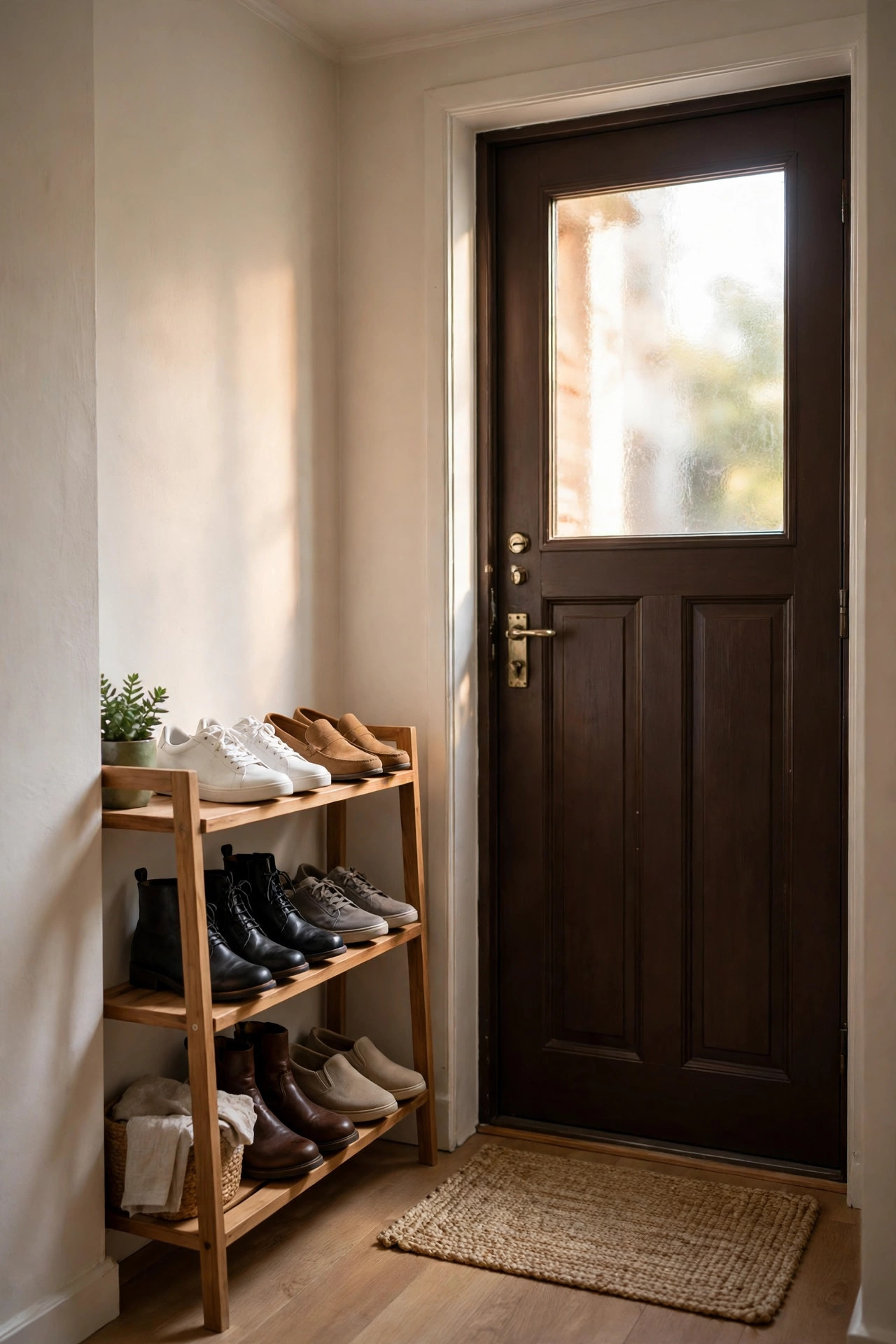
Measure First: Width, Depth, and Walkway
Before you look at any rack, take three measurements. First, the wall width beside your door, minus door swing: that is the maximum rack width. Second, the walkway width after the rack goes in: leave at least 24 inches of clear walking space, and more if you carry bags or a child through the door. Third, your tallest shoes: boots need 12 to 16 inches of vertical clearance, while flats and sneakers need about 6 inches.
Depth is the measurement most people get wrong. Most small-entryway shoe storage falls between 6 and 10 inches deep. Anything deeper than 10 inches starts to interfere with doors and foot traffic in a narrow hall. If your entryway is under 36 inches wide in total, stay at 8 inches deep or less, or go wall-mounted and take zero floor space.
Count pairs honestly. A household of two adults who rotate 3 pairs each needs 6 to 8 slots, not 20. Buying for guests you host twice a year is how a slim entryway ends up with a tower nobody asked for. Our guide to where to put shoes in a small entryway with no closet covers the daily routine that keeps any rack tidy once it is in place.
Best Slim Open Rack: Narrow 3-Tier Racks
Best for: one or two people, a wall gap of 24 to 30 inches, daily shoes only.
The workhorse of small entryways is a narrow 3-tier metal and wood rack, typified by models like the RUNJIMY small narrow shoe rack. These racks are compact enough for a gap beside the door, open enough that shoes dry and air out, and cheap enough that a wrong guess does not hurt. Reviewers consistently point to the same trade-off: three tiers limit capacity for a large family, and boots need a separate spot, usually a tray by the door.
Choose an open rack if your shoes are mostly sneakers, flats, and low shoes, and if you are happy to see them. If visible shoes bother you, skip to the closed options below instead of buying an open rack and regretting it.
Best Natural Look: Bamboo 3-Tier Rack
Best for: renters and warm interiors, a wall gap of about 27 inches.
Bamboo racks, such as the Kitsure bamboo wooden shoe rack, measure about 26.8 inches wide, 11 inches deep, and 18.9 inches high, with three tiers. That footprint fits most entryway gaps, and the bamboo reads as furniture rather than utility storage, which matters when the rack sits in full view of the living room.
Reviewers report easy assembly with labeled parts, and a modular design that stacks or repurposes for bags and books. The limit is the same as any 3-tier rack: it is a daily-shoe station, not a closet replacement. If you need tall vertical storage, this is too modest for the job.
Best for Zero Floor Space: Wall-Mounted Cabinet
Best for: entryways too tight for any freestanding unit, where drilling is allowed.
When even a slim rack would block the walkway, a wall-mounted flip-drawer cabinet takes the shoes off the floor entirely. The GREATMEET wall-mounted shoe rack, for example, measures 32 inches wide, 6 inches deep, and 43 inches high, with three flip drawers in powder-coated steel. At 6 inches deep, it is the shallowest option in this guide, and mounting it above the floor makes cleaning underneath easy.
The trade-offs are real. Wall mounting requires a drill and solid fixings, so it suits owners more than renters. Reviewers also note that larger shoe sizes, size 12 and up, may not close the flip drawers fully, and that the mounting hardware could be sturdier. Measure your largest pair against the drawer depth before you buy.
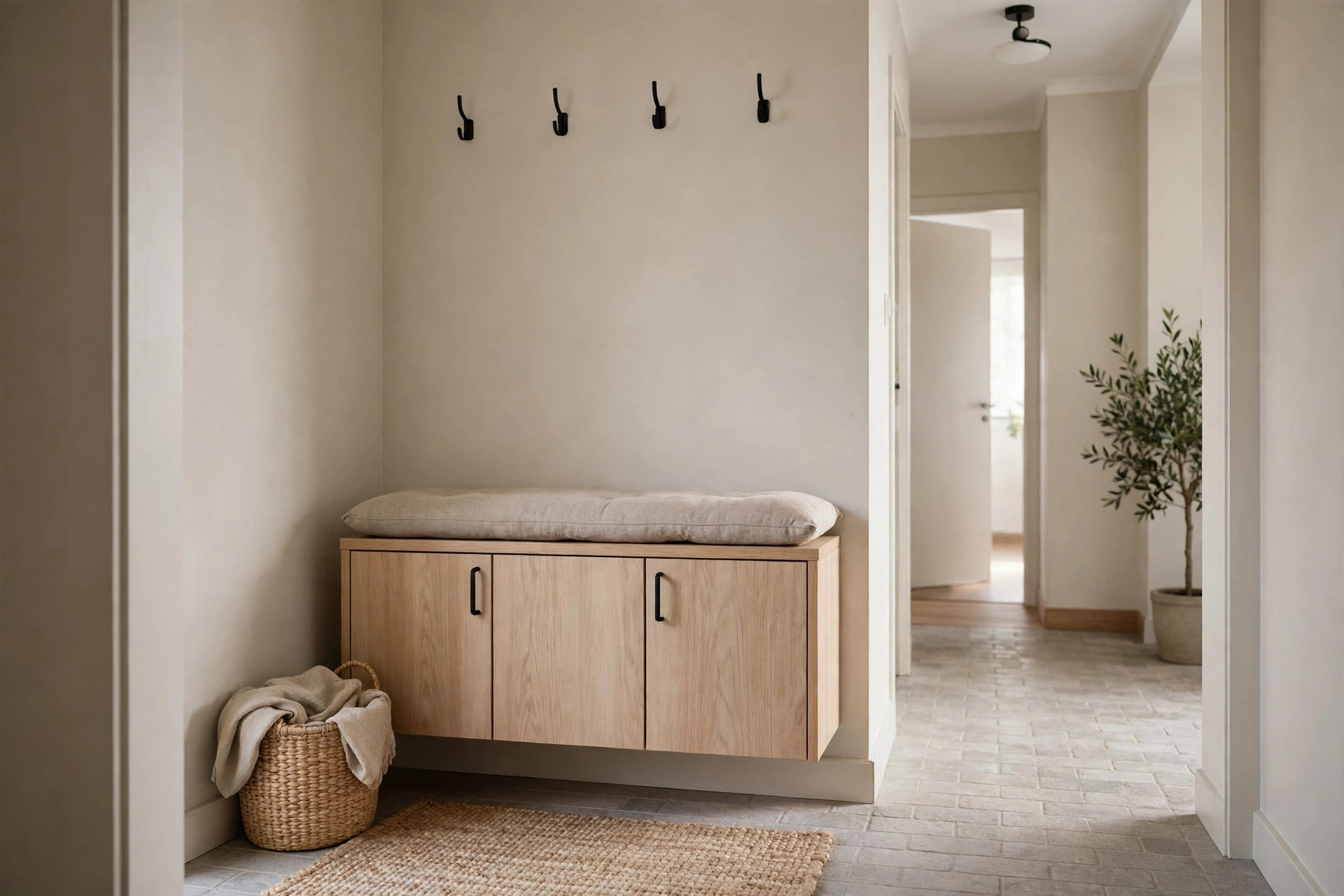
Best for Sitting Down: Shoe Bench
Best for: households that sit to put shoes on, and entryways with 28 to 36 inches of wall.
A shoe bench does two jobs: storage below, a seat above. The SONGMICS bamboo shoe rack bench, at 27.6 inches wide, holds at least 6 pairs and supports up to 286 pounds on top, according to its listed specs. Cushioned benches from the same family hold 7 to 8 pairs with a padded seat, which helps children and anyone who struggles to balance on one foot by the door.
A bench needs more floor depth than a flat rack, usually 11 to 13 inches, so check your walkway measurement first. It is also the best choice if your entryway has no console table: the bench top doubles as the landing spot for keys and bags, a role our small entryway without a console table guide covers in detail.
Best for Many Pairs: Vertical Tower
Best for: larger households with a narrow but tall wall slice.
A 7-tier vertical tower, such as the AZERPIAN vertical storage organizer, holds up to 21 pairs in a slim metal frame. It suits a household that genuinely needs capacity but has only a narrow strip of wall, for example beside a tall coat hook rail.
Two cautions from reviewers: tall towers need a step stool for the top tiers, and a fully loaded tower can tip if bumped, so anchor it to the wall if your model allows it. Shelves on these towers are also narrow, which suits smaller shoes better than wide boots or large sneakers.
Best Closed Storage: Slim Shoe Cabinet
Best for: people who want shoes completely out of sight, with 36 inches of wall.
The Costco Bayside Furnishings shoe organizer, reported in October 2026 at 229.99 dollars online and 199.99 dollars in store, measures 36 inches wide, 12.2 inches deep, and 39.6 inches high, with two soft-close flip drawers holding 16 to 18 pairs, including boots on an adjustable shelf. Prices may change, so check before buying.
Closed storage hides damp shoes too, so let wet shoes dry on a tray before they go inside. It also needs the full 12.2 inches of depth, so this is not the pick for a truly narrow hall: it is the pick for an entryway that has width to spare and wants a clean, furniture-like front.
Pick by Your Wall Width
Under 28 inches of wall: a narrow 3-tier open rack or a wall-mounted cabinet. 28 to 36 inches: a bamboo rack or a shoe bench. Over 36 inches: a closed shoe cabinet, or a bench plus a tray for boots. Over 60 inches: two narrow racks side by side beat one wide unit, because you can leave a gap for boots, bags, or a plant. In every case, leave the door swing clear.
What to Skip in a Small Entryway
Skip deep bookcases repurposed as shoe storage. At 12 inches deep or more, they eat the walkway. Skip over-door racks on the front door itself: they rattle, block the peephole or lock on some doors, and advertise your shoes to visitors. Skip any rack you cannot clean under or behind, because dust and grit will collect there fast.
One final rule: buy for the shoes you wear this week, not the shoes you own. Off-season and rarely worn pairs belong in a bedroom closet or under-bed storage, not in the entryway. The right rack holds your daily rotation neatly, and nothing more.
How deep should a shoe rack be for a small entryway?
Between 6 and 10 inches deep. Leave at least 24 inches of clear walkway after the rack goes in. If your hall is under 36 inches wide, stay at 8 inches deep or less, or go wall-mounted.
How many pairs should a small entryway rack hold?
Count daily shoes honestly: most two-person households need 6 to 8 slots. Off-season pairs belong elsewhere, not in the entryway.
Is a wall-mounted shoe cabinet renter friendly?
Usually no, because it needs drilling and solid wall fixings. Renters should choose a freestanding slim rack or a rolling bench instead.
Where do boots go in a small entryway?
On a boot tray by the door, or on an adjustable shelf inside a closed cabinet. Most open racks and flip drawers do not fit tall boots.
Open rack or closed cabinet, which is better?
Open racks air shoes out and cost less, but shoes stay visible. Closed cabinets hide everything and cost more, but damp shoes must dry before going inside.