Mixing Metals in a Bathroom: Start With What You’re Keeping
The chrome faucet works, the shower fittings are staying, and the mirror you like has a brass frame. Do you need to replace everything else to make it belong? Usually, no. Mixing metals in a bathroom can begin with one useful change, rather than a shopping list of matching replacements.
The aim is to make the combination look considered from the places where you actually see it: the doorway, the basin and the mirror. Choose which existing finish will stay prominent, then give the new finish a clear role. An exact percentage matters less than the size, position and shine of the pieces involved.
In this article
- Start with what stays
- A chrome-and-brass finish plan ·
- Compare the actual finishes ·
- Edit a mix that feels accidental
Mixing Metals in a Bathroom Starts With the Fixed Pieces
Look around before selecting a new finish. Include the faucet, drain, shower controls, showerhead, enclosure frame, towel rail, toilet-paper holder and door hardware. Some are easy to overlook in a mood board but obvious in the finished room. Decide which pieces are staying because they work, fit and still suit the space.
If the shower fittings, faucet and towel rail are chrome, treat chrome as part of the design. There is no need to hide it or replace it just because you prefer a warm mirror frame. Kohler’s guidance on mixing bathroom metals describes using a main finish with a supporting accent, rather than requiring every item to match.
For a straightforward refresh, start by adding one other finish. That is a manageable way to judge the result, not a rule that every successful bathroom must contain exactly two metals. An existing dark door handle also does not automatically mean the room needs a third coordinated set of accessories.
Keep visual choices separate from replacement compatibility. A new shower control cannot be chosen by its color alone; confirm which trim works with the existing valve before ordering. If the plumbing is sound and outside the scope of the refresh, leave it alone and work with the mirror or cabinet hardware instead.
A Chrome Bathroom, With a Warmer Vanity
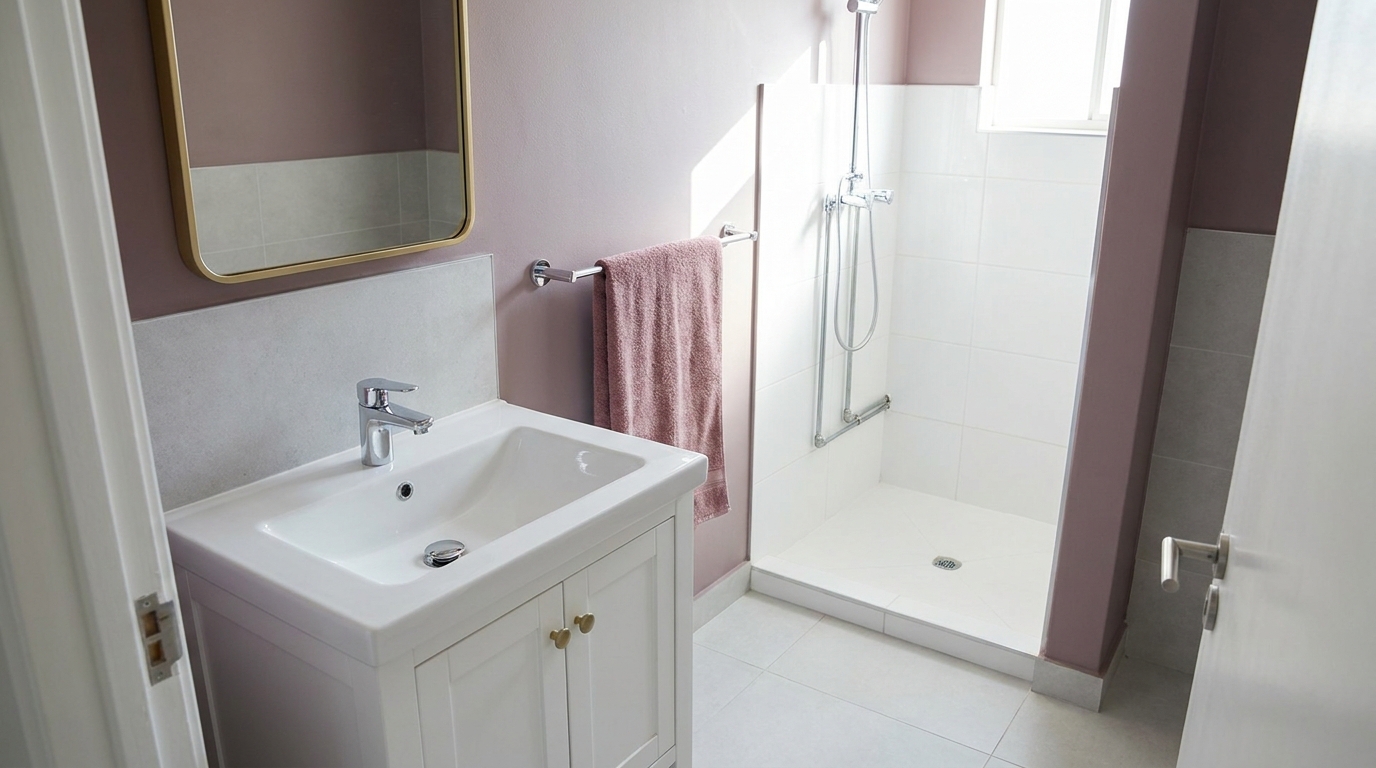
Consider an illustrative bathroom with a white vanity, pale-gray tile and chrome plumbing. The vanity needs a new mirror, but the faucet, drain and shower fittings are staying. The goal is to add warmth at the basin without turning a mirror purchase into a plumbing project.
Keep: the chrome faucet and drain, shower fittings and existing towel bar. They already repeat a silver-colored finish around the room.
Introduce: a slim satin-brass mirror frame. Its position above the basin makes it noticeable even though the frame itself is narrow.
Repeat, if it improves the result: use small brass vanity knobs that look compatible with the frame. Check the existing fixing holes and the door thickness before buying. The warm finish now appears above and below the basin, while chrome continues to connect the vanity to the shower.
This is a proposed finish arrangement, not a renovation we have carried out. It also does not depend on buying the knobs immediately. Place a sample at the vanity and compare the room with and without it. A distinctive mirror can be enough; repetition is useful when it helps the composition, not when it creates another unnecessary purchase.
The mirror still has to fit the wall and serve the people using the basin. Use the measurements in our guide to choosing a bathroom mirror before deciding that the right frame finish makes it the right mirror.
For paired items, consistency is an easy way to keep this example calm. Keep two vanity knobs alike, and keep a pair of matching faucets in the same finish. Moen’s mixed-finish advice makes the same distinction between mixing finishes around a room and keeping sets consistent.
You do not need a brass towel bar, brass showerhead and brass soap pump to complete the plan. The retained chrome pieces are doing a useful job: they keep the second finish from spreading into every corner.
Look at the Finish, Not Just Its Name
When shopping, “metal” often means the visible finish rather than the material beneath it. A brass-colored mirror frame is not necessarily solid brass, and a similar name does not establish a color match. Moen’s finish-identification guide uses finish names, model-number suffixes and images, and notes that some finishes look similar. Keep the exact product and finish code when trying to match an existing item.
For a mixed scheme, an exact match between chrome and brass is not the aim. Their difference is the point. The closer comparison is between the two pieces intended to look related, such as the new mirror frame and the vanity knobs.
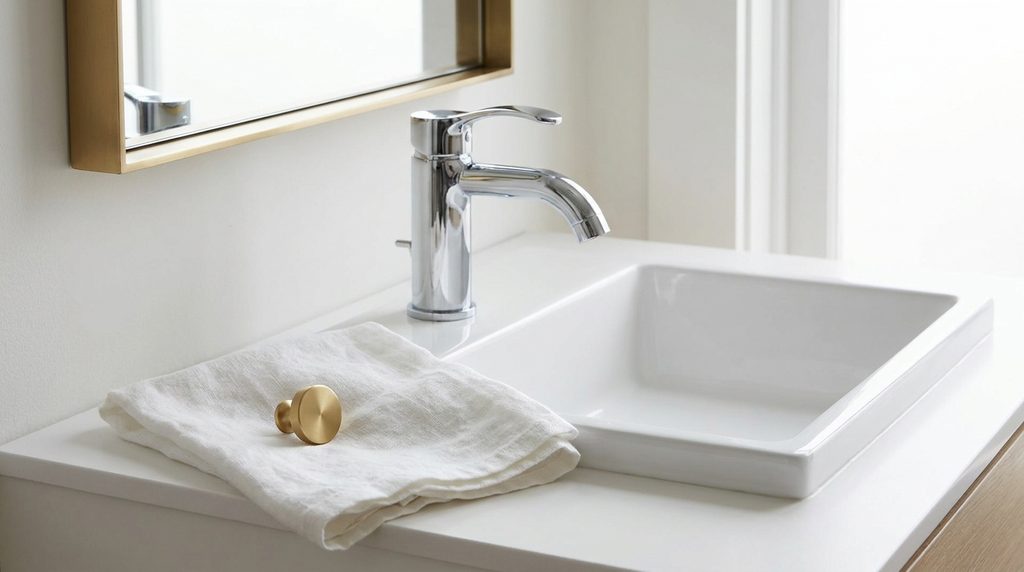
Illustrative finish comparison: look at color and sheen together. An image cannot verify that two manufacturers’ finishes match.
Compare real samples where the pieces will be used. Put a knob beside the existing faucet and, if available, a sample of the mirror finish. Look during daylight and with the bathroom lights on. A screen comparison can help narrow the search, but it cannot show the exact reflection, brushing or color you will see at home.
Notice both tone and sheen. One golden finish may look pale and muted; another may look yellow, dark or reddish beside it. A highly polished surface catches light differently from a brushed one. Matching the word “brass” in two product listings does not answer either question.
There is no need to ban chrome and nickel from sharing a room. However, if you are trying to replace a chrome item with an identical-looking piece, a warmer or more softly reflective silver finish may disappoint you. Decide whether you want a match or a visible contrast before buying. A near-match is only a problem if the difference bothers you in the actual setting.
Also read the product’s finish and care description. Do not assume every gold-colored surface can be polished like bare brass, or that the cleaning method used on the faucet suits the mirror frame. Keep the individual care instructions rather than treating all metal surfaces as one material.
When the Mix Still Looks Accidental, Edit the View
Stand in the doorway and identify the detail drawing more attention than you intended. Is it a large black mirror around a delicate chrome faucet? Several slightly different gold finishes beside each other? Or a shiny countertop accessory that is easy to move? Change the smallest contributing element first, then look again.
Remember that object count does not measure visual impact. A broad mirror frame can dominate several small knobs. Dark hardware against a white cabinet may stand out more than a larger silver towel rail against gray tile. This is why a strict 70/30 count is less useful than looking at the room from its normal viewpoints.
Use the mirror view as well as the doorway view. A towel rail on the opposite wall may appear directly beside the mirror frame in reflection. That could give an existing finish all the repetition it needs, without adding anything new.
If the room feels crowded with different finishes, temporarily remove movable metal accessories and reconsider the fixed pieces. You may find that the faucet, mirror and cabinet hardware work together once the extra trays and bottles are gone. If the main combination still feels wrong, revisit the sample that differs most instead of replacing the whole set.
Stop when the parts you kept and the parts you added make sense together. A mixed-metal bathroom does not need every component updated; it needs a finish arrangement you like in your own light, with fixtures that still work for everyday use.