Sofa Seat Depth: How to Choose a Comfortable Fit
The right sofa seat depth lets you sit the way you actually relax. If you usually sit upright, look for a seat that lets you reach the back cushion while keeping your feet comfortably on the floor. If you curl up or sit with your legs on the sofa, extra depth may be useful. A deeper seat is not automatically a more comfortable one.
Before comparing sizes, check which depth the retailer lists. Overall depth tells you how far the sofa projects into the room; inside seat depth tells you how much space you have in front of the back cushion. Confusing the two can leave you with a sofa that fits the floor plan but feels wrong when you sit down.
Use the measurements to narrow your options, then test the actual sitting position. A number cannot tell you how far you will sink into a cushion or whether you will spend every evening reaching for another pillow.
On this page
- Measure the space you actually sit on
- Use depth ranges as starting points
- Try your everyday positions
- Choose for people who sit differently
- Check the details before ordering
Measure Sofa Seat Depth With the Back Cushions in Place
Start with a sofa you already know. Put its normal back cushions in position and move decorative pillows aside. Measure from the front edge of the seat to the face of the back cushion, keeping the tape running front to back rather than diagonally. Record where you took the measurement, especially if the back cushion slopes.
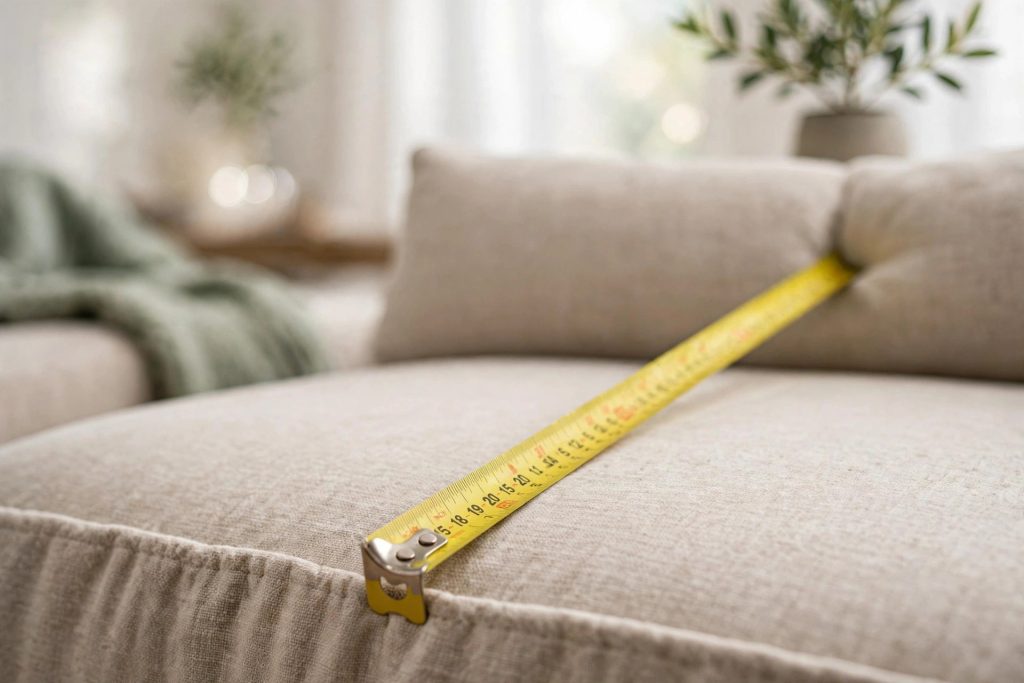
This is the usable sitting area, not the entire depth of a removable seat cushion. Part of that cushion may sit underneath the back cushion. Measuring it after pulling it out can give you a larger number than the space available when the sofa is assembled.
Retailers do not always use exactly the same measuring point. What A Room explains that back-cushion shape and measuring method can change the listed depth. If two sofas seem surprisingly different on paper, ask for a dimension drawing or confirmation of where the measurement begins and ends.
Write down one observation beside your home measurement: “comfortable upright,” “too much reaching for the back,” or “not enough room to tuck my legs up.” That is more useful than recording a number without remembering how the seat felt.
Example, not a product comparison: imagine two sofas that are both 39 inches deep overall. One lists a 21-inch inside seat depth; the other lists 24 inches. They project equally far into the room, but the second offers three more inches in front of its back cushion. You still need to compare cushion feel and seat height before deciding which suits you.
Use Depth Ranges as Starting Points, Not a Height Formula
There is no single industry-wide boundary between a shallow, standard and deep seat. For a concrete reference, Room & Board’s comfort guide lists a 20-inch seat in its shallow group, 21- and 22-inch examples in its medium group, and a 27-inch example in its deep group. Those are examples from one retailer, not universal fit rules.
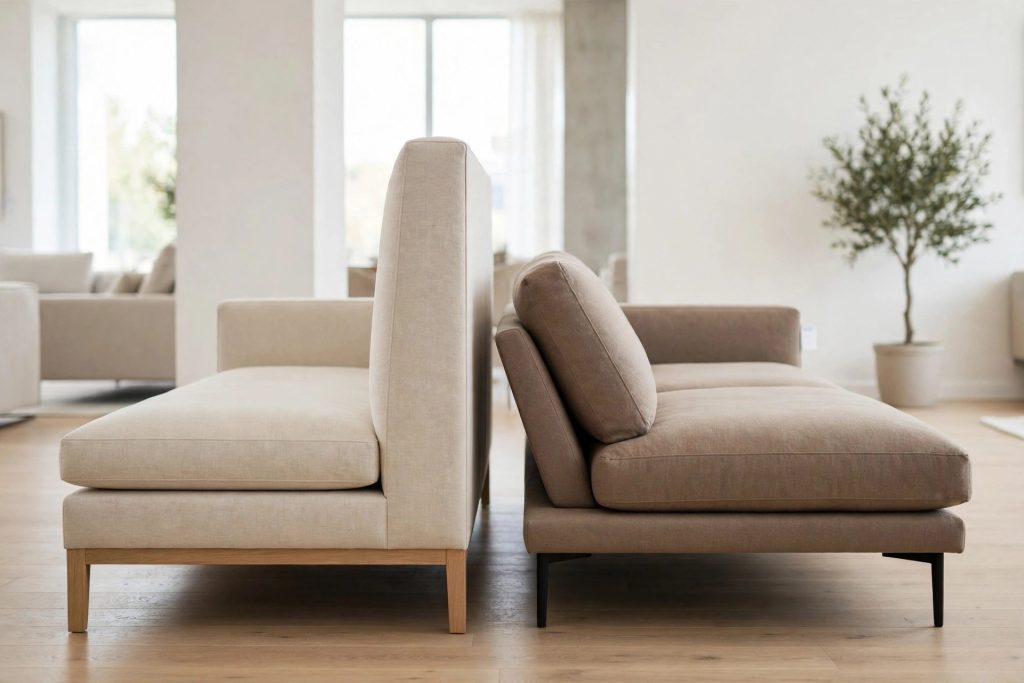
Use those numbers to choose different depths to try. A seat around 20–22 inches is a useful comparison against one around 24 inches or deeper, particularly when deciding between upright sitting and curling up. Your preferred position matters more than the label on the collection.
| What you notice | What to compare next |
|---|---|
| You can reach the back only by lifting your feet or sliding away from it. | A shallower seat, while checking whether seat height is also the problem. |
| You sit upright comfortably but cannot tuck your legs onto the seat. | A deeper version, or a separate place to lounge if upright comfort is the priority. |
| The measurements look right, but you sink and struggle to change position. | A different cushion feel and seat height, rather than changing depth alone. |
Height charts can help you find candidates, but two people of the same height may have different leg proportions and habits. Avoid treating a recommendation such as “24 inches for tall people” as a reason to skip the sitting test.
Try Your Everyday Positions Before You Choose
In a showroom, begin without the display pillows. Sit where you would normally sit at home, with your back against the regular back cushion. Notice whether your feet rest comfortably, whether the front edge presses behind your knees, and whether you keep shifting forward to find a usable position. Crate & Barrel’s sofa selection guidance also uses the combination of back contact and feet on the floor when discussing depth.
Then try the position you use for a longer evening: reading with a book, sitting sideways, or curling up. Do not judge a conversation sofa only by how pleasant it feels when you lie across it. Equally, a sofa intended for lounging does not have to feel like an upright dining chair.
Spend enough time for the first impression to settle. Change position, move toward the front, and stand up normally. Notice the movements you would repeat every day. If you need to haul yourself out of a deep, soft seat, test another combination of depth, height and firmness.
Repeat the test on the exact version you intend to order. A deeper configuration or a different cushion option can change the experience, even when the collection name is the same. Ask whether the display sofa has the same filling as the one on your quote.
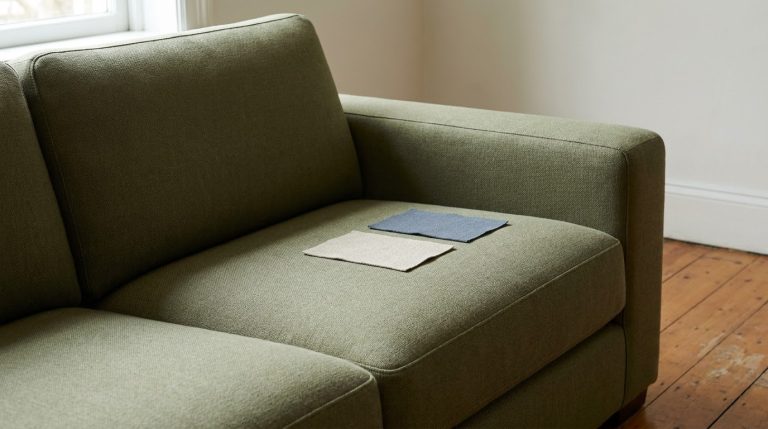
For an online purchase, use your familiar sofa as a reference and ask questions before paying. “Does the 23-inch seat measurement include the back cushion in place?” is more useful than “Is this comfortable?” A fabric swatch can help with color and texture; it cannot reproduce the sitting experience.
When Two People Want Different Things From One Sofa
Do not automatically choose the midpoint between two preferred depths. That may leave one person still reaching for the back and the other still short of lounging space. Instead, compare how each person uses the sofa and which problem occurs most often.
If one person sits upright and the other likes their feet up, try an upright-friendly seat with an ottoman. This provides leg support without making every seat deeper. It will not create the same sideways sitting space as a deep cushion, so try the actual position and allow room for the ottoman.
A supportive removable back pillow may make a deeper seat more usable for someone who prefers less depth. Test it rather than assuming it will work: a very soft pillow may collapse, while a bulky one may push you too far forward. Keep the sofa’s intended back cushions in place; removing them can expose a frame that was never meant to support your back directly.
Separate seating can also be the better compromise. A shallower chair alongside a lounge-friendly sofa lets two people choose different positions without rebuilding the sofa with pillows each evening. Choose the arrangement that fits the room and the people, rather than making every seat identical.
Check These Details Before Ordering
Once a depth feels promising, record the exact model and configuration. Keep these details together so you do not accidentally compare the seat measurement from one version with the overall dimensions of another:
- Inside seat depth: with the normal back cushions in place, plus the retailer’s measuring method.
- Seat height and cushion option: the combination you tried, not just the collection name.
- Overall width and depth: for the room, along with the delivery dimensions and route requirements.
- Return conditions: including any restrictions or charges for the exact upholstery and configuration you are ordering.
Mark the overall footprint on the floor with a floor-safe temporary method and walk around it. This checks the space the sofa occupies; it does not simulate how the seat feels. A sofa can fit against the wall and still interrupt the route through the room.
Keep upholstery as a separate decision. Once you have a comfortable shortlist, compare the care instructions and claims for a performance fabric sofa rather than letting a fabric label substitute for a sitting test.
Choose the sofa on which your usual position feels easy. If you can describe why one depth works better for you, using both the measurement and the way it feels, you have a stronger basis for buying than a “standard” or “extra-deep” label alone.