How to Organize Under a Small Bathroom Sink
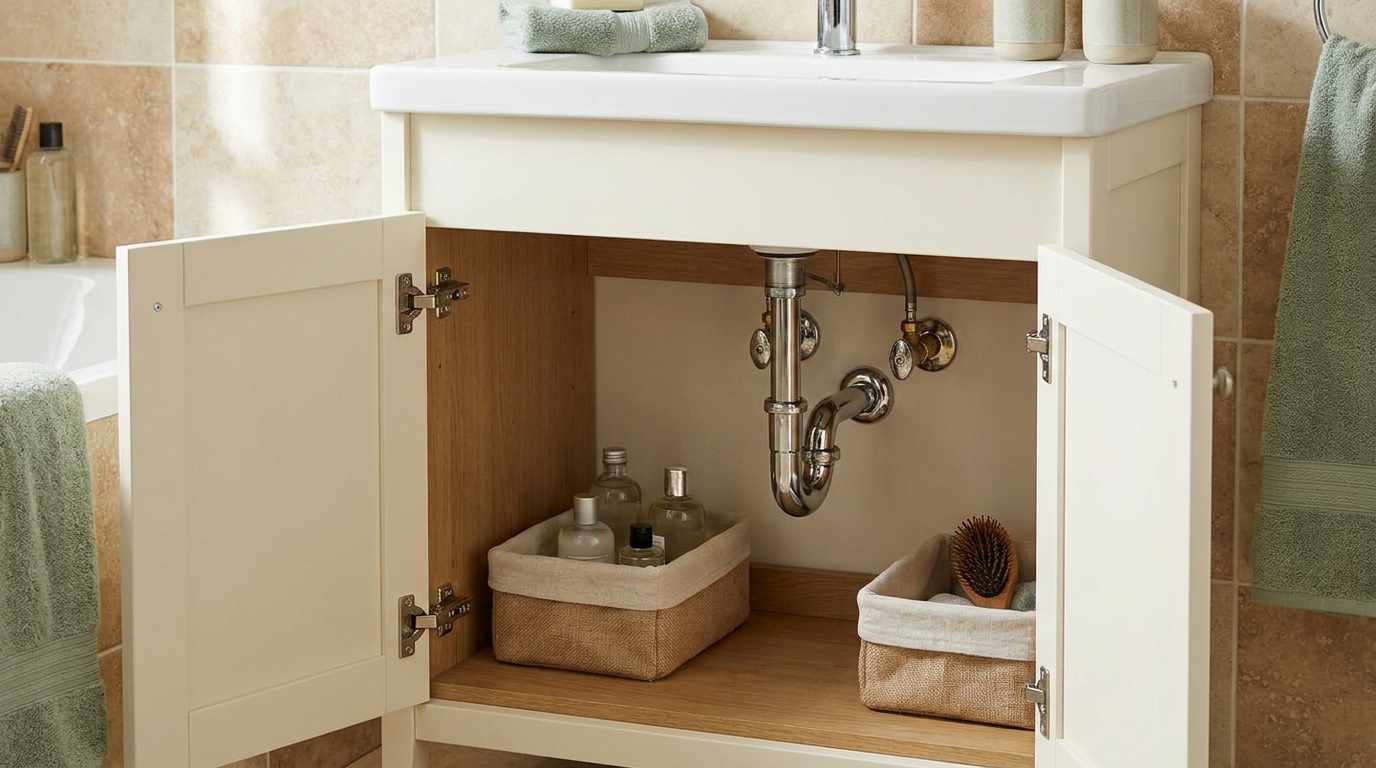
To organize under a small bathroom sink, work around the plumbing first, then give daily items and spare supplies separate places. Start with removable containers that fit through the cabinet opening. Keep the drain connections and shutoff valves accessible instead of packing every gap around them.
This guide is for an existing sink cabinet with doors. If your basin has no cabinet underneath, use our guide to organizing a small bathroom without a vanity. The goal here is to make the cupboard you already have easier to use, without changing the plumbing.
1. Empty the Cabinet and Check Its Condition
Take everything out so you can see the base, back corners and plumbing. Wipe the surfaces and let them dry. If you find active drips, damp patches or a swollen cabinet base, address the cause and any damage before putting storage back. A new liner should not hide a problem.
Separate the contents into items in use, unopened replacements and things that belong elsewhere. Keep usable duplicates together so you know what you already own. Dispose of unwanted products according to their labels and local disposal guidance.
While the cupboard is empty, identify the parts you may need to reach: water shutoff valves, pipe joints and the drain trap. Leave them visible or easy to uncover by lifting out a container. Do not hang storage from the pipes or use them to support a shelf.
2. Measure Around the Pipes, Not Across an Imaginary Empty Box
The cabinet’s overall width is only one measurement. Its door opening may be narrower, and the sink bowl can reduce the height near the top. Measure each usable pocket separately: to the left of the plumbing, to the right, and at the front.
- Opening: measure past hinges and any center divider. A bin must pass through this space when full.
- Depth: measure from the closed door’s inner face to the first obstruction in the position you plan to use.
- Height: measure beneath the lowest obstruction, then allow room to lift out the actual bottles or containers.
- Movement: check where a pull-out basket, cabinet door or organizer lid travels when opened.
For example, an organizer may stand neatly beside the drain while its upper basket hits the sink bowl as you lift out a bottle. A door-mounted rack may fit with the door open but collide with an interior bin when you close it. Test the whole movement, not just the resting position.
Try paper footprints or empty containers you already own before shopping. This can show whether two separate bins fit the available spaces better than one wide unit. There is no single organizer size that suits every sink cabinet.
3. Decide What Actually Belongs Under the Sink
Give frequently used toiletries the easiest position, usually near the front. A shallow caddy can hold the items you bring to the basin together. Keep unopened replacements in a separate group so a new bottle does not hide the one already in use.
If the cupboard stays dry, a small supply of dry accessories may fit in a covered container. Keep bulk packs elsewhere when they crowd the working space. Do not automatically put towels or toilet paper here just because a basket fits; choose a location that stays dry and is convenient to reach.
Cleaning supplies need a deliberate storage decision. The U.S. Consumer Product Safety Commission advises keeping household chemicals in their original child-resistant containers and storing cleaning supplies in a locked cabinet or box out of children’s reach. An open bin in a low cupboard does not meet that need. If this cabinet cannot provide suitable storage, keep the cleaners elsewhere.
Where cleaning products are stored, follow their label instructions and keep them separate from toiletries. Do not pour them into decorative bottles to make the cupboard look coordinated. Use the cabinet for the products it can accommodate appropriately, rather than trying to put every bathroom supply in one place.
4. Organize Under a Small Bathroom Sink With Removable Bins
Start with one washable container for daily items and another for replacements, if both fit. Low sides make small items easier to see; taller sides can help contain bottles but may make reaching in awkward. Choose around the contents and your grip, not a matching set.
A workable example is a small daily-use caddy at the front left and a spare-toiletry bin on the right, with the plumbing area behind them left accessible. If the pipes occupy the left side, reverse or simplify the arrangement. The layout follows the cabinet rather than forcing the cabinet to fit a diagram.
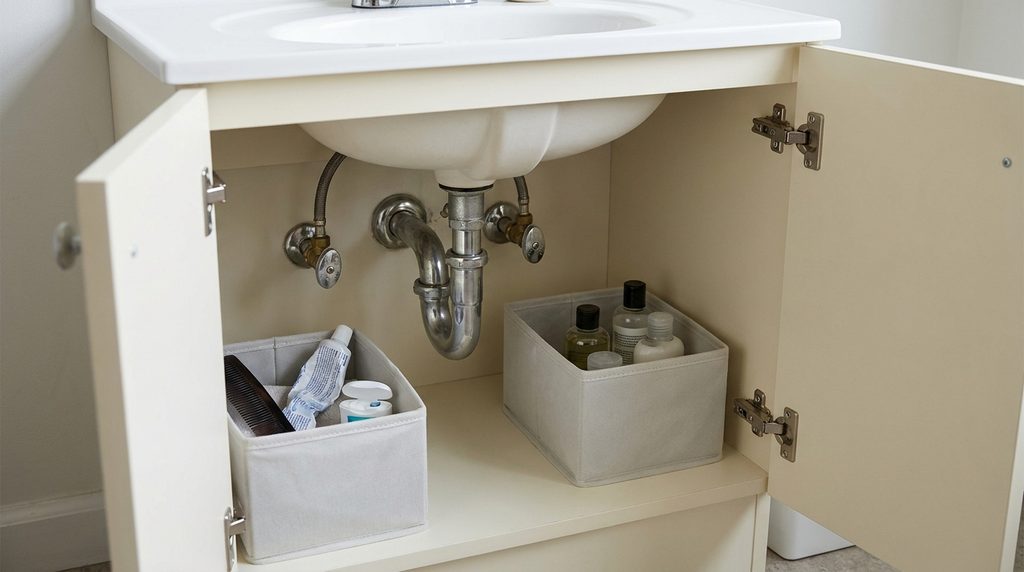
Add height only where it helps. A short shelf riser may create a second level beside the pipes, provided the cabinet and organizer support the load and you can still remove everything comfortably. Stacking boxes is better suited to occasional supplies than the items you need every morning.
A fitted pull-out can improve access in a deep cupboard, but measure its full frame, runners and extended path. A center divider may prevent a wide unit from coming out. Check the installation requirements before choosing a fitting that needs screws; plumbing and cabinet construction can limit where it can be mounted.
Door storage is optional. Its brackets, contents and depth all occupy space when the door shuts. If the door needs a push to close, or bottles touch the bins inside, reduce the storage rather than forcing it. Two simple removable containers may already solve the problem.
5. Test Access Before Adding Another Organizer
Close both doors, open them again and remove the item you use most. Next, lift out the spare-supply bin and check that you can see and reach the plumbing without dismantling a stack. Nothing should catch on a hinge, pull against a pipe or require squeezing a bottle through a narrow gap.
Use the arrangement for several days. If one product repeatedly ends up on the basin, move its storage closer to the front or simplify the caddy. If a container is too heavy or awkward to lift, divide its contents instead of buying a larger one.
When restocking, take the bins out briefly and check the cabinet base and the space behind them. Keep enough room to notice changes and clean the surfaces. For storage elsewhere in the room, see our small bathroom storage ideas. Stop adding organizers once daily supplies are easy to retrieve, replacements are easy to find and the plumbing remains accessible.