Best Storage Ottoman for a Small Living Room: 6 Picks That Actually Fit
A storage ottoman is the rare piece of furniture that earns its floor space twice: it is a footrest, an extra seat, and a hidden cupboard in one. In a small living room that matters, because a separate footrest, a blanket basket, and a side table would eat three footprints, while one ottoman eats one. The catch is size. An ottoman that is too long blocks the walkway, one that is too tall makes the sofa uncomfortable, and one with a shallow compartment holds almost nothing. This guide gives you the sizing rule first, then six types that actually fit small rooms, with the dimensions, storage capacity, and trade-offs that decide between them. No pick here is based on hands-on testing: sizes, capacities, and ratings are taken from current retailer listings, so check the listing for your exact model before you buy.
The Sizing Rule First
Measure before you fall in love with a style. Start with your sofa: a good ottoman is about two thirds the length of the sofa it serves, and it should sit 12 to 18 inches away from the sofa edge so you can stand up without shuffling sideways. Leave at least 30 inches of clear walkway around the other sides, and keep the ottoman height at or just below your sofa seat height, usually 15 to 18 inches, so your feet rest flat instead of dangling or pushing your knees up. Next, measure what you plan to store. A folded throw needs about 12 inches of depth, a stack of two throws needs closer to 15 inches of height inside the compartment, and board games need a flat base at least 11 inches wide. Write those three numbers down, sofa length, walkway clearance, and storage depth, and reject any ottoman that fails one of them, no matter how good it looks in the photo.
1. The Compact Cube
Best for: a tight corner, beside an armchair, or a room where a bench would block the path.
A 15 inch cube is the smallest useful storage ottoman, and it is the right choice when floor space is the binding constraint. It holds one throw, a few magazines, and remotes, and it tucks beside a chair or under a window without claiming the middle of the room. Two cubes beat one bench in a room with two seating spots, because you can separate them when guests arrive and push them together as a coffee table substitute when they leave. The trade-off is capacity: a cube cannot hold a full bedding set or a stack of board games, and a folding cube with soft sides will not hold a heavy tray steady. Buy a cube only if your storage list is short, and check that the lid is rigid enough to sit on if you plan to use it as a spare seat.
2. The Storage Bench
Best for: a small living room that needs real hidden storage, at the foot of a sofa or along a wall.
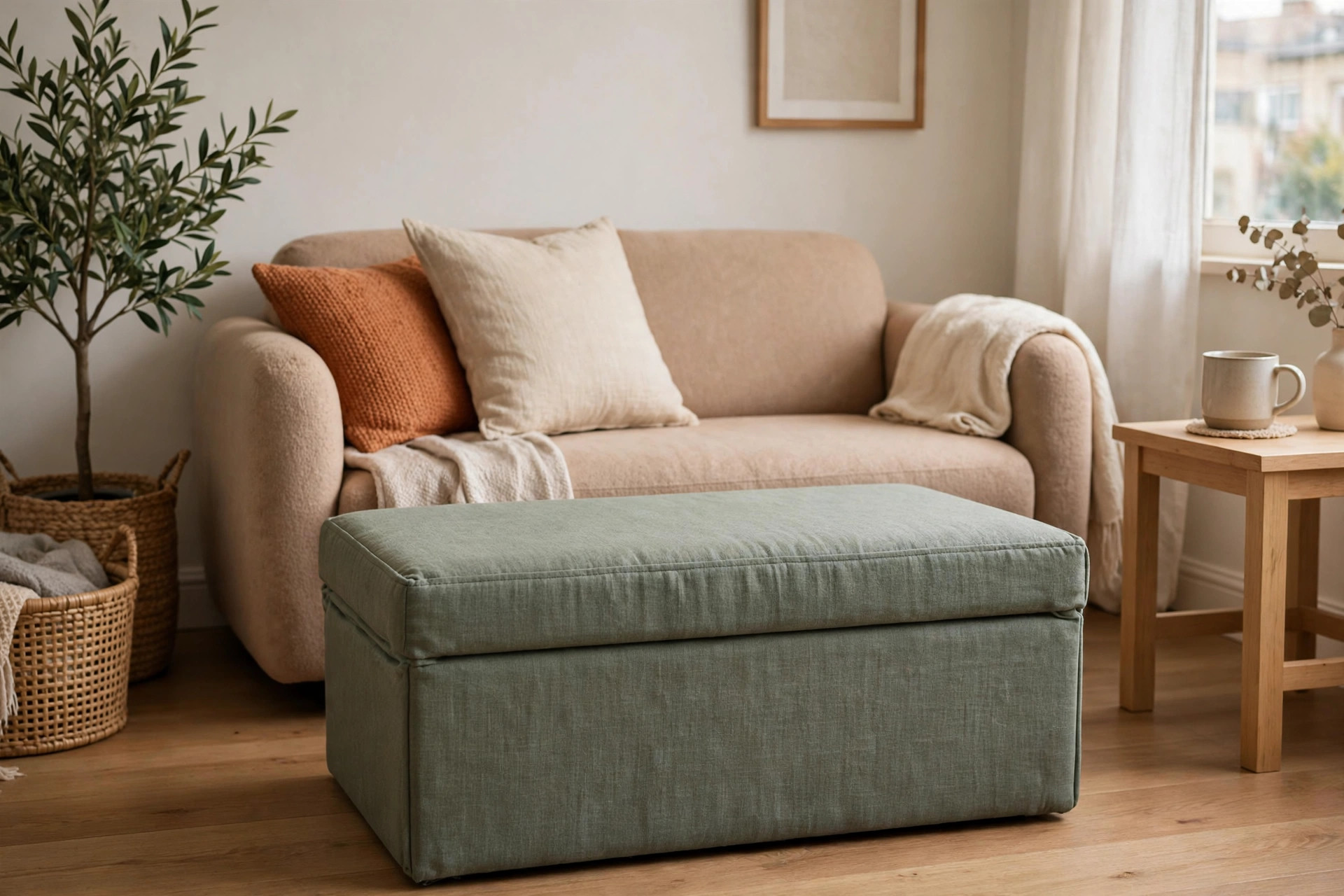
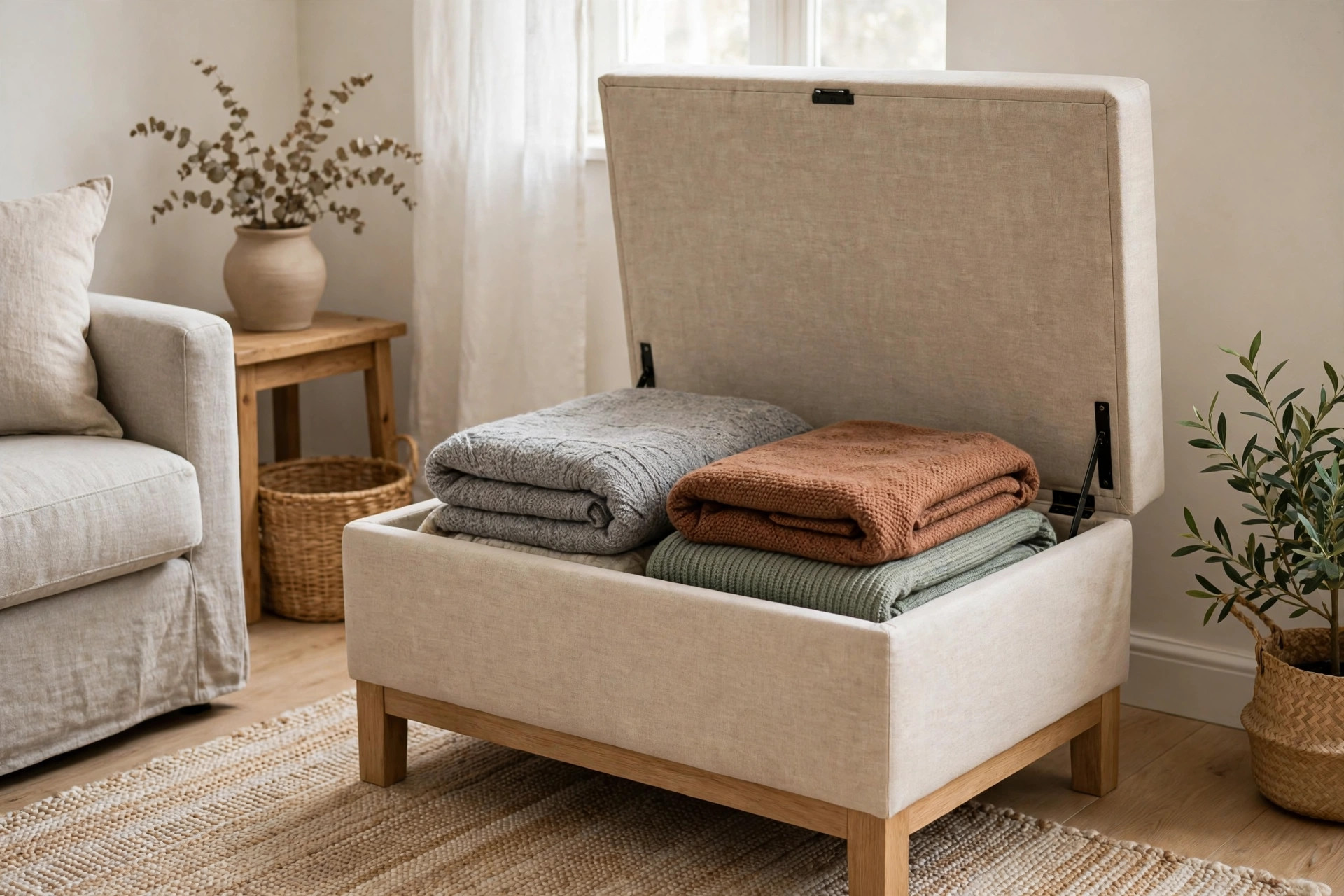
The 30 inch folding storage bench is the balanced pick for most small living rooms. The widely listed model in this size measures about 30 inches long, 15 inches deep, and 15 inches high, with roughly 24 gallons, about 89 liters, of interior storage, which is enough for several throws, a set of guest towels, or a stack of magazines and games. Its listed static load is up to about 660 pounds when assembled as directed, so two adults can sit on it, and it folds flat when it is not needed. A larger 43 inch bench holds more, but it needs at least 48 inches of wall or sofa-front space to look comfortable, and in a 10 by 12 foot room that extra length often eats the walkway. Choose the 30 inch bench unless you have measured a full 43 inch run with walkway to spare, and prefer a bench with a removable, washable cover if it will hold throws you actually use.
3. The Round Ottoman
Best for: a room full of straight lines, a sectional corner, or a spot where a rectangle would catch shins.
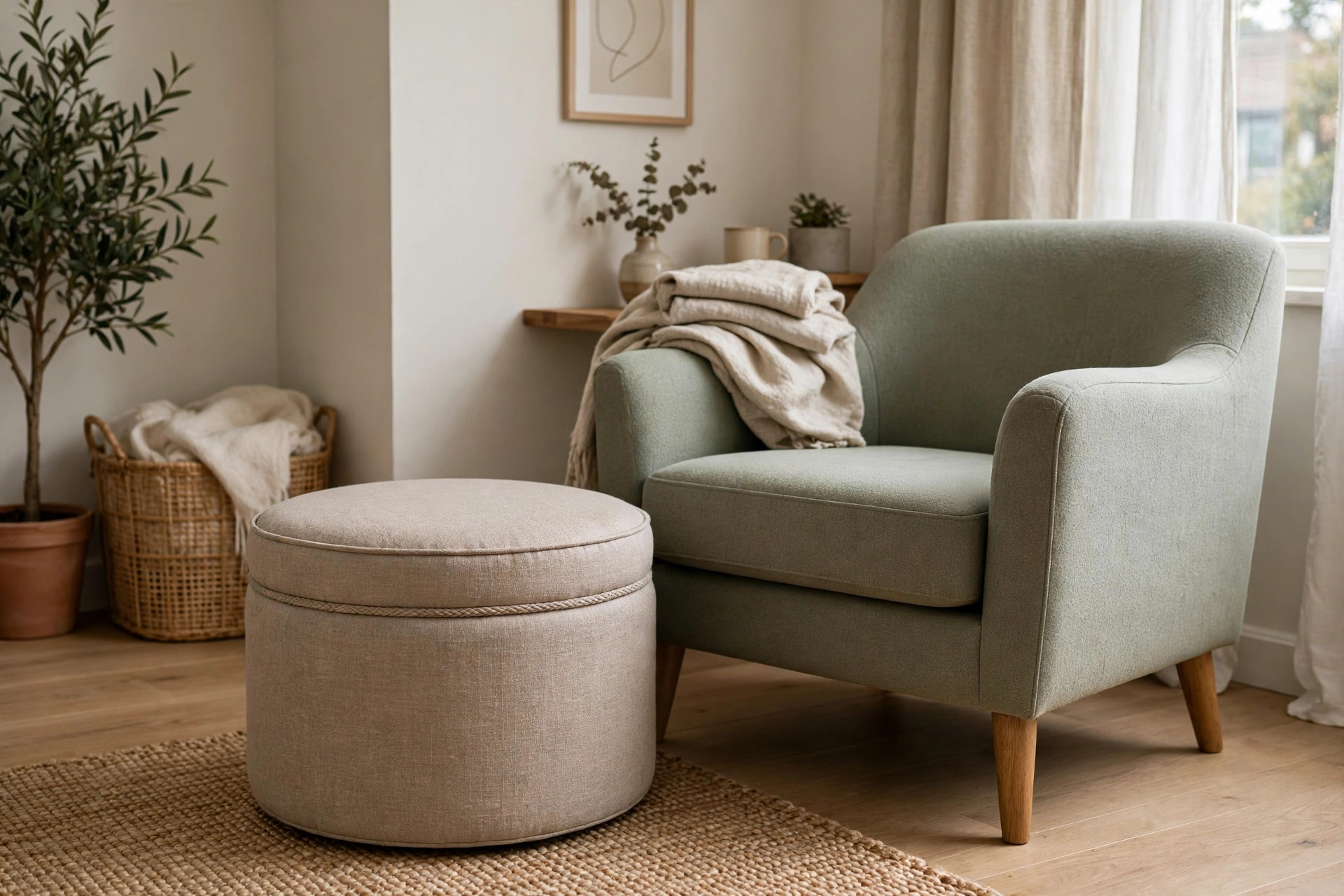
A round ottoman softens a small room and moves better than a rectangle, because there are no corners to bump into in a narrow passage. It works well tucked into the angle of a sectional, beside a reading chair, or as a single footrest in front of a compact sofa. The storage inside is smaller than a bench of the same footprint, since the round shape wastes the corners, so expect room for one throw and small items rather than a full blanket collection. Check the diameter against your walkway before you buy: a 20 inch round ottoman in a 30 inch passage leaves only 10 inches to pass, which is not a passage at all. Round ottomans also pair well with a round rug, because the repeated shape makes a small seating group look intentional instead of cramped.
4. The Tray-Top Ottoman
Best for: a living room without a coffee table, where the ottoman must also hold drinks.
A tray-top ottoman has a firm, removable tray set into the lid, so it doubles as a coffee table without giving up its storage. This is the most useful type if your room has no coffee table, because it replaces two pieces with one footprint, and it keeps remotes and a mug within reach while the blankets stay hidden underneath. The trade-off is that the tray surface is smaller than a real coffee table, so it holds two mugs and a book, not a full board game night, and a tray that is not truly removable will slide when someone sets a drink down. If you choose this type, test the tray in the listing photos: it should sit flush, lift off with one hand, and leave a flat lid underneath for sitting. Pair it with a rug that extends at least 6 inches beyond the ottoman on each side, so the group reads as one seating zone.
5. The Ottoman as an Extra Seat
Best for: a household that hosts often but has no room for a spare chair.
If extra seating is the real job, buy for load rating and lid strength first, and storage second. A bench ottoman rated for two seated adults, with a rigid lid and a stable base, is a genuine spare seat, while a soft folding cube is a footrest that tolerates sitting, not a chair replacement. Seat height matters here too: a 15 inch ottoman seat matches most sofa seat heights, while a 17 or 18 inch ottoman can feel like perching for shorter guests. Keep the ottoman near the seating group, not in another room, or guests will never fetch it, and keep the top clear of the storage you reach for daily, or the seat becomes a lid you never open. A bench by the wall, pulled out for guests, is the most practical version of this idea in a small room.
6. The Wipe-Clean Ottoman
Best for: snack traffic, pets, or a room where fabric would stain in a month.
A leather or faux leather ottoman with a boxed shape is the easiest to maintain, and it suits rooms where the ottoman will see food, drinks, and frequent touch. It wipes clean, holds its shape under a tray, and looks more structured than a soft fabric cube. The trade-offs are comfort and temperature: a firm leather top is less inviting for bare feet than fabric, it can feel cold in winter and sticky in summer, and a scratched surface shows more than a fabric one hides. If you choose this type, keep it out of direct sun, which dries and cracks faux leather, and check that the interior is still deep enough for your storage list, because wipe-clean models sometimes trade interior depth for a firmer shell. For a household with pets, a darker color hides claw marks better than a pale one.
What to Avoid in a Small Room
Four mistakes ruin an otherwise good ottoman choice. First, buying before measuring: an ottoman longer than two thirds of your sofa dominates the room and shrinks the walkway. Second, choosing a soft, lidless pouf when you need storage: a pouf is a footrest, not a cupboard, and it will not hide anything. Third, putting a heavy storage bench on a rug with a thick pile and no hard base, so the lid sticks and the bench wobbles when you open it. Fourth, blocking a drawer, a radiator, or a door swing with the ottoman’s parking spot, which turns a storage win into a daily annoyance. Run this check before you order: sofa length times two thirds, 12 to 18 inches from the sofa, 30 inches of walkway, height at or below seat height, and storage depth that fits your longest item. An ottoman that passes all five is the right one, whatever its style.
What size storage ottoman is best for a small living room?
About two thirds the length of your sofa, 15 to 18 inches high, and placed 12 to 18 inches from the sofa edge, with at least 30 inches of walkway around it.
How much can a 30 inch storage ottoman hold?
The widely listed 30 inch bench holds roughly 24 gallons, about 89 liters, enough for several throws, guest towels, or magazines and games.
Can a storage ottoman replace a coffee table?
Yes, if you choose a tray-top model with a firm removable tray. It holds drinks and a book, but not a full board game spread, so keep expectations modest.
Is a round or rectangular ottoman better for a small room?
A rectangle stores more and seats two, while a round ottoman moves better in narrow passages and softens a room full of straight lines. Choose by walkway width and storage needs.
Can you sit on a storage ottoman?
Yes, if it has a rigid lid and a stated load rating for sitting, such as the 660 pound rating listed for the common 30 inch bench. Soft folding cubes are footrests first, not spare chairs.