Where to Put a Toaster in a Small Kitchen (Without Losing Counter Space)
A toaster is small, but it is one of the worst counter hogs in a small kitchen. It sits out every day, it needs clearance on every side, and it cannot be shoved against a wall like a kettle can. The fix is not a bigger kitchen. It is deciding, honestly, how often you toast, then giving the toaster the spot that matches that answer: a permanent corner, a hidden garage, or a rolling home it only visits at breakfast. This guide gives you six spots, with the footprint and clearance numbers that decide whether each one actually fits.
The Daily-Use Test First
Before you pick a spot, answer one question honestly: do you toast every day, or a few times a week? A daily toaster earns a permanent counter spot, because dragging it out every morning costs more time than the counter space is worth. A toaster used two or three times a week belongs in a pull-out, a garage, or a cart, where it is reachable in seconds but off the counter the rest of the day. A toaster used once a week or less belongs in a cabinet or on a high shelf. This one decision prevents the most common mistake in small kitchens: giving a weekly appliance a daily spot. Next, measure your toaster. A standard 2-slice toaster is roughly 11 inches long, 7 inches deep, and 7 inches tall, while a 4-slice toaster runs about 11 to 12 inches long and 10 to 11 inches deep. Measure yours, including the cord, because the spot has to fit the toaster plus its clearances, not just the toaster alone.
1. The Counter Corner
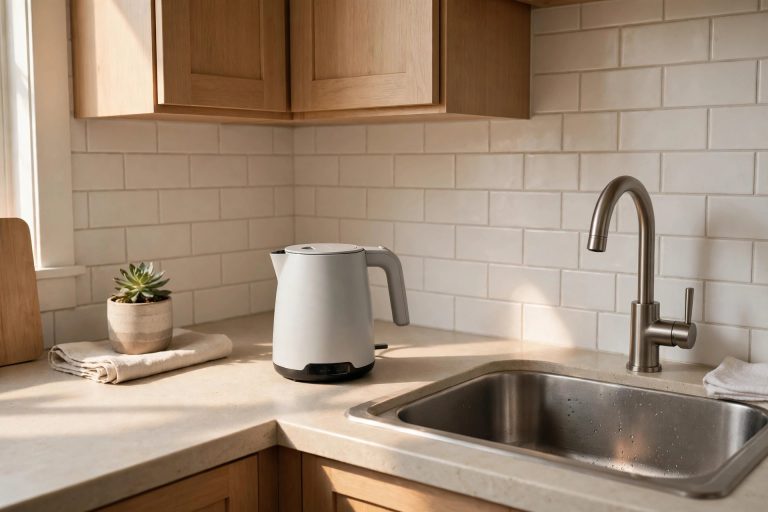
If you toast daily, the counter corner is the best permanent spot. A corner uses dead space that is awkward for prep anyway, and it keeps the toaster within reach of the bread, the butter, and the plate. Push the toaster into the corner but leave at least 2 inches of air on each side and 4 inches above it, because a toaster vents heat from its sides and top. Keep it away from curtains, paper towels, and wooden utensil holders, which can scorch. The trade-off is that the corner spot is permanent, so it costs you roughly 80 square inches of counter all day, every day. That price is only worth paying if the toaster is truly a daily tool. If it is not, pick one of the hidden spots below instead.
2. An Appliance Garage
An appliance garage is a counter-level cabinet with a door that closes over the toaster, and it is the best hidden spot for a daily or near-daily toaster. The toaster stays plugged in, so breakfast takes no setup, and the door closes to hide it when you are done. The garage needs to be at least 2 inches wider than your toaster on each side, with a heat-safe interior and a door that can stay open while the toaster runs. Never run a toaster with a garage door closed, because trapped heat damages the cabinet and the toaster. The trade-off is cost and space: a garage eats a full stretch of counter-depth cabinet, so it only makes sense if you already have a corner cabinet or a dead stretch of counter to convert. Pair it with the kettle in the same garage and you get a single breakfast station instead of two scattered appliances.

3. A Pull-Out Shelf
A pull-out shelf inside a lower cabinet turns a deep cabinet into a toaster home that slides out for use and slides away after. This is the best choice for a toaster used a few times a week, because it costs zero counter space and keeps the toaster plugged in if the cabinet has an outlet, or one short move from an outlet if it does not. The shelf must support the toaster’s weight plus the force of pushing bread down, and it needs a lip or a non-slip mat so the toaster does not slide when you press the lever. Measure the cabinet opening before you buy a shelf: the toaster plus the shelf hardware must clear the opening by at least half an inch on each side. The trade-off is that you lose a lower cabinet, so this only works if you can move that cabinet’s contents to a less convenient spot.
4. A Rolling Cart Breakfast Station
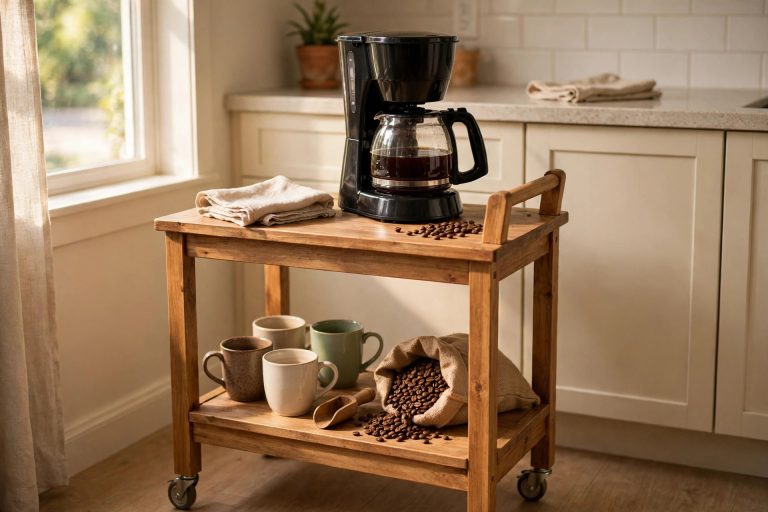
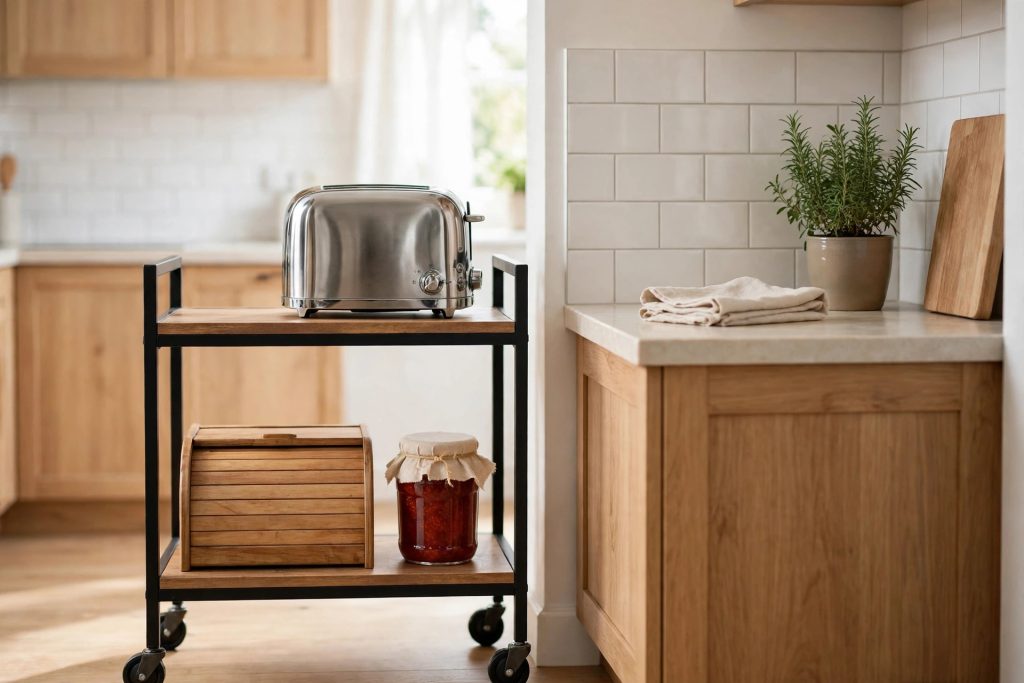
A narrow rolling cart, about 12 to 16 inches wide, gives the toaster a home that moves. Park the cart in a gap between the fridge and the counter, or against a free wall, and roll it out for breakfast. Group the toaster with the kettle and the bread box on the cart’s top, and keep plates or jam on the shelf below, so breakfast becomes one trip instead of three. This is the best choice if your counters are already full and you have a gap the cart can live in. The cart’s top must be heat-safe, and the cart must lock in place while the toaster runs, because a rolling cart under a hot toaster is a burn risk. The trade-off is floor space, so measure your gap first: a cart wider than its parking spot becomes a hallway obstacle, not a solution.
5. Inside a Cabinet
If you toast once a week or less, a cabinet is the honest answer. Store the toaster in a lower cabinet near the counter where you use it, with the cord wrapped loosely, never tightly around a hot toaster, and the crumb tray emptied before storage so crumbs do not attract pests. Keep it upright, not on its side, because crumbs and loose parts shift inside a toaster stored sideways. The trade-off is setup time: you will carry the toaster out, plug it in, and put it away each time, which takes about a minute. That minute is the reason this spot fails for daily users, and the reason it is perfect for weekly users. Do not store the toaster in a cabinet directly above the stove, because heat rises into that cabinet even when the toaster is not running.
6. A High Shelf for Occasional Use
A high shelf, above the cabinets or on a wall shelf near the ceiling, works for a toaster you use rarely, such as a second toaster or a toaster oven you bring out for guests. Keep it light enough to lift safely, store it in a bin with handles so you can bring it down in one trip, and never store a heavy 4-slice toaster above head height if you cannot lift it comfortably with both hands. The trade-off is obvious: every use means a step stool and a lift, so this spot is only for appliances used a few times a month. If you find yourself fetching it weekly, move it to a cabinet or a pull-out instead, because a high shelf that gets used weekly is a chore, not storage.
Clearances and Safety Rules
Whatever spot you choose, the safety rules are the same. Leave at least 2 inches of air on each side of the toaster and 4 inches above it while it runs, and keep it away from curtains, towels, and paper. Empty the crumb tray weekly for a daily toaster, or crumbs build up and become a fire risk. Never cover a toaster while it runs, and never run it inside a closed cabinet or garage. Plug it directly into a wall outlet when you can, because a toaster draws high power and a long, thin extension cord can overheat. If you must use a power strip, use one rated for the toaster’s wattage, usually 800 to 1500 watts, and keep the cord short and clear of the sink. Pick the spot that matches how often you toast, give it its clearances, and the toaster stops being a counter problem.
Related reading: small kitchen storage ideas, where to put a kettle in a small kitchen, where to put a microwave in a small kitchen with no counter, and where to put a coffee maker with no counter space.
Where is the best place for a toaster in a small kitchen?
In a counter corner if you toast daily, or in an appliance garage or pull-out shelf if you toast a few times a week. A weekly toaster belongs in a cabinet.
How much clearance does a toaster need?
At least 2 inches of air on each side and 4 inches above it while it runs, kept away from curtains, towels, and paper.
Can I keep a toaster inside a cabinet?
Yes, if you take it out to use it and let it cool before putting it away. Never run a toaster inside a closed cabinet or appliance garage.
What size is a standard toaster?
A 2-slice toaster is roughly 11 inches long, 7 inches deep, and 7 inches tall. A 4-slice toaster is about 11 to 12 inches long and 10 to 11 inches deep. Measure yours before buying storage.
Should a toaster stay on the counter?
Only if you use it daily. A toaster used a few times a week or less should live in a pull-out, a garage, a cart, or a cabinet, so the counter stays free for prep.