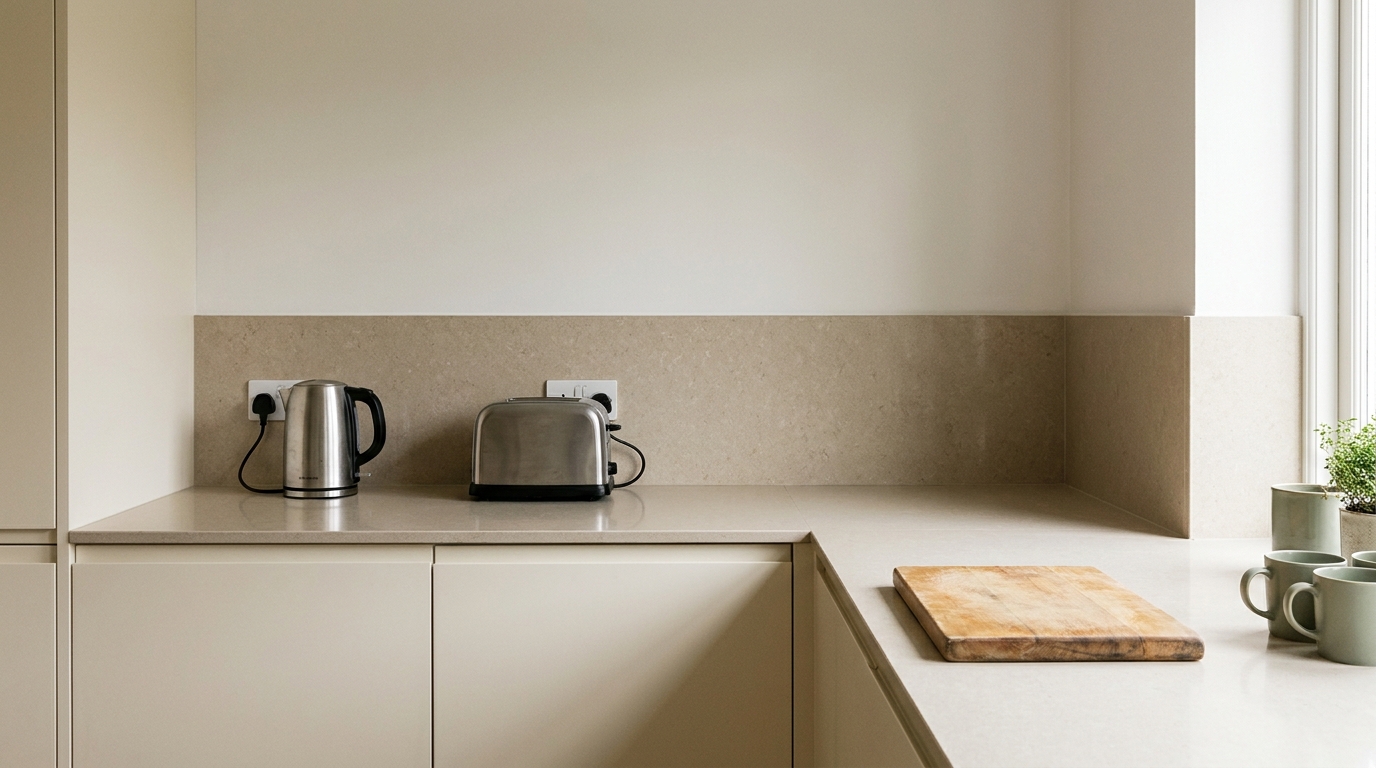
Where to Put Small Appliances in a Small Kitchen
Deciding where to put small appliances in a small kitchen starts with two questions: how often do you use each one, and where can you operate it comfortably? The kettle you reach for several times a day has different needs from a blender you bring out on weekends.
Keep frequently used equipment in a convenient place without giving away your main preparation surface. Store occasional appliances where you can lift them out easily, and plan a suitable worktop position before putting them away. A machine fitting inside a cupboard does not mean it can run there.
Choose Which Small Appliances Stay on the Counter
Start with what you used during the past week. A daily coffee maker may deserve a permanent spot; a waffle maker used once a month probably does not. Frequency is useful, but weight matters too. Repeatedly lifting a heavy machine from a deep cupboard can make a tidy-looking arrangement frustrating.
Reserve your most useful stretch of counter for preparing food. Place your chopping board there and check that you still have room for a bowl or ingredients. If every appliance stays out, that working area often becomes the space you have to rebuild before each meal.
Choose the equipment that earns the remaining space. You might keep a kettle and toaster out, or give a regularly used air fryer priority over an occasional blender. There is no ideal number of visible appliances: the right arrangement depends on your worktop and routine.
For the wider cupboard layout, use our small kitchen storage ideas to give everyday items accessible homes before adding more organizers.
Match the Storage Place to the Appliance
Use these options as a starting point. Storage means the appliance is switched off, unplugged, cool, clean and dry as appropriate to its instructions. Before operating it, follow the placement and electrical requirements for your model.
| Appliance | Possible storage place | Check before using it |
|---|---|---|
| Kettle or coffee maker | A convenient counter position if used daily. | Access for filling, lifting or removing the reservoir, plus a position that meets the instructions for steam and overhead clearance. |
| Toaster | Counter if used often; an accessible cupboard when used occasionally. | Clearance from combustible materials, access to controls and crumb tray, and room to remove toast. |
| Blender or food processor | A reachable cupboard, with its jug or bowl stored beside the base if needed. | A stable work surface, room to fit and remove the jug or bowl, and a suitable nearby outlet. |
| Air fryer | Counter if used regularly; an accessible, adequately supported shelf if comfortable to move. | The specified ventilation gaps, basket or door opening space, and a suitable place to set down hot parts. |
| Stand mixer | A stable counter position can suit frequent use or a machine that is difficult to lift. | Head-lifting or bowl-removal clearance, attachment access, and a surface suitable for the machine in operation. |
Measure the Space Needed During Use
Measure more than the appliance body. Include handles, plugs and the space needed to open a lid, lift a mixer head or pull an air-fryer basket all the way out. A machine can fit beneath a wall cabinet while leaving too little room to use it.
Check the manual for ventilation gaps, surface requirements and restrictions on overhead cabinets. Keep vents clear. Do not assume that pulling an appliance forward a little makes its position suitable, or borrow another model’s clearance measurements. Never use a stove or hob as an extra appliance shelf.
Also check the route from the outlet to the appliance. The lead should not cross a sink, hot cooking surface or walkway, or hang over the counter edge. Avoid choosing a storage scheme that depends on stretching the cord to reach its operating position.
The KitchenAid KSB40-series blender manual, for example, prohibits extension cords and instructs users to lift the appliance by its base. Those details show why placement needs to follow the actual model’s instructions, rather than just its dimensions.
Finally, leave a suitable landing place for the things you remove: a blender jug, coffee pot or hot basket. If opening the appliance means moving your chopping board and balancing something at the counter edge, the setup needs more room.
Make Cupboard Storage Easy to Use
Choose a shelf you can reach and lift from comfortably. Very high shelves are a poor match for heavy equipment, while a low shelf may be awkward if bending is difficult. Check the shelf’s load limit and condition before giving it a heavy machine.
Measure the cupboard opening as well as the interior. Hinges and a central frame can make the usable entrance much narrower than the shelf behind it. Try moving the unplugged appliance in and out before buying bins or changing shelf positions.
Keep the appliance near the front when practical. Store its clean, dry attachments together in a small container beside it, with sharp components protected according to the manufacturer’s directions. Do not bury an everyday machine behind spare dishes simply because there is room at the back.
A tall blender may fit better with its jug beside the base, if the instructions permit that storage arrangement. Keep both pieces within easy reach. The benefit disappears if the jug lives in another cupboard behind a stack of bowls.
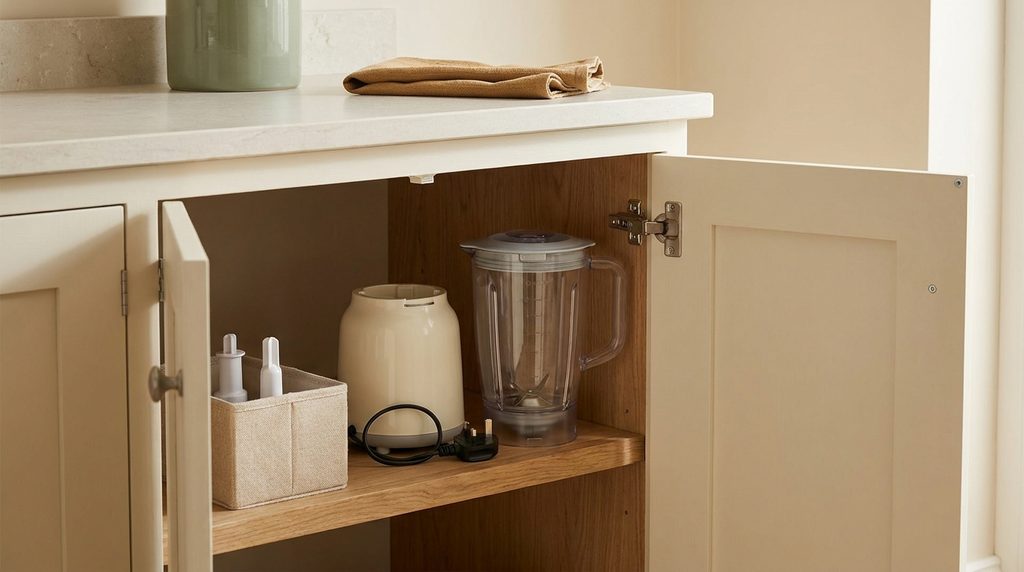
Put appliances away only after the required cooling and cleaning. A cupboard that fits the machine but has no room for its cord or accessories will quickly become awkward. Avoid tight cord wrapping or pinching the lead in the door.
Consider Appliance Garages and Carts Carefully
An appliance garage can hide equipment between uses, but treat it as a storage enclosure unless the appliance instructions and installation specifically allow operation there. An open garage door alone does not establish adequate ventilation, heat clearance or steam protection.
Before adding one, check what worktop depth it removes. You may gain a cleaner view while losing the surface needed to fill the kettle or prepare breakfast. Keep the door-opening space clear, and make sure the appliance can be moved to its intended operating position without an awkward lift.
A cart can hold occasional appliances if its shelves have enough capacity and it has a proper parking place. Include handles and wheels in your measurements, and check that cupboard doors and walking routes remain usable. A cart chosen for storage is not automatically suitable for operating a hot or vibrating appliance.
If food and equipment are competing for the same shelves, our guide to a small kitchen without a pantry can help you organize groceries before adding another piece of furniture.
Test the Arrangement Through a Normal Day
Try the layout through breakfast, meal preparation and cleanup before buying anything. Can you fill the kettle without reaching over another machine? Can you remove the blender without unloading the shelf? Is the preparation surface still available when the air fryer is in use?
Notice which item you repeatedly move. If the toaster travels between two counter corners every day, it needs a better home. If a stored machine is too awkward to retrieve, move it somewhere accessible or reconsider how often you need it.
Where to put small appliances in a small kitchen is ultimately a question of the whole routine: taking them out, using them, cleaning them and putting them back. Keep the frequent jobs easy and leave enough working space for the meal itself.